MY AMERICAN FLAG
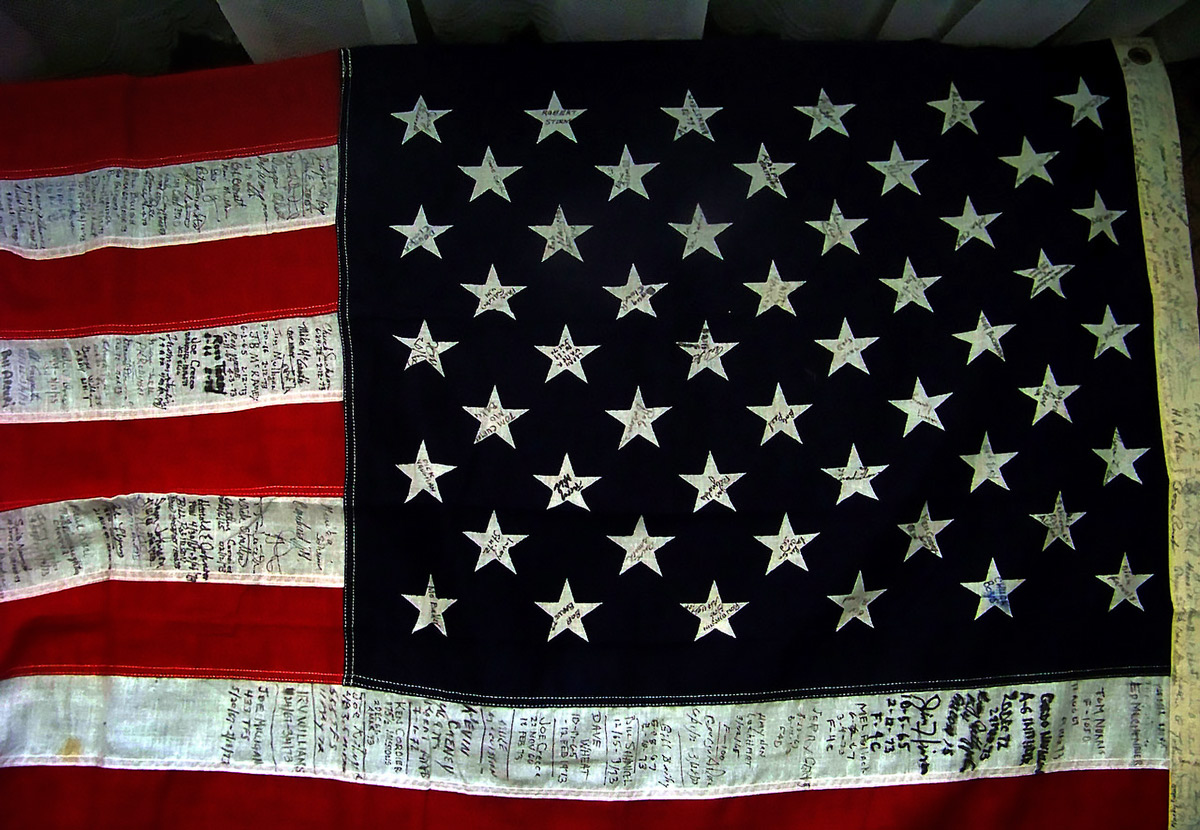
Colonel Gargus’ flag — Raider signatures are on white canvas border of the flag. Son Tay POW signatures are inside of the stars. White stripes have signatures of NAM/POWs.
By Colonel John Gargus USAF (Ret)
Originally published in the November 2019 Sentinel
I have an American flag that I carried with me on the Son Tay raid. It was signed by most of the participating raiders and by many former POWs. The names on this flag belong to the finest professional American soldiers who had the guts to come to the aid of their colleagues that suffered in captivity and to those who endured its inhumane hardships with enviable honor. This is the story of this flag.
I was born in Czechoslovakia. Because my mother was an American citizen by birth, I inherited a legal claim to US citizenship. All I needed to do was to establish residency anywhere in the USA before I reached my sixteenth birthday. (My story about coming to America was published in the January 2019 issue of SENTINEL)
Once in the USA I reunited with my maternal grandmother in Ohio and resolved to take advantage of every opportunity that my new country offered to me. I learned English and worked my way through college. My original plans were to go into diplomatic service with the State Department. But my hopes for a diplomatic career were shattered during my sophomore year when a State Department visitor came to visit our political science department. He was surprised to meet me. He had served in Czechoslovakia. He knew my father and was in on the deception that got me out of that country. He was also there when the local authorities confiscated the US passports of my brother and sister. This act caused the US Embassy to protest, but the protests were not followed up once they realized that their intervention was causing increased hardships for my family. He informed me that I would probably never get a clearance to work at the State Department because my immediate family remained behind the Iron Curtain.
With my original career plans shattered, I decided to continue with my Air Force ROTC training and fulfill the military service obligation that it entailed. Once on active duty in navigator training I applied for a regular commission. I was very pleasantly surprised when my application was accepted because with it came a Top Secret clearance which, I was led to believe, would be beyond my reach because of my family background.
The start of the war in Vietnam found me in a very comfortable setting as an AFROTC instructor at Texas A&M University. There I saw many Air Force officers who, upon completion of their engineering studies through AFIT, were sent to Vietnam to fly aircraft that were not of their own choosing. I had a good friend who had flown a C-130 from Hawaii on his prior assignment catching intelligence satellites returning from orbits in space. Together we decided that we would pick the aircraft we wanted to fly during our Vietnam tour. Then after we saw the Air Force film that featured ground to air rescue capability of the Fulton Recovery System* we decided to curtail our ROTC tours and volunteered to go to Vietnam in that C-130 Combat Talon program. It turned out to be the best career decision I had ever made. My tour in Vietnam was very productive. As a refugee from Communism, who had lived under its oppressive rule for almost two years, I felt compassion for the Vietnamese people who were resisting the life style my family had to endure. Here was my opportunity to fight back. Our aircraft and our missions were highly classified. We had the capability to penetrate into the enemy territory without detection and carry out some amazing operations. I always felt that we were contributing greatly and successfully toward the war effort. I soon became a mission planner. This made me that much more involved in everything that our crews did and helped me to grow professionally in areas I had not previously envisioned.
Prior to my arrival to Vietnam I attended the AF Survival School at Fairchild AFB with other members of my crew. There I learned how it must be like to become a prisoner of war and how such fate would apply to me. School’s instructors quickly focused on my accent and became convinced of my origins somewhere in Eastern Europe. They became very determined to break me. On the other hand I thought that I was too tough and too smart for them. But I must have given myself away by my facial reaction when two of them tried to speak with each other about my attitude in a very basic and poorly annunciated Russian. They placed me in a tight, pie-slice box where I had to kneel down and lower my head just above the knees. I don’t recall how long they kept me there, but the process was repeated five times in smaller and smaller boxes with the only rest and stretch out periods coming during repeated interrogations. Once, when I resisted squeezing my body into the box, they shoved the sliding door on the protruding soles of my feet causing long lasting bruise marks. But the greatest damage to my body came from the hemorrhoids I developed in that crouched position. They bled and got so bad that when I went to see a doctor on my first full day in Vietnam, he recommended sending me to a hospital in the Philippines. I would have none of that. We all trained as a crew and I could not just leave them after a few hours in the combat zone. The flight surgeon appreciated my crew loyalty and agreed to a long treatment. It took full three months before my body got back to normal.
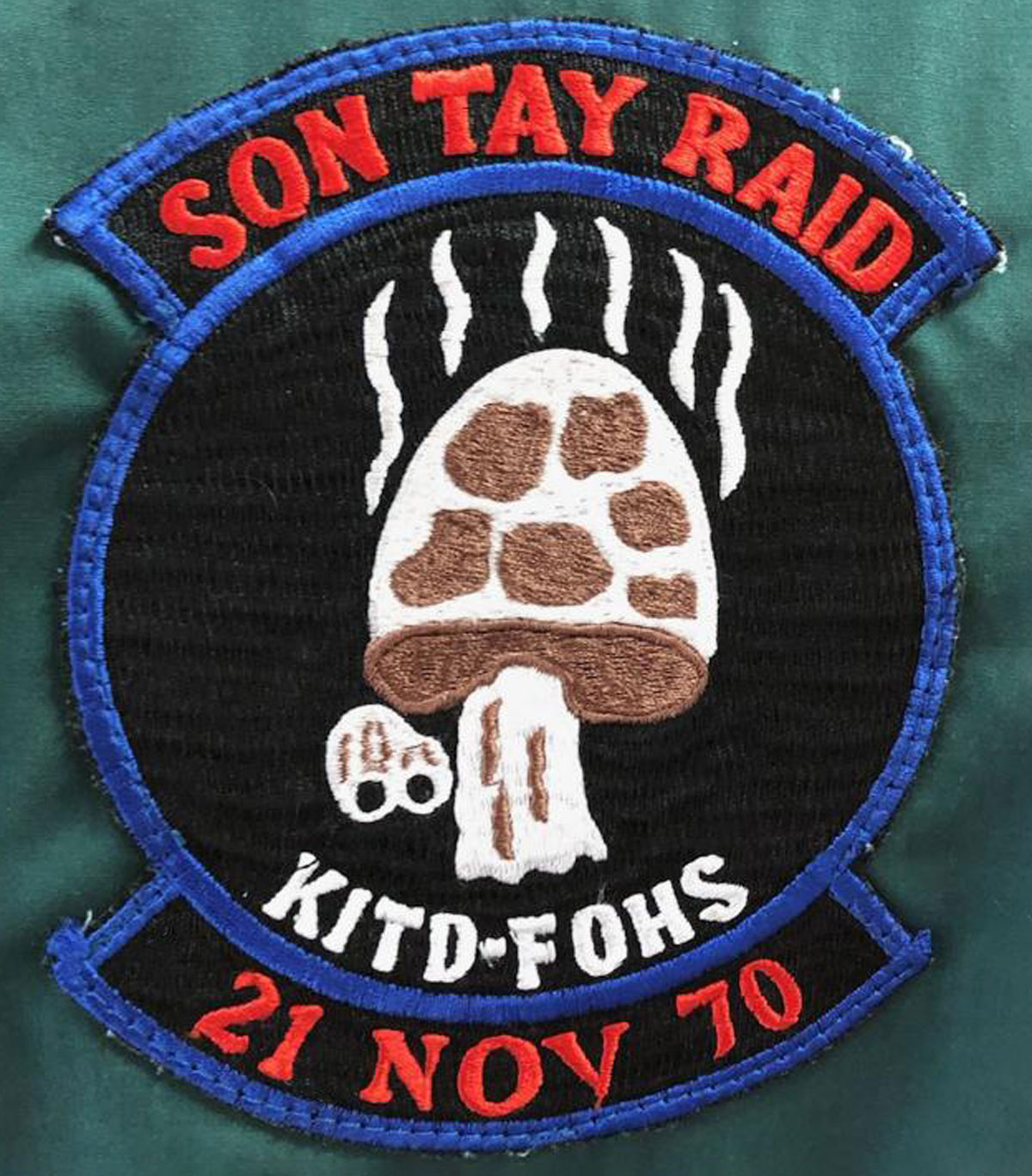
The unofficial Son Tay Raider patch that Col. Gargus wears on the back of a jacket depicts a mushroom with the acronym “KITD–FOHS” — referring to the raid’s extreme secrecy. It means “Kept In The Dark–Fed On Horse S---.”
The main lesson I learned at Fairchild was that I could never allow myself to be captured by the enemy. I convinced myself that I would not survive in captivity. I would certainly become a prized prisoner, one who had already been declared a traitor by their Communist comrades. My family would be dragged into some adverse propaganda scheme and be subjected to a new wave of repression. I rationalized that since I would not survive my ordeal, it would be better not to even begin captivity that had so much adverse potential not just for my family in Czechoslovakia, but also for my own at home in Texas. Consequently I resolved that I would never surrender and if necessary, provoke the would-be captors with my 38 caliber pistol into killing me. That seemed simple enough, but the problem was that, if forced down, I would not be alone. There were eleven of us on each crew. All of us together did not have enough pistol power to ward off the enemy armed with AK-47s. Eventually the time would come to give up in order to save the lives of the crew. My private agenda in such a scenario would be counterproductive. I would not be a good companion to have around under those circumstances. But once I had a taste of our challenging special operations and became our unit’s mission planner, I developed such confidence in our aircraft’s capabilities and crew members’ skills that I stopped concerning myself with those thoughts. I never shared my apprehensions about becoming a POW with anyone.
My post-Vietnam assignment was to Pope AFB where I became a Combat Talon instructor for new Vietnam bound crews. My specialty was the terrain following radar. With this new duty and my mission planning experience in Vietnam I became a prime candidate for the Son Tay POW rescue mission.** Believing that the USAF was developing something new that was going to involve our terrain following radar, I readily volunteered for whatever laid ahead. I was thrilled beyond description when I became a part of the small mission-planning group that was read in on the focus of the mission. I knew instantly that our aircraft could lead the necessary force into Son Tay without detection. During my Vietnam tour I flew into the Red River Valley and flight planned missions for other crews into the same part of North Vietnam. What a noble cause that would be to bring out some of those who suffered the unfortunate fate of a POW! As a soldier I couldn’t ask for a better task. As an American with my background, I could perform no nobler duty for my country than this one.
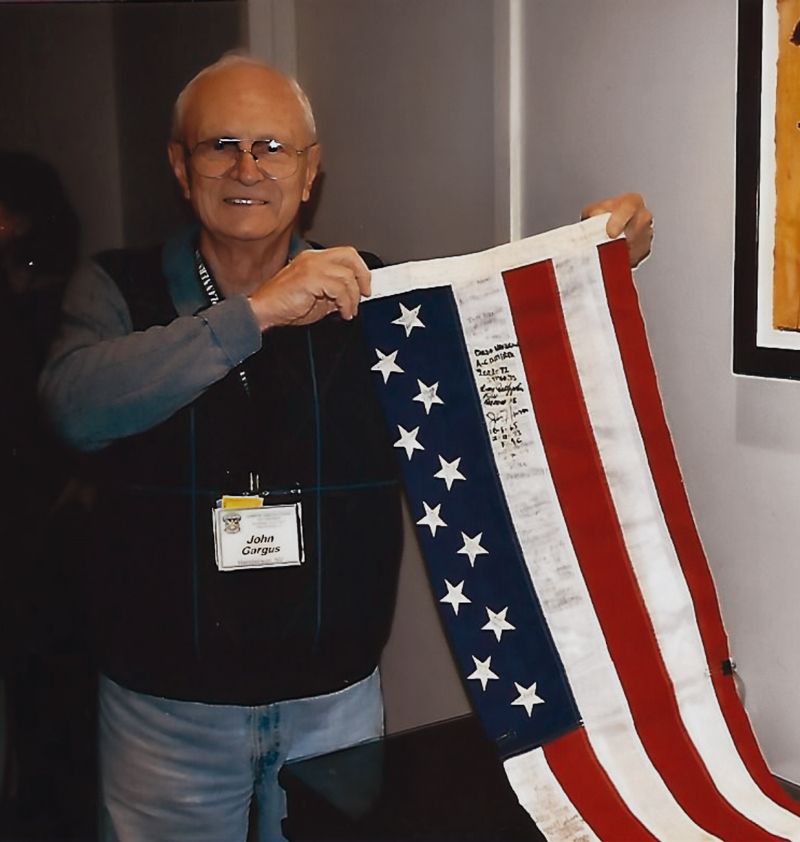
Colonel John Gargus displays the signatures on his flag.
We had an outstanding mission planning team. We planned for every eventuality and trained repetitiously, devising safe maneuvers for our odd flight formations. Once the MIG cap with the Wild Weasels, F-4s and the Navy from the Gulf of Tonkin got incorporated into the overall plan, we knew that the safety of the low flying helicopters and the A-1Es of the raiding force was assured. The F-105, Wild Weasels and the F-4s would draw the AAA and SAM fire and insure that the MIGs would stay on the ground. Our two C-130s had the capability to take care of themselves. My only concern for the C-130s was the possibility that someone from the MIG cap could get shot down and require a Fulton recovery. That would call for one of the C-130s to drop a recovery kit and then return for a pick up. Should this occur in a hostile environment, in an area with AAA and small arms coverage, the low and slow flying C-130 on a predictable course to intercept the balloon supported lift line would be in serious trouble. But then how many North Vietnamese would know that we had such a capability? And how much could they see at night? I felt that we still had the element of surprise on our side and pull it off just like we used to do it in demonstrations and in training. That, however, would not be true if the downed crew needed assistance from the A-1Es. Their fire suppression would pinpoint the area our C-130 would have to fly through.
I prepared myself even for this unlikely turn of events. As a soldier, I want to have a US flag at my funeral. So I went to the BX at Eglin and bought a 3×5 flag that I would take with me on the mission. As on my prior tour in Vietnam, I again never shared my apprehensions about becoming a POW with anyone. When the time came to get dressed for the raid, I wrapped the flag around my chest and flew with it around me. In this way I was assured that if my end would come, be it suddenly, or during evasion, I would have the Old Glory on my body.
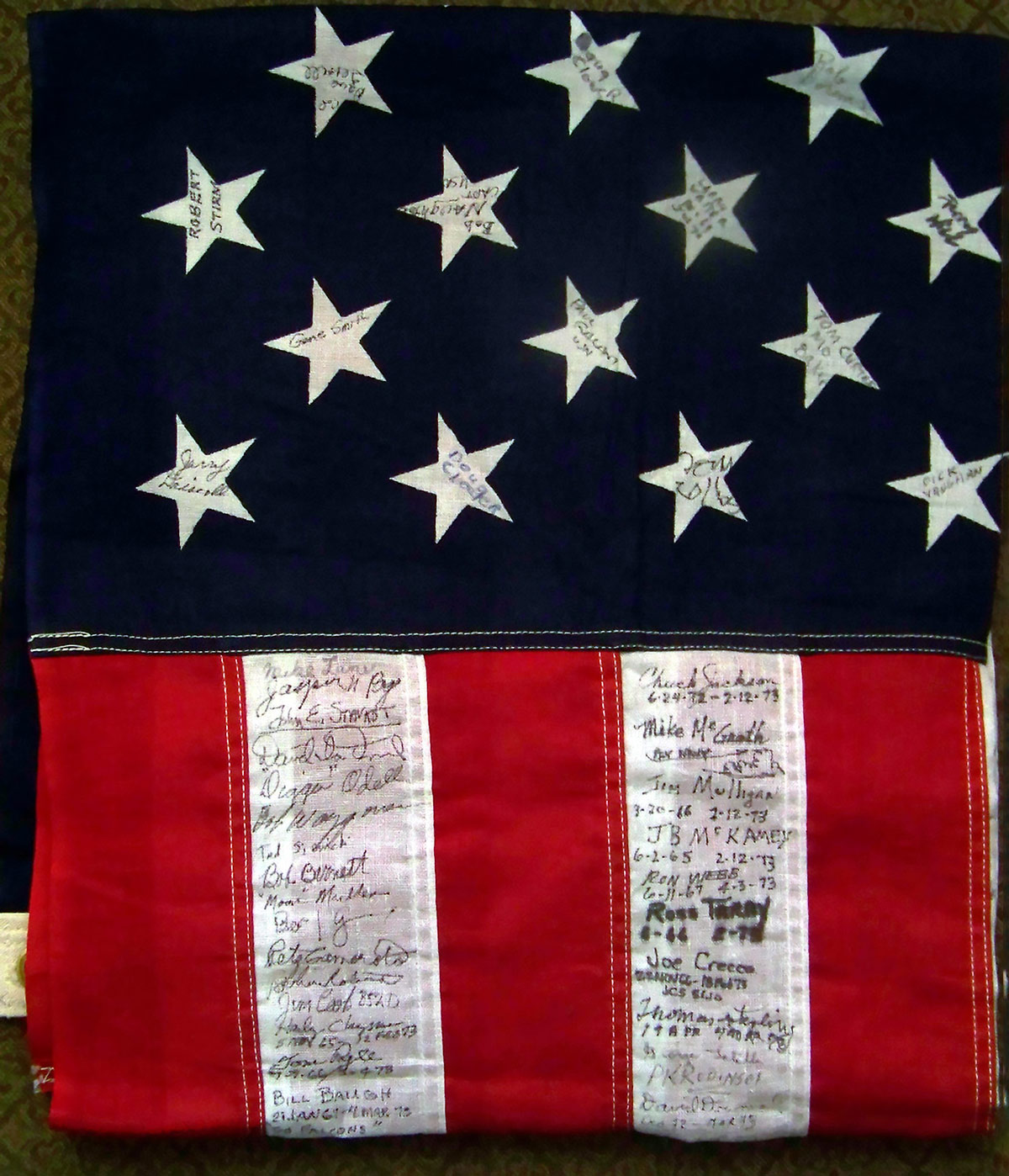
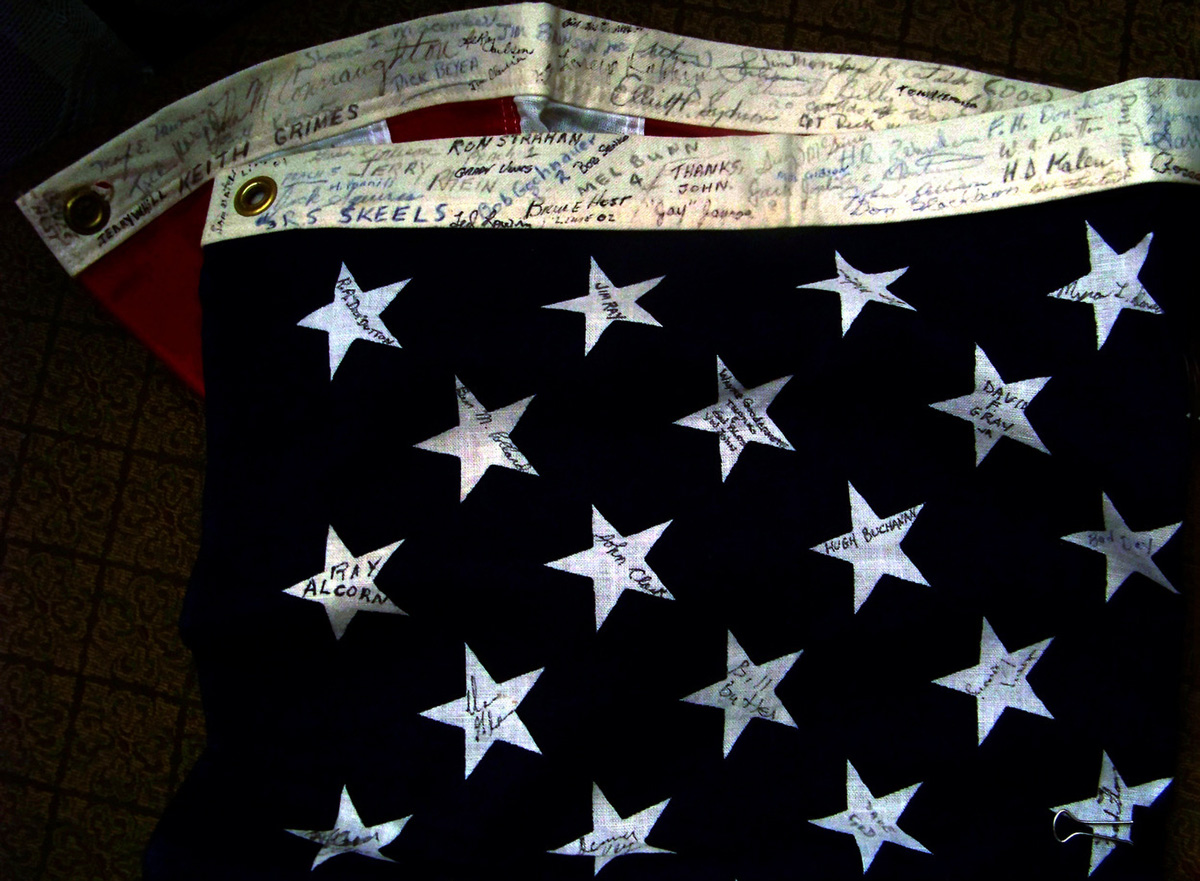
I still have this flag. It has become one of my most prized possessions. I took it off my body after landing at Udorn and started collecting signatures of my fellow raiders on its white canvas border. Then while I lived in Austin, Texas, former Son Tay POW Dick Dutton invited me to their NAM-POW reunion. There I began collecting signatures of Son Tay POWs in the white stars of my flag. Later, I began soliciting signatures from all former POWs. My quest for them is not yet completed. My family agreed to donate this flag to the Maine Military Museum in South Portland, Maine, after I join the ranks of all my raid colleagues who predeceased me.
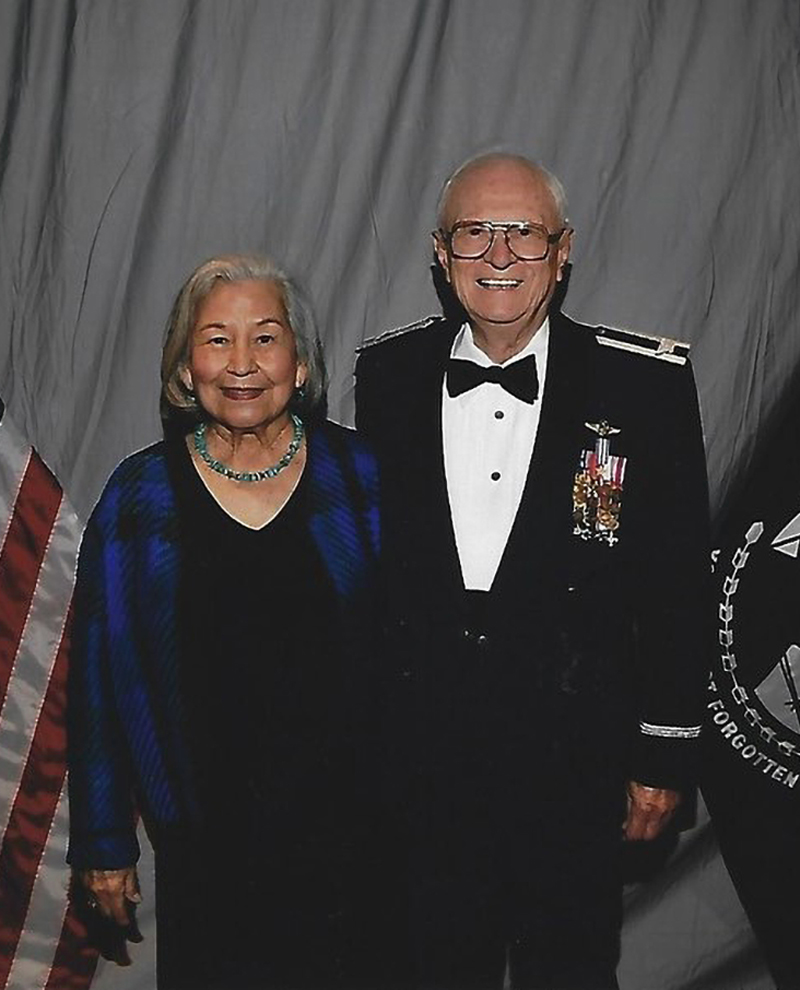
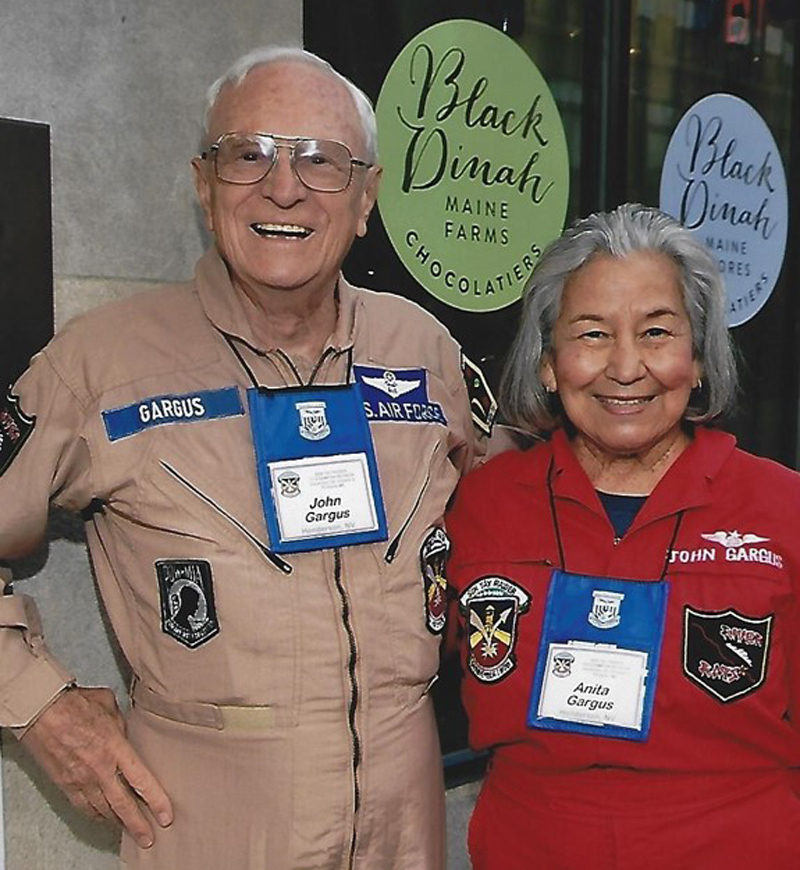
Col. John Gargus and wife Anita at the 2019 NAM/POW Reunion in Portland, Maine. They suited up for the customary flight suit welcome party and also attended the formal banquet. The reunion was held at the Maine Military Museum, which has more Vietnam POW memorabilia than any other in the nation. The Gargus family has decided that Col. Gargus’ Son Tay raid flag will go on display here once he is gone.
*Editors Note: To learn about Fulton recovery, also known as STARS, read Col. Gargus’ article “STARS — Surface to Air Recovery System” published in the April 2019 Sentinel.
**Read Col. Gargus’ article “Air Operations for the Son Tay Raid” in the November 2016 Sentinel.
About the Author
John Gargus was born in Czechoslovakia from where he escaped at the age of fifteen when the Communists pulled the country behind the Iron Curtain. He was commissioned through AFROTC in 1956 and made the USAF his career. He served in the Military Airlift Command as a navigator, then as an instructor in AFROTC.
He went to Vietnam as a member of Special Operations and served in that field of operations for seven years in various units at home and in Europe. He participated in the air operations planning for the Son Tay POW rescue and then flew as the lead navigator of one of the MC-130s that led the raiders to Son Tay, for which he was awarded the Silver Star.
His non-flying assignments included Deputy Base Command at Zaragoza Air Base in Spain and at Hurlburt Field in Florida and a tour as Assistant Commandant of the Defense Language Institute in Monterey, California.
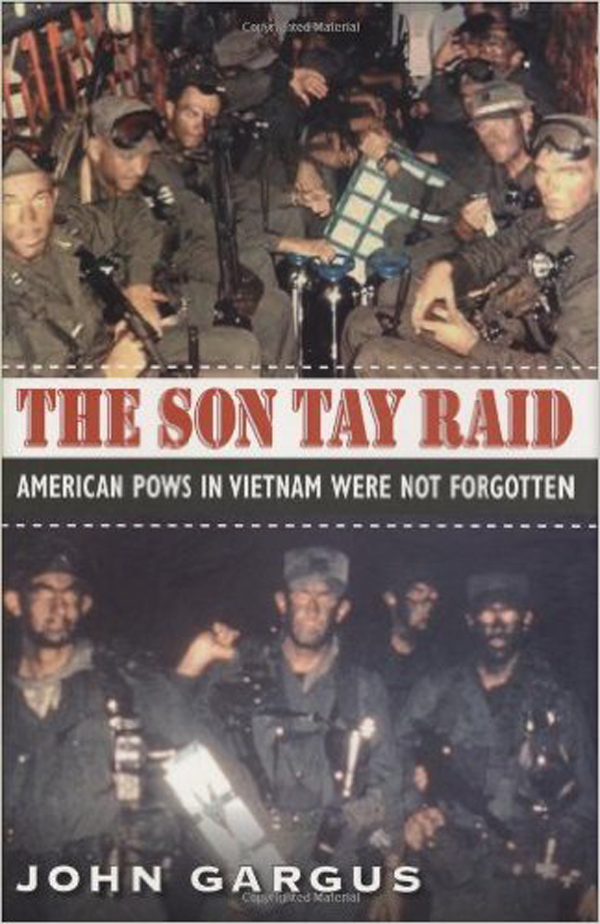
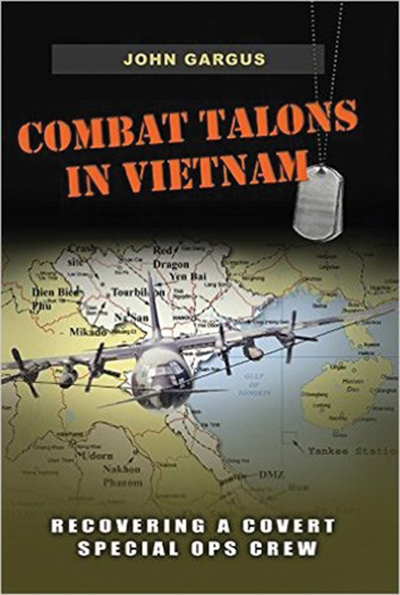
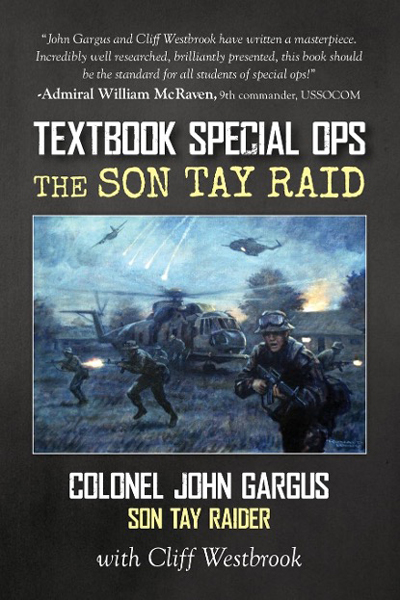
He retired in 1983 after serving as the Chief of USAF’s Mission to Colombia, having accrued more than 6,100 flight hours, including 381 combat hours in Southeast Asia. In 2003 he was inducted into the Air Commando Hall of Fame. He has authored two books, The Son Tay Raid: American POWs in Vietnam Were Not Forgotten, published in 2007, and Combat Talons in Vietnam: Recovering a Covert Special Ops Crew, published in 2017. He has co-authored with Cliff Westbrook Textbook Special Ops: The Son Tay Raid, which was released in September, 2025. He has been married to Anita since 1958. The Garguses have one son and three daughters.
Leave A Comment