300th SPECIAL FORCES Operational Detachment (SFOD) – USAR
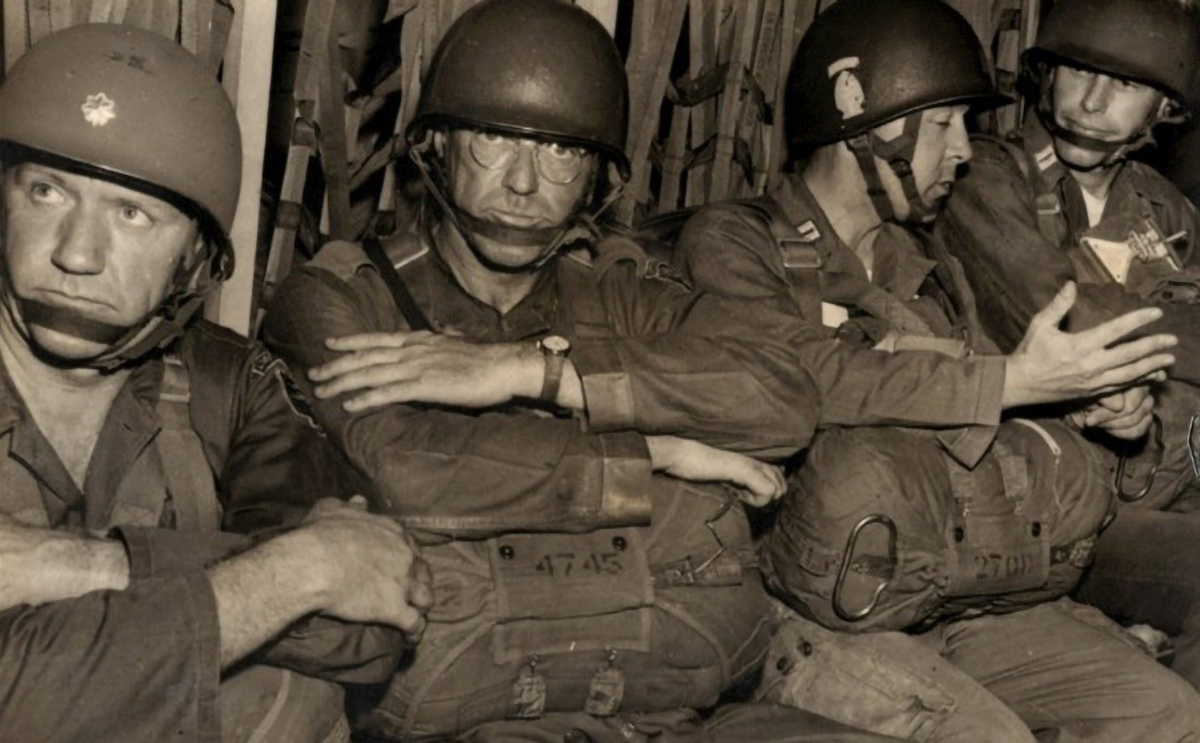
Left to right, MAJ Frank West, COL William McArthur, CPT Robert Rutan, CPT Jack Marshall. (Photo courtesy of McArthur family)
By Matt Dorn
Special Forces was limited to active duty in 1952. It was not until 1955 that US Army activated the first Special Forces reserve unit—the 300th Special Forces Operational Detachment (SFOD). Organized by Colonel William S. McArthur, a WW2 vet, local farmer, and resident of the region.1 2
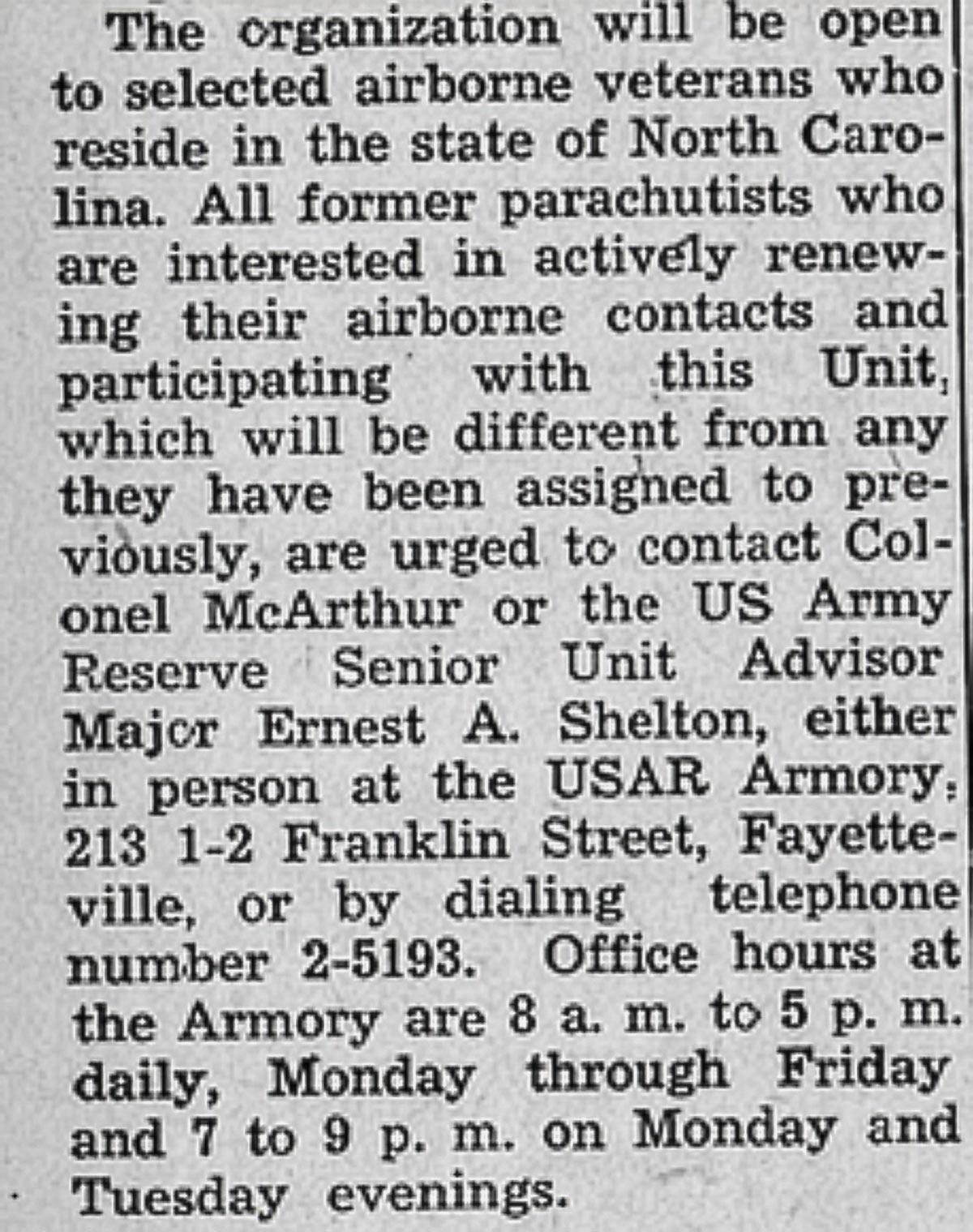
After attending a Special Forces Officers Orientation Course, COL McArthur and MAJ Frank West became convinced the concept was beneficial to the US Army Reserve program.3 COL McArthur undertook this tremendous task, encouraged by COL Edson Raff, commander of US Army Psychological Warfare Center and School and former commander of the 77th SFG (A).4 The 300th SFOD was formed in Fayetteville, NC on 31 Mar 1955, under the sponsorship of the 77th SFG(A).5 6 The unit’s initial strength was four officers and one enlisted: COL McArthur, MAJ West, CPT Marshall, CPT Rutan and CPL Richard Caldwell.7 By Nov 1995, the unit gained its full TO&E strength of six officers and eighteen enlisted.8 9 The 300th SFOD adopted the green beret as their unit head gear. Local newspapers pictured CPT Jack Marshall, SGT Roger Goetsch and PVT LeVaughn Bullis wearing berets10 and discussed the green beret wearing 300th, marching in the local festival parade.11 “Most people thought we were foreign troops training at Fort Bragg, because we were wearing the Green berets and we didn’t have any insignia on our uniforms.”12 The 300th SFOD created, their own unique unit crest and adopted the 77th SFG(A)’s motto as the own “Anything, Anyplace, Anytime, Anyhow.”13 14
Members of the newly created unit were WWII combat veterans and former paratroopers. After three years with the 82nd ABN, SGT Roger Goetsch joined the 300th SFOD in the summer of 1955. SGT Goetsch said the unit was officer heavy. SGT Goetsch said the officers were WW2 guys and were a bit older. “Those officers were gung-ho and they really got after it. We trained hard and all the time.”15
Annual Training 17th SFG History
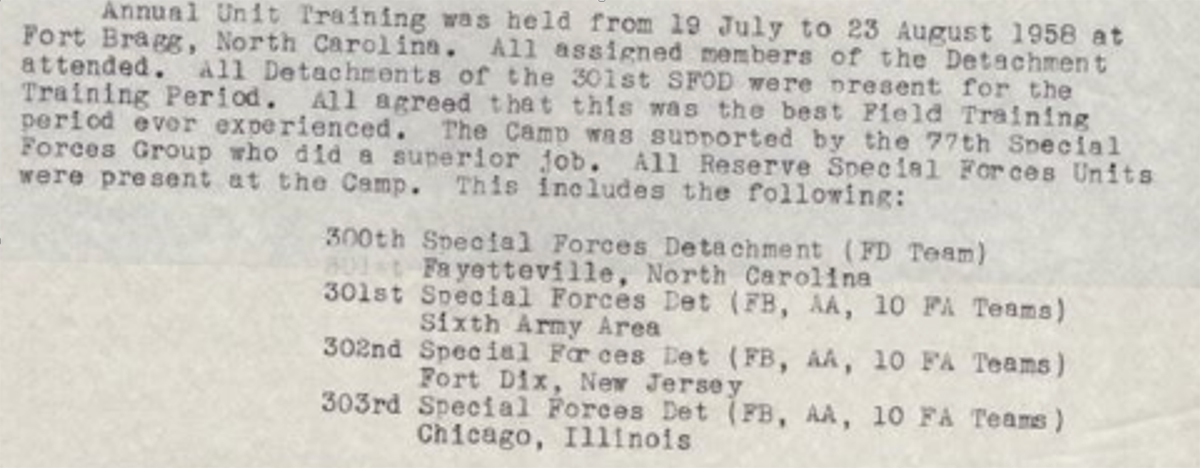
During the year, the weekly reserve center training consisted of common Army tasks. The 2-week annual training consisted of Special Forces topics of airborne operations, small boat and underwater training at Camp Lejeune, mountain training in Pisgah National Forest, survival courses at Camp Mackall, and medical, communications, weapons, and demolitions training, all under the support of the 77th SFG(A).16 17 18
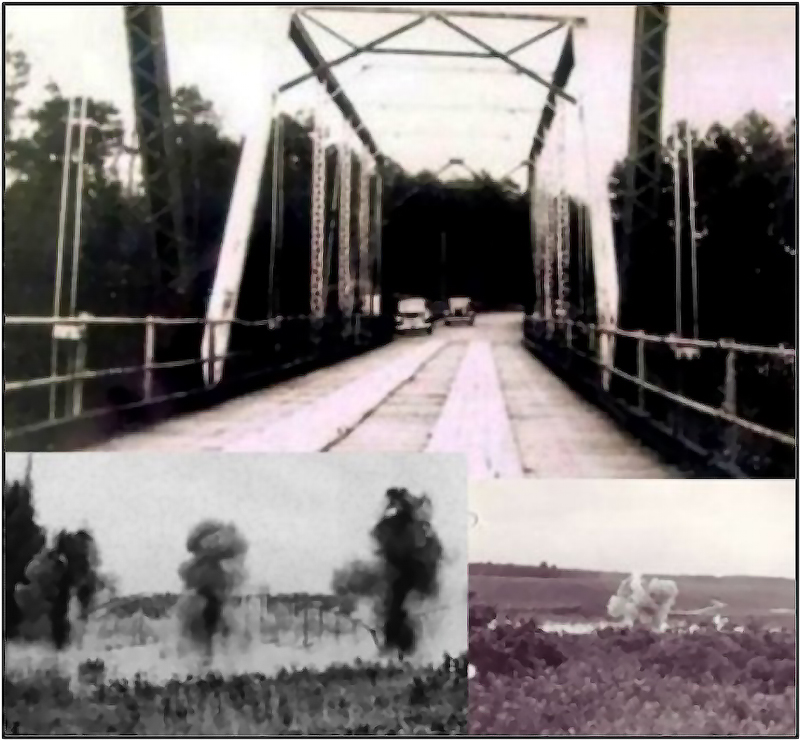
By May 1956, the US Army formed three additional units in the USAR: 301st (San Francisco, CA) 302nd (Chicago, IL) 303rd (Kearny, NJ). The 300th would serve as the Headquarters. The SFODs were expected to fall under 77th SFG(A), during times of war, providing the necessary replacements and allow for the expansion of the Special Forces.19 During July of 1958, with 77th SFG(A) as trainers, the 4 SFODs conducted their first field exercise as a unit at Ft Bragg.20 The unit was called upon to participate in local “real world” missions. In the summer of 1962, the demolition of Steel-span bridge, as part of the Lake Norman Dam project was tasked to CPT Douglas Horne’s team.21
In 1957, the U.S. Army reorganized under the short-lived Pentatomic structure. As part of the reorganization, the Combat Arms Regimental System (CARS) concept was designed to perpetuate regimental histories. Under the CARS, the 1st Special Forces Regiment was created, as the “parent regiment” for Special Forces units in all three US Army components (AC, NG, USAR).22 This arrangement was unique, the first time a regimental history was shared between the three components. On 15 April 1960, the entire SF establishment was formally brought under CARS. This paper scheme initially provided a maximum of 24 AC SF Groups and on 14 December 1960, seven Groups were reallocated from AC to USAR.23 After 5 five years of existence, the 300th was deactivated in 1960 and then reactivated as B co 13th SFG(A). In 1965, the reserves were streamlined; all units not part of the Strategic Reserve were realigned. 13th SFG(A) was deactivated and B co 13th SFG would become F co 11th SFG(A).
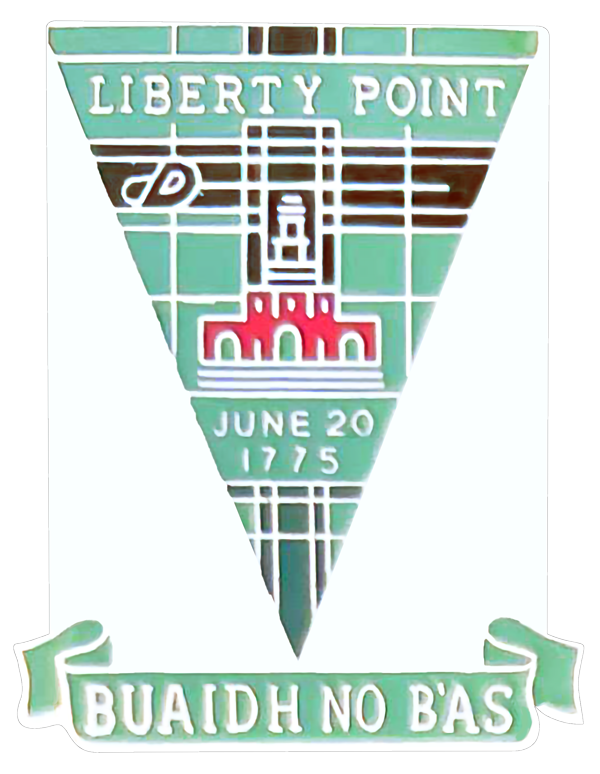
The 300th SFOD unique Distinctive Unit Insignia-DUI was designed and procured by the unit itself. As with the 10th SFG(A), the 77th SFG(A)and the 1st SFG(A), the US Army did not authorize the insignia. The originator of the DUI is unknown, LTC Frank West, first XO for 300th, suspected it was COL McArthur who influenced the design. The unit’s DUI reference to the local region’s history: the Fayetteville Market house, Liberty Point, an old Gaelic motto, a Scottish Tartan and date. The Market House served as a market house and town hall in the center of Fayetteville, North Carolina. Fayetteville was the capital of North Carolina from 1789 to 1794. Liberty Point and June 20, 1775, both refer to when a group of fifty-five patriots signed an early Declaration of Independence, commonly called the Cumberland Association or Liberty Point Resolves. The Tartan is a “Art Neuvo” version of the McArthur Scottish Tartan. The motto “Buaidh no Bas” (Victory or Death) was a traditional Scottish War cry.24
Endnotes
1. “Army’s Only Special Forces Reserve Unit Trains in N.C.,” Army Times, 19 Nov 1955 click to return
2. Interview with son, COL William S. McArthur, May 2025 click to return
3. “Unique Reserve Outfit” Sanford Herald, 15 Nov 1955 click to return
4. Ibid. click to return
5. “Army’s Only Special Forces Reserve Unit Trains in N.C.,” Army Times, 19 Nov 1955 click to return
6. A Concise History of the US Army Special Forces with Lineage and Insignia, Geoffrey T. Braker click to return
7. “Army’s Only Special Forces Reserve Unit Trains in N.C.,” Army Times, 19 Nov 1955 click to return
8. Ibid. click to return
9. “Unique Reserve Outfit” Sanford Herald, 15 Nov 1955 click to return
10.Ibid. click to return
11. A Concise History of the US Army Special Forces with Lineage and Insignia, Geoffrey T. Braker click to return
12. Interview with SGT Roger Goetsch, April 2025 click to return
13. “Army’s Only Special Forces Reserve Unit Trains in N.C.,” Army Times, 19 Nov 1955 click to return
14. Interview with son, COL William S. McArthur, May 2025 click to return
15. Interview with SGT Roger Goetsch, April 2025 click to return
16. “Army’s Only Special Forces Reserve Unit Trains in N.C.,” Army Times, 19 Nov 1955 click to return
17. “Unique Reserve Outfit,” Sanford Herald, 15 Nov 1955 click to return
18. Interview with SGT Roger Goetsch, April 2025 click to return
19. Ibid click to return
20. 301st SFOD /17th SFG Official History click to return
21. Life in the Rear View Mirror by COL Douglas Horne click to return
22. “Army Guard Reorganizes SF Troops,” Army Times, 6 June 1961 click to return
23. John K. Mahon and Romana Danysh, Infantry, Part I: Regular Army, Army Lineage Series, rev. ed., (Washington, DC, GPO: 1972) click to return
24. The Pentagon Papers, The Senator Gravel edition, Beacon Press, Boston, Vol. II, p.p.201-276. click to return
About the Author
Matt Dorn is a retired MSG, who served with the 1st SFG and the 20th SFG, and a member of the Special Forces Association. He is currently working on the history of the USAR/ARNG Special Forces units. Click here to learn more about this project and how you can contribute to this effort.
[…] Special Forces was limited to active duty in 1952. It was not until 1955 that US Army activated the first Special Forces reserve unit—the 300th Special Forces Operational Detachment (SFOD). Organized by Colonel William S. McArthur, a WW2 vet, local farmer, and resident of the region. 1 2 […]