SOG Recon
Versus
NVA Sappers
By John S. Meyer
In late 1967 and early 1968 The North Vietnamese introduced a deadly new combat element into the eight-year secret war of the Military Assistance Command Vietnam – Studies and Observations Group (SOG)– NVA sapper teams, highly trained communist soldiers with one mission: Kill SOG Americans.
During the summer of 1968 – the deadliest year of the Vietnam War, recon team members talked among themselves about the “rumor” of NVA sappers, wearing only loincloths and bandanas, armed with AK-47s and hand grenades. During a pre-mission briefing for a target in the A Shau Valley, in August 1968, S-3 warned of reports of NVA sappers.
Tragically, on the morning of August 23, 1968, at FOB 4 in Da Nang, rumors became real with horrific results as a well-planned, early morning sapper attack left 16 Green Berets dead – the highest total of SF killed in one day in SF history.
Rewind to New Year’s Eve 1968 at FOB 1 where Camp Commander Major William Shelton ordered extra base security, including having all reconnaissance teams and Hatchet Force personnel on alert in case the local VC or NVA attacked. Months earlier, a VC had placed a marker on the roof of the Green Beret Lounge, which VC or NVA mortarmen could use as a target guide-on. In preceding days, one of the Hatchet Force NCOs had found a camp worker carefully counting his steps as he walked away from the clubhouse. That was a common practice for mortarmen or artillerymen to improve their accuracy on a proposed target. As we prepared to ring in the New Year, the jukebox blared, the drinks flowed, the men played the slot machines, and the poker stakes were high. But there was an edge to the evening’s festivities. Shelton ordered the club closed early, in case of enemy activity.
Before it closed, conversation around our poker table turned to the FOB 4 team on the ground in the MA target area, around the DMZ river as it extends into Laos. One-zero Rodney Headman told us how happy he was to have been extracted in time to spend New Year’s Eve at FOB 1, instead of across the fence. A few comments were made about how the team in the target area planned to celebrate New Year’s Eve. Someone mentioned that the Americans had taken a bottle of Jim Beam to the field for the occasion.
Headman and I gave each other a skeptical look. Personally, I wondered how they could carry a glass bottle and not break it. Another recon man said the two SF troops were unhappy about having to run a target on New Year’s Eve. However, the S-3 brass cut them no slack and sent them out anyway. I knew one of the team members, Wayne Hawes, from Special Forces Training Group and considered him a good recon man. He had served in Canada’s military before joining the US Army and becoming a Green Beret. I loved his biting sense of humor.
The other two Americans, Jim “Mickey” Hall and Mike McKibban, I knew only slightly. Hall had been in the Army 11 years and was highly respected. McKibban got bored at West Point, thought he’d have more fun in Special Forces, and wound up at FOB 4.
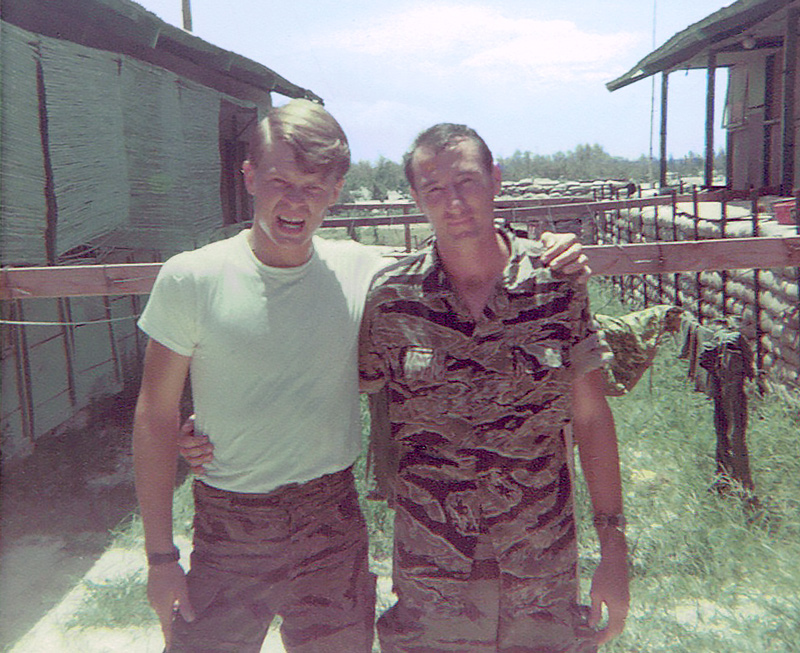
John Meyer and Robert J. “Spider” Parks in 1968 at FOB 1 Phu Bai. (Photo courtesy John S. Meyer)
Around 2200, Robert J. “Spider” Parks told us that he and the Covey pilot were going to fly into the team’s AO at midnight to wish the men a “Happy New Year.” While Spider’s O-2 was over the target area, the mortarmen at FOB 1 lit up the sky with flares of various colors and other rudimentary explosive devices, welcoming in the New Year.
When he returned to base, Spider told me it sounded as though the Americans had too much Jim Beam. He gave the team holiday greetings and a reminder that they were in Laos. The only activity we had at FOB 1 was from a poorly trained VC mortar crew who lobbed some mortar rounds at us, but they landed in the ARVN compound to the south instead.
Bright and early on 1 January 1969, Spider left FOB 1 early for a commo check with RT Diamondback. He talked to the team’s radio operator and returned to Phu Bai. Later in the morning, however, the 1-2 requested a tactical extraction from the AO because there had been a lot of enemy activity around them. While Spider was talking to the 1-2, he heard a burst of AK-47 fire and screams. Then silence. For a long time he was unable to raise anyone on the radio. He knew something was terribly wrong. He finally got an indigenous team member who said that the Americans were dead, but the indidge had survived the attack.
Back at FOB 1, around 1200 hours, someone from the commo shack came into the club and said a Vietnamese team member was on the radio, talking to Spider. That was very bad news. Several of the recon team members in FOB 1 headed toward the commo shack. Before we got there, Tony Herrell, a veteran recon man, came around the corner with more bad news. “They were hit by sappers. It doesn’t look good,” he said.
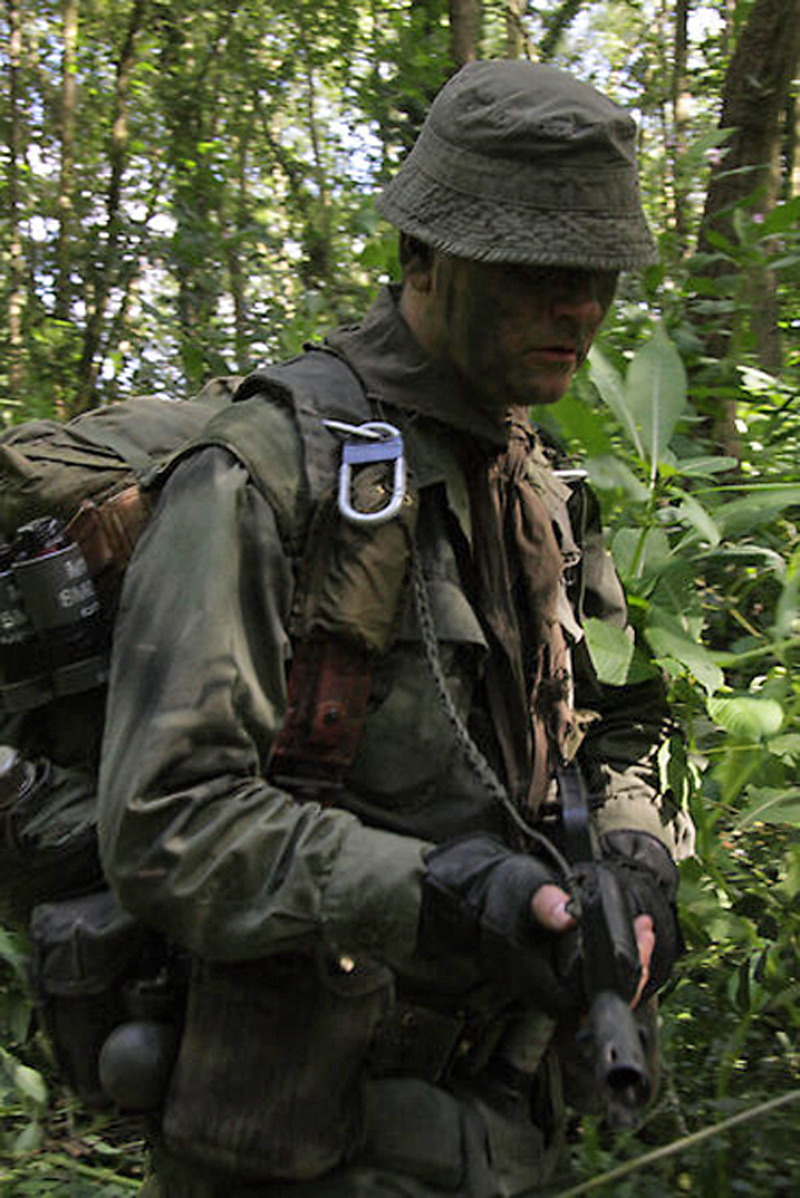
SOG trooper on patrol. (Photo courtesy John S. Meyer)
As always, when a team was in trouble, several team members pulled out their PRC-25s, attached a long antenna, and monitored any radio traffic they could pick up. From FOB 1, SF troops usually could hear the Covey rider talking to the team on the ground. Transmissions from the team, however, were too far away to be picked up in Phu Bai. The only news this first day of the New Year was bad. We could hear the Covey rider patiently talking to the Vietnamese team members on the ground. They were obviously shaken. At first, we assumed the Vietnamese team members were wounded. But as time passed, it was apparent that the three Vietnamese were alive and had suffered no combat wounds. In addition, there were no NVA casualties.
It appeared the Americans had been slow to react to the deadly sapper attack. In a matter of seconds, the sappers killed the three SF troops and chose to leave the South Vietnamese team members alive. The news about the sappers was a triple dose of bad news: First, we had three dead Green Berets. Second, reports we had received for months about NVA sappers being a lethal force in the areas of operations in Laos and Cambodia were now confirmed. Third, by killing only the Americans, the NVA pulled off a psychological coup. By leaving the Vietnamese team members alive, their survival would plant seeds of doubt and dissension between SF troops and our little people.
That tactic worked momentarily at Phu Bai. Some of the U.S. personnel in camp, those who didn’t work daily with the little people, openly questioned the loyalty of the Vietnamese team members. (Autopsies of the three Americans would later confirm that they were killed by enemy AK-47 rounds, not CAR-15 ammo.) I went over to the ST Idaho hootch and told Hiep and Sau to have the team be alert for any untoward comments from U.S. personnel in camp. I also asked them to learn as much as they could about the Vietnamese team members as quickly as possible. They later reported back that the Vietnamese men were solid recon men.
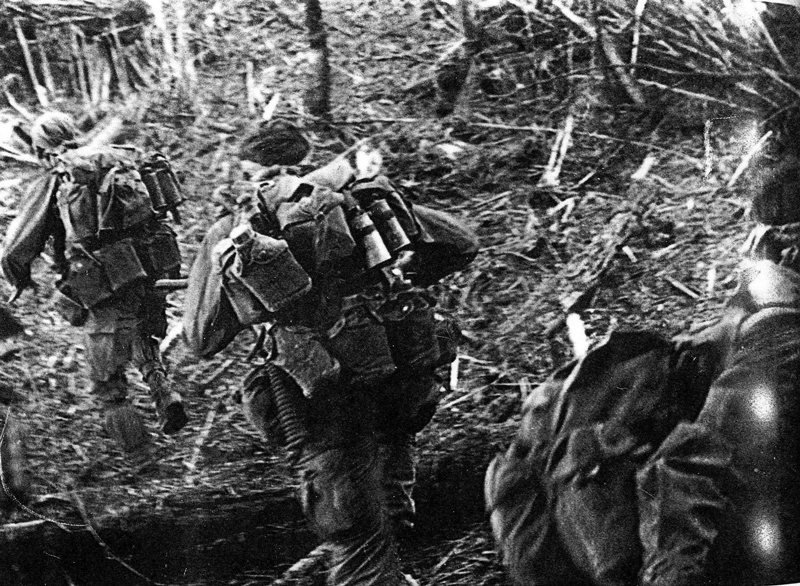
SOG on patrol. (Photo courtesy John S. Meyer)
I headed back to the comm center. The radio room usually took on an eerie silence after a team had been pulled out of a target. That afternoon was no different. The only sounds in the comm center were radio tones, hums and static while the men waited for the helicopters to return to base.
Whenever a team was hit as badly as this recon team had been, the comm center took on an additional somberness. On the first day of 1969, it was tomb-like. Three Americans dead, no apparent intelligence other than that all of SOG now knew that the NVA sappers were as good as they had been touted in earlier briefings.
For Herrell and me, it was hard to swallow because we had lost a friend. Forever. For several minutes we just sat there, deep in our own thoughts. It had been about ten minutes since the pilots had called in to report that all of the fateful team members had been recovered and were returning to Quang Tri.
None of the aircraft extracting the team received significant ground fire from the NVA. To me that was a definite indicator the NVA wanted to send a psychological message along with the carnage the sappers had wrought on that team. On 30 November, we had lost seven SF troops and an entire Kingbee crew. Thirty-two days later, we lost three Americans.
And since this was a secret war, Walter Cronkite could tell viewers that he no longer believed in the war, but he couldn’t tell the American public about another day in SOG.
I stood up and started to walk out of the comm center. A war-weary voice broke the long silence in the comm center with a short, clear transmission: “Happy New Year.” His words caught me off guard.
I thought of those three words in the context of the many close calls ST Idaho had survived since the day I joined it, the same day Sergeant First Class Glen Oliver Lane, Sgt. Robert Owen and an entire ST Idaho team had disappeared in the Prairie Fire AO. I thought of how every member of ST Idaho would probably have been killed in action had it not been for the heroics of Kingbee pilots, Marine and Army helicopter gunship crews and Uncle Sam’s Air Force.
On 1 January 1969, the NVA upped the ante and the thought of going across the fence with this new enemy element in the mix sent a sobering chill down my spine. I walked over to the club and had my first drink since August.
ST Idaho boarded Kingbees to launch into an MA target in another attempt to find the NVA gasoline pipeline.
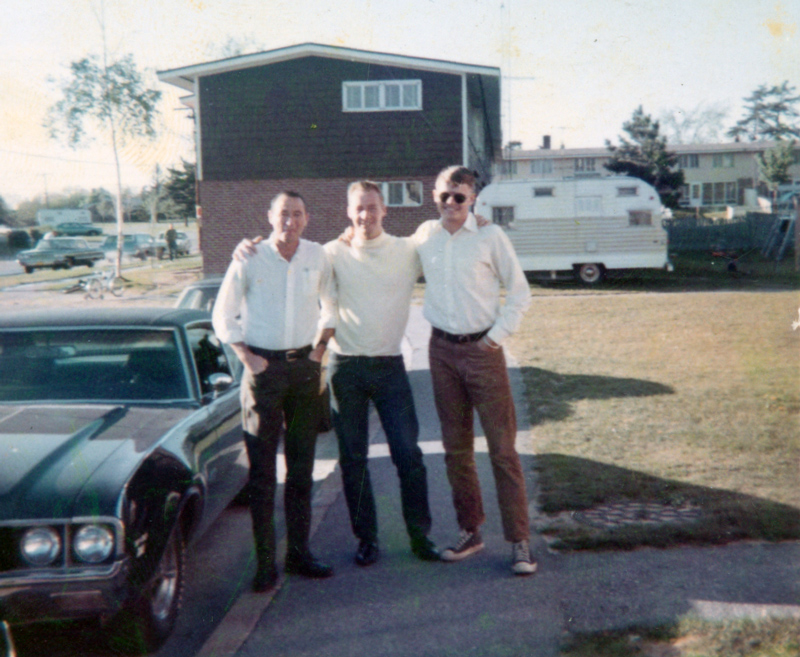
Summer 1969, Spider Parks, Don Wolken and John Meyer at Ft. Devens. (Photo courtesy John S. Meyer)
And while we headed north to Quang Tri, 101st Airborne Division choppers carried the six men south. When the choppers landed on the helicopter pad, Colonel Jack Warren ordered every man in FOB 4 out to the site. He was held in high regard by SF troops because he genuinely cared about his men. It had been said that because of his dedication to the SF mission and the men of SF, that he would never advance beyond the rank of colonel. He had remained in SF too long, a career decision the traditional Army hierarchy despised and punished.
This fateful team was from FOB 4, which Warren commanded. At the time, FOB 4 was transitioning into becoming Command and Control North (CCN) as part of a major consolidation of resources within SOG. FOB 1 would join FOB 4 in Da Nang. Where once there had been six FOBs, there would now be three bases, CCN in Da Nang, Command and Control Central (CCC) in Kontum, and Command and Control South (CCS) at Ban Me Thuot.
After the three corpses were unloaded from the helicopter, Warren gave a terse, teary-eyed speech to his captive audience. Warren warned everyone that if they were careless in the field, death was the result of that carelessness. Then he bent down, opened a body bag and picked up a portion of a body of one of the dead Americans. Now he was crying and screaming at his men to never be careless in the field. Warren was never the same after that. Neither was SOG. Rumors were replaced with deadly results.
RT Diamondback Members
KIA 1 January 1969
Photos and information courtesy Bonnie Cooper
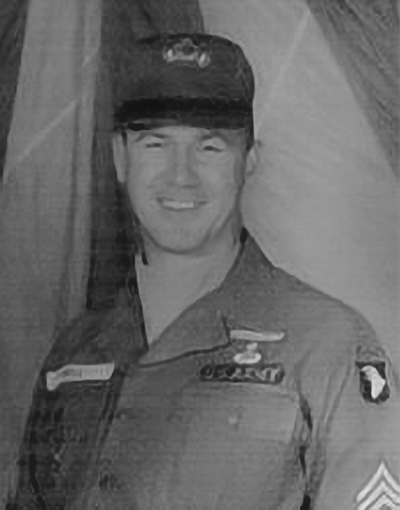
SSG JAMES MICHAEL “MICKEY” HALL, came from Benton, Kentucky and was buried in Marshall County Memory Gardens Cemetery in his hometown. He left behind a widow and three children, including a daughter born 11 days after his death. He was on the 4th month of his third tour of duty in Vietnam. He had been in the Army 11 years. His awards included the Bronze Star for meritorious service.
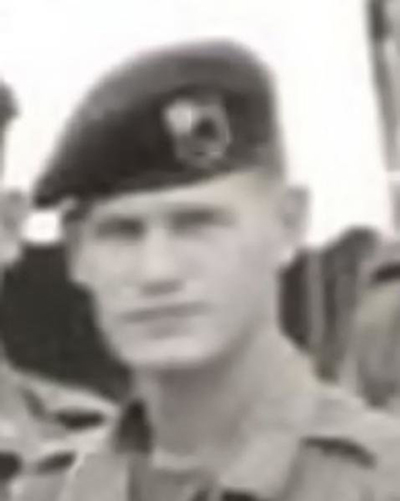
SP4 WAYNE LINDSAY HAWES was a native of Canada. He was survived by his wife Jacqueline, his mother Mrs. Elsie A. Hawes and a brother, Clinton Darrell. He was buried with full military honors on January 23, 1969 at Forest Lawn Cemetery (Burnaby, British Columbia). Wayne’s name is on the Canadian Vietnam Veterans Memorial (The North Wall) in Windsor, Ontario, Canada.
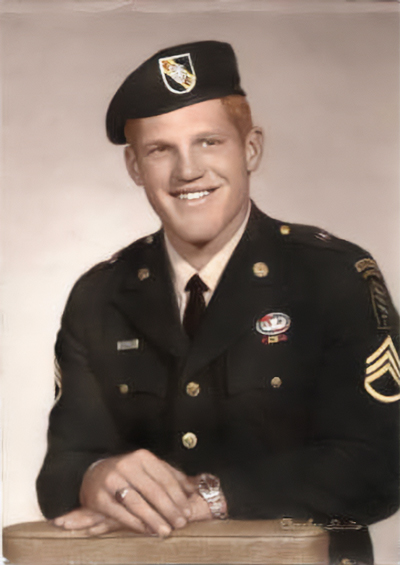
SSGT MIKE McKIBBAN was born in Vancouver, Washington but after his mother’s death, he was adopted by his Uncle John Parisotto at the age 7 and grew up in Kalmath Falls, Oregon. At age 10 he was an award winning marbles player. In high school he wrestled and played football. For a short time he attended the United States Military Academy (West Point). He was survived by his adoptive parents and sisters Sue, Toni, Linda; brother John and his biological father James F. McKibban.
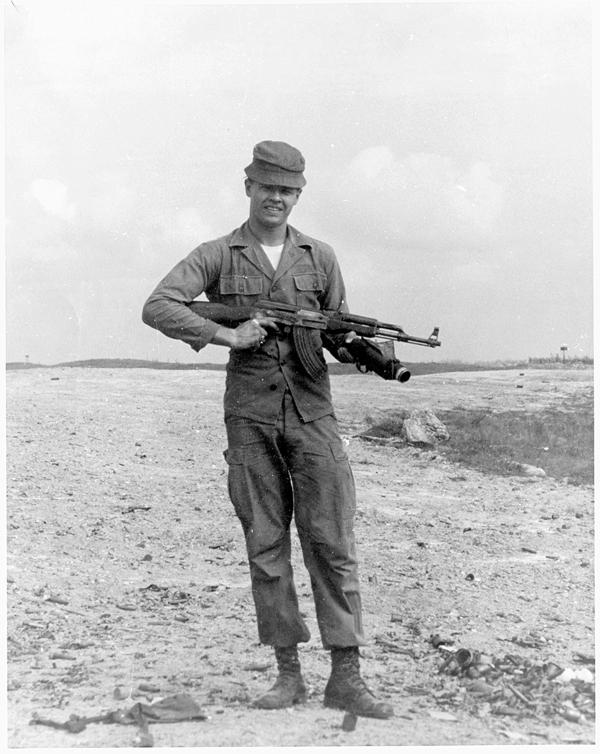
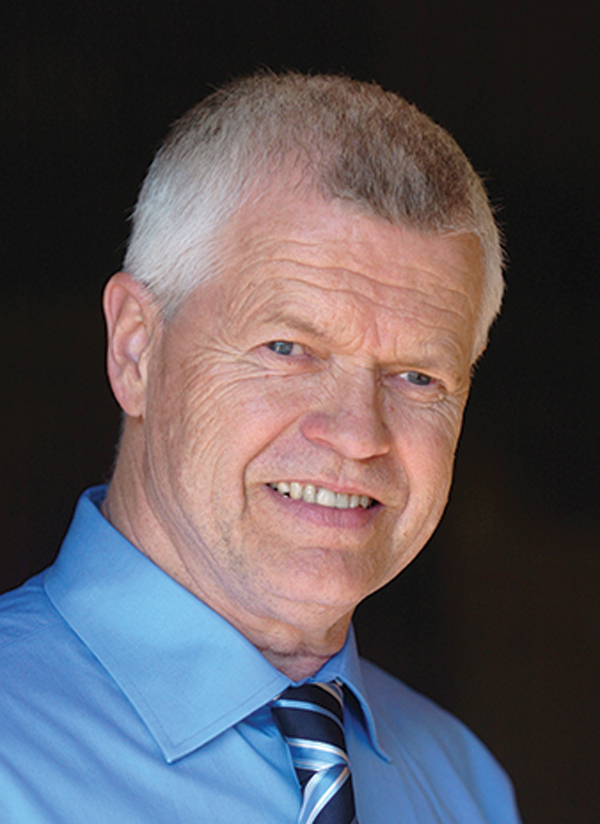
ABOUT THE AUTHOR — John Stryker Meyer entered the Army Dec. 1, 1966. He completed basic training at Ft. Dix, New Jersey, advanced infantry training at Ft. Gordon, Georgia, jump school at Ft. Benning, Georgia, and graduated from the Special Forces Qualification Course in Dec. 1967.
He arrived at FOB 1 Phu Bai in May 1968, where he joined Spike Team Idaho, which transferred to Command & Control North, CCN in Da Nang, January 1969. He remained on ST Idaho to the end of his tour of duty in late April, returned to the U.S. and was assigned to E Company in the 10th Special Forces Group at Ft. Devens, Massachusetts, until October 1969, when he rejoined RT Idaho at CCN. That tour of duty ended suddenly in April 1970.
He returned to the states, completed his college education at Trenton State College, where he was editor of The Signal school newspaper for two years. In 2021 Meyer and his wife of 26 years, Anna, moved to Tennessee, where he is working on his fourth book on the secret war, continuing to do SOG podcasts working with battle-hardened combat veteran Navy SEAL and master podcaster Jocko Willink.
Visit John’s excellent website sogchronicles.com. His website contains information about all of his books. You can also find all of his SOGCast podcasts and other podcast interviews. In addition, the website includes in stories of MACV-SOG Medal of Honor recipients, MIAs and a collection of videos.
Leave A Comment