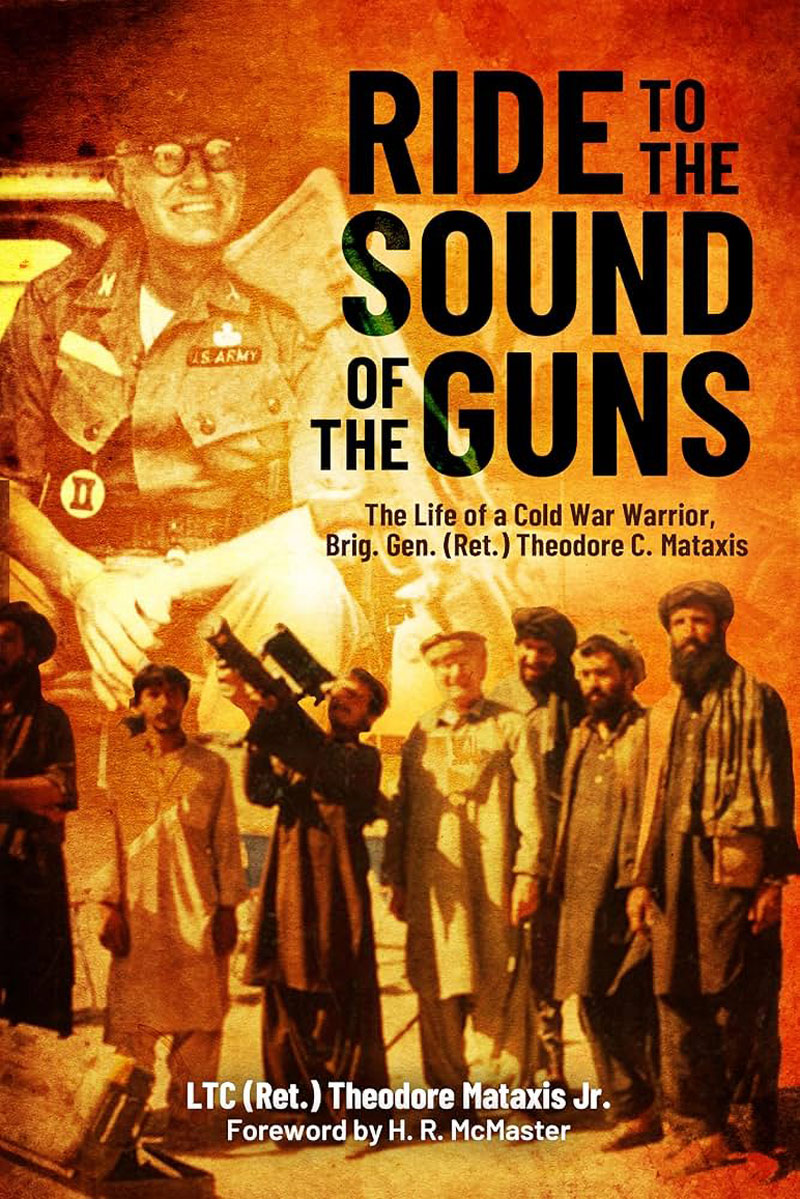
Ride to the
Sound
of the Guns:
The Life of a Cold War Warrior,
Brig. Gen. (Ret.)
Theodore C. Mataxis
By H. R. McMaster Lt. Gen., US Army (Ret.)
Forward from Ride to the Sound of the Guns: The Life of a Cold War Warrior, Brig. Gen. (Ret.) Theodore C. Mataxis by LTC (Ret.) Theodore Mataxis Jr., published by Casemate, August 15, 2025, pages ix-xi, used with permission.
In Ride to the Sound of the Guns, Brigadier General Theodore Mataxis’s son, Lieutenant Colonel (Ret.) Theodore Mataxis Jr., has written a memoir of his father that not only illuminates an extraordinary career, but also reveals the character of a man who exhibited tremendous courage, intellect, and compassion.
Brigadier General Mataxis was a prepossessing figure. He seemed intimidating through the eyes of a 14-year-old boy as I arrived at Valley Forge Military Academy and College as a high school freshman in August 1976. When I first saw him, he was in his dress greens army uniform with the stars on his shoulder boards gleaming in the hot summer sun. I thought that this barrel-chested, fit man with a shaved head was a dead ringer for the actor and World War II veteran and son of Greek immigrants, Telly Savalis. I was an avid consumer of military history and movies and was a fan of many of the World War II movies in which Savalis often played the role of a tough, irascible sergeant, like Sergeant Guffy in the 1965 film The Battle of the Bulge. I would soon learn that Mataxis’s true exploits across three wars far exceeded any Hollywood heroics.
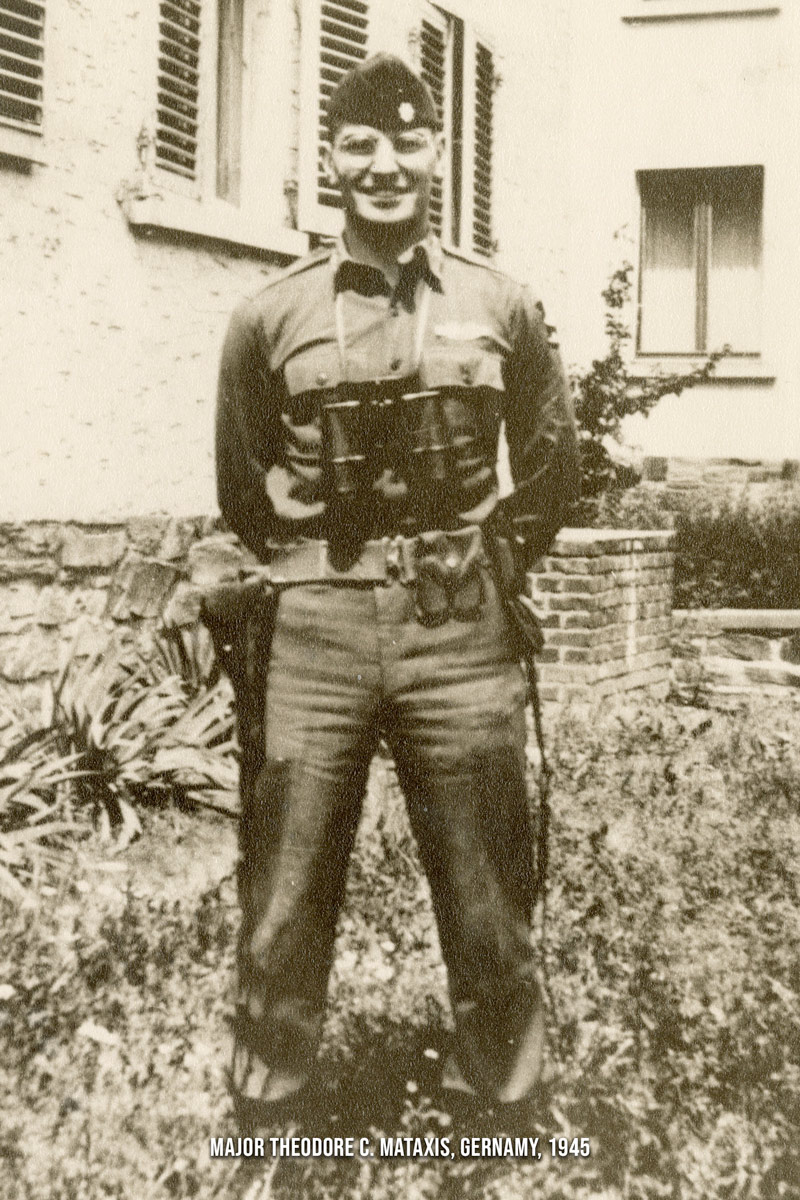
Major Theodore C. Mataxis, Germany, 1945
Mataxis’s record surpasses fictional stories in literature as well as film. His career and character resonate with Anton Myrer’s portrayal of Sam Damon, the strong, principled, and dedicated soldier in the novel Once an Eagle. Mataxis commanded a battalion in combat in World War II at the age of 26 and a regiment in the Korean War at the age of 36. He served for four years in Vietnam and Cambodia.
I had the privilege of getting to know General Mataxis well during my high school years at Valley Forge and we stayed in contact after I departed for the United States Military Academy at West Point. We corresponded across most of my subsequent career in our army. His intimidating countenance belied a deep concern for the young cadets of Valley Forge, and I remember fondly our many conversations over those years, even those which followed adolescent indiscretions on my part. Mataxis emphasized the tenets of leadership in our army. He told us that army leaders must always put mission accomplishment and the survival and well-being of those they lead before their own well-being. He described how he fostered trust, confidence, and cohesion among soldiers as the key ingredients for courage in battle. Trust, confidence, and cohesion, he told us, form psychological and emotional bulwarks against fear and inspire soldiers to act in ways contrary to the natural preoccupation with self-preservation. I remember him saying that good army teams take on the quality of a family in which the teammates’ sense of honor make them more afraid of letting one another down than they are of the enemy’s bullets. All of this rang true to me as I prepared soldiers for and led them in battle years later.
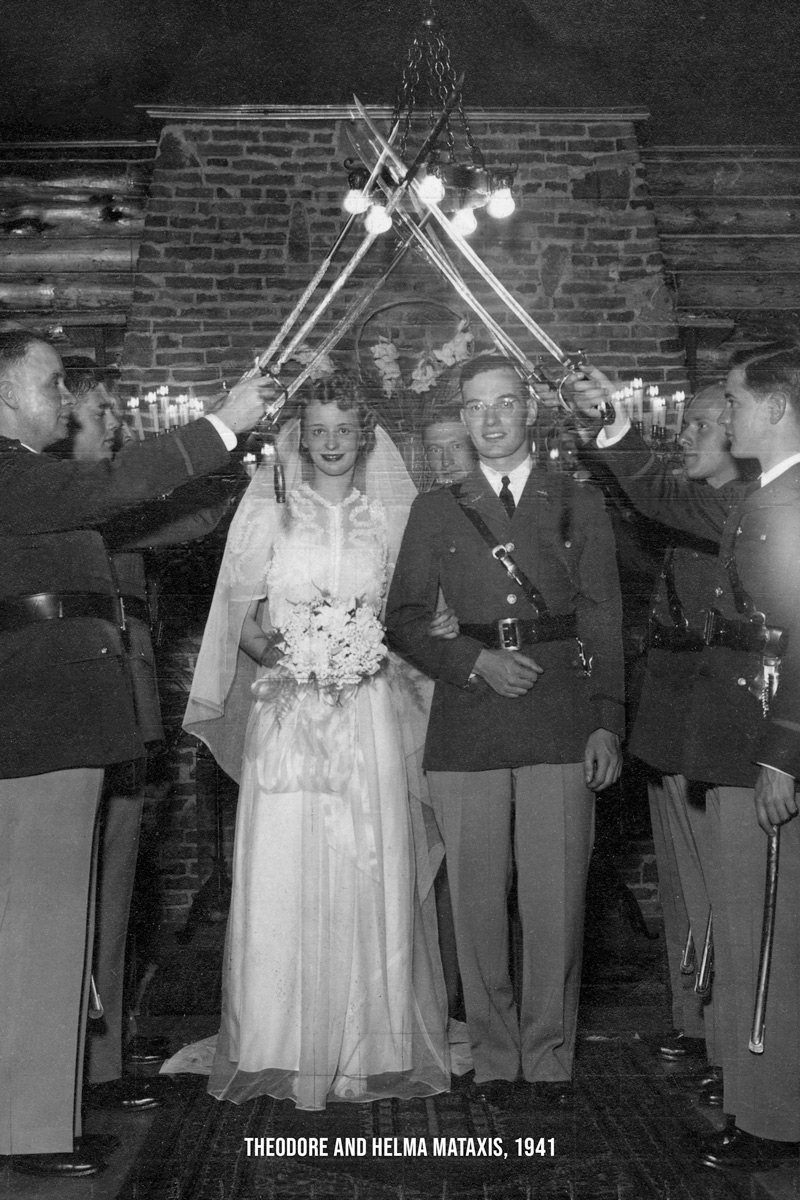
Theodore and Helma Mataxis, 1941
Mataxis had witnessed many changes in the army across three wars, but he was a source of one of the greatest continuities in the profession of arms: the priority of developing the next generations of leaders. I grew to admire greatly that tough, empathetic general. He showed me that the United States Army is a living historical community in which younger generations look to earlier generations for inspiration and to understand better their calling as soldiers.
Mataxis had a profound influence on me and other future leaders through his example and his mentorship. I soon realized that behind our commandant’s rugged countenance was a person who always treated everyone with respect. I later understood that Mataxis was also an intellectual, an author, an avid reader, and collector of books. Across my career he sent me the books from his library that he thought were most relevant to my new responsibilities. When I decided to write a doctoral dissertation on how and why Vietnam became an American war, I asked to see General Mataxis for advice. In a letter to him in February 1997, just prior to the publication of that work as a book, I wrote to him: “I often think of you as the book nears publication. It all really began for me with an interview I did with you in the Carolina Inn.”
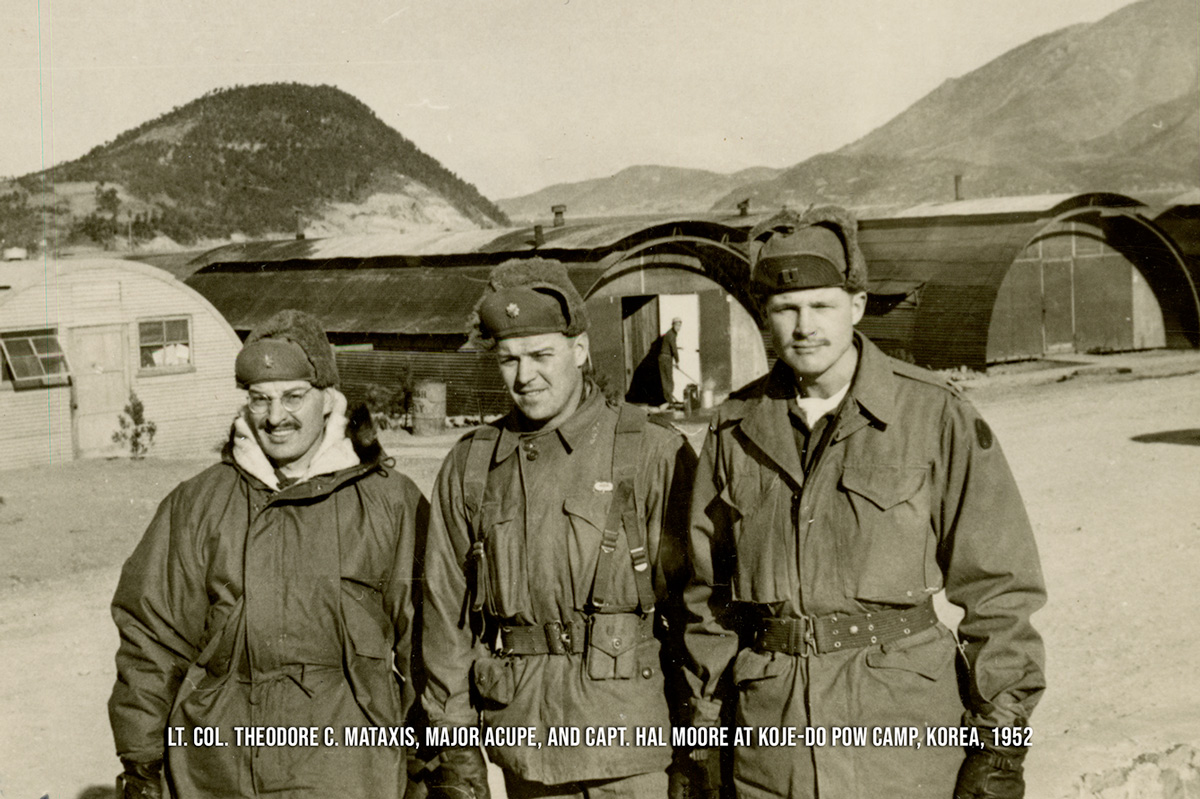
Lt. Col. Theodore C. Mataxis, Major Acupe, and Capt. Hal Moore at Koje-do POW Camp, Korea, 1952
I was fortunate to be with him and his wife, Helma, in the last years of his life when he attended the ceremony in which I assumed command as 71st colonel of the 3rd Armored Cavalry Regiment. He whispered words of encouragement and expressed confidence in me as our regiment was preparing for a second combat mission in Iraq. I told him that I would do my best to live up to his example.
I hope that many young people read this memoir of a great soldier, father, and citizen so that General Mataxis can continue to inspire future generations through his example. Readers will, no doubt, note the contrast between Mataxis’s embrace of danger—he received a Silver Star, three Bronze stars with “V” devices for valor, and two Purple Hearts—with the “safetyism” that pervades much of American society. On battlefields there are no safe spaces to which one can retreat and the riskiest course of action is the one that, in seeking the safest course, cedes initiative to the enemy. Young Americans may also draw inspiration from the patriotism of a man whose father arrived, penniless, at Ellis Island from Greece in 1907. The Mataxis family story might help young people challenge the orthodoxy of self-loathing to which so many Americans are subjected in universities and secondary schools. All who read these pages will understand better the rewards of service across lives well-lived. Even after his retirement, when the Soviets occupied Afghanistan in the 1980s, Mataxis went to his fourth war as the field director for the Committee for a Free Afghanistan in Peshawar, Pakistan.
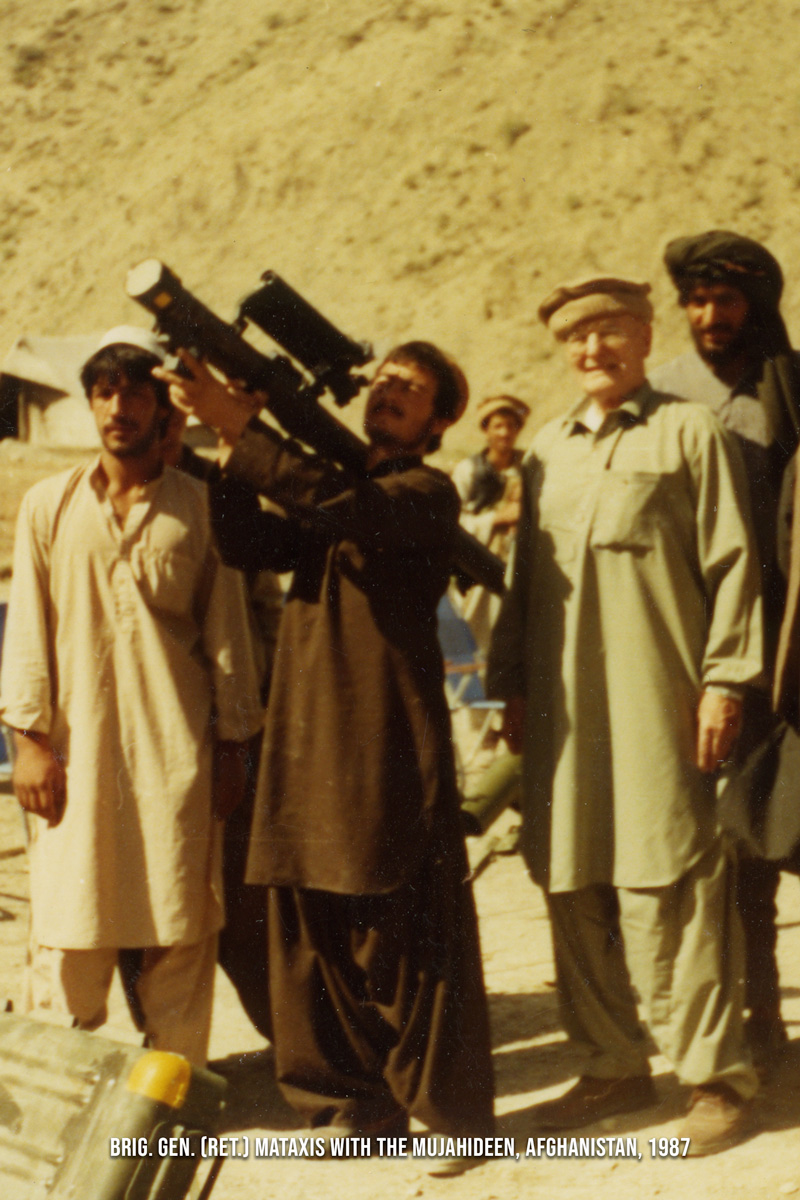
Brig. Gen. (Ret.) Mataxis with the Mujahideen, Afghanistan, 1987
Readers will also gain an understanding of the rewards of service across multiple generations. The author served with great distinction in US Army Special Forces and the Rangers. Brig. Gen. Theodore Mataxis pinned captain’s bars on his newly promoted son’s uniform when they were both serving in Vietnam in 1971. Theodore Mataxis Jr. went on to serve in two more wars: Grenada in 1983 and in El Salvador from 1988 to 1989. His son, Ted III, carried on the family tradition of service, deploying to combat in Afghanistan and Iraq. All three who wore “Mataxis” nametags on their combat uniforms began service as enlisted soldiers and non-commissioned officers in the reserves before their commission as officers. The author, his father, and his son served their nation in eight wars across their three generations. All three men understood that it is a privilege to serve their nation and their fellow citizens in uniform. And General Mataxis’s wife, Helma, exhibited other forms of courage and an equal commitment to service. Married to the general for 65 years at the time of his death, she had lived in bombed-out Berlin in 1946 with two small children, lived in India with no running water and dirt floors with three small children for over a year, was the only parent for three small children for two years while the general was in Kashmir and then in the Korean War, and endured having both her husband and son in combat together in Vietnam for 14 months.
All bore trials and tribulations, but they persevered and experienced the joy of being part of teams committed to missions more important than any individual in which the man or woman next to you is willing to sacrifice everything for the soldier next to them. Ride to the Sound of the Guns is a compelling story that should be shared and discussed with others. And it is my hope that it will inspire many more to emulate General Mataxis and his family in service of our nation.
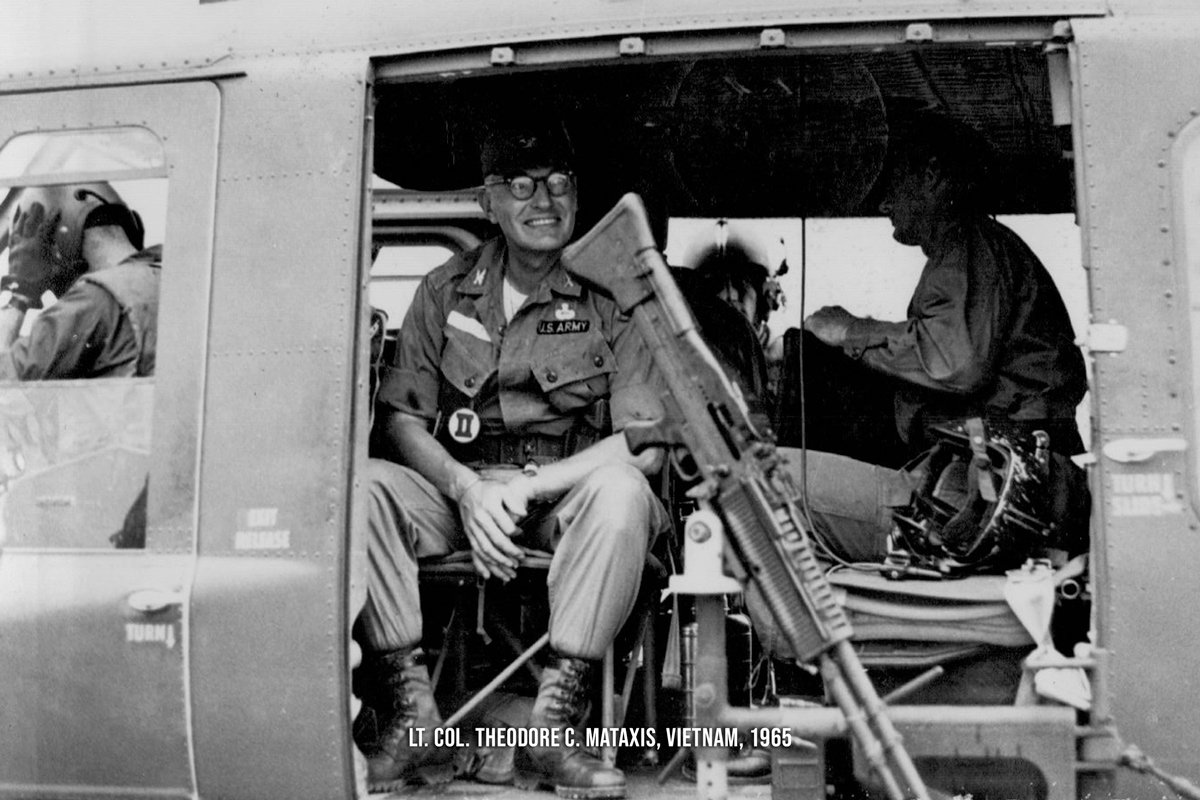
Lt. Col. Theodore C. Mataxis, Vietnam, 1965
THOUGHTS & COMMENTS ABOUT THE BOOK
Click here to read words of praise for Ride to the Sound of the Guns.
ABOUT LTC (Ret) Theodore Mataxis Jr.
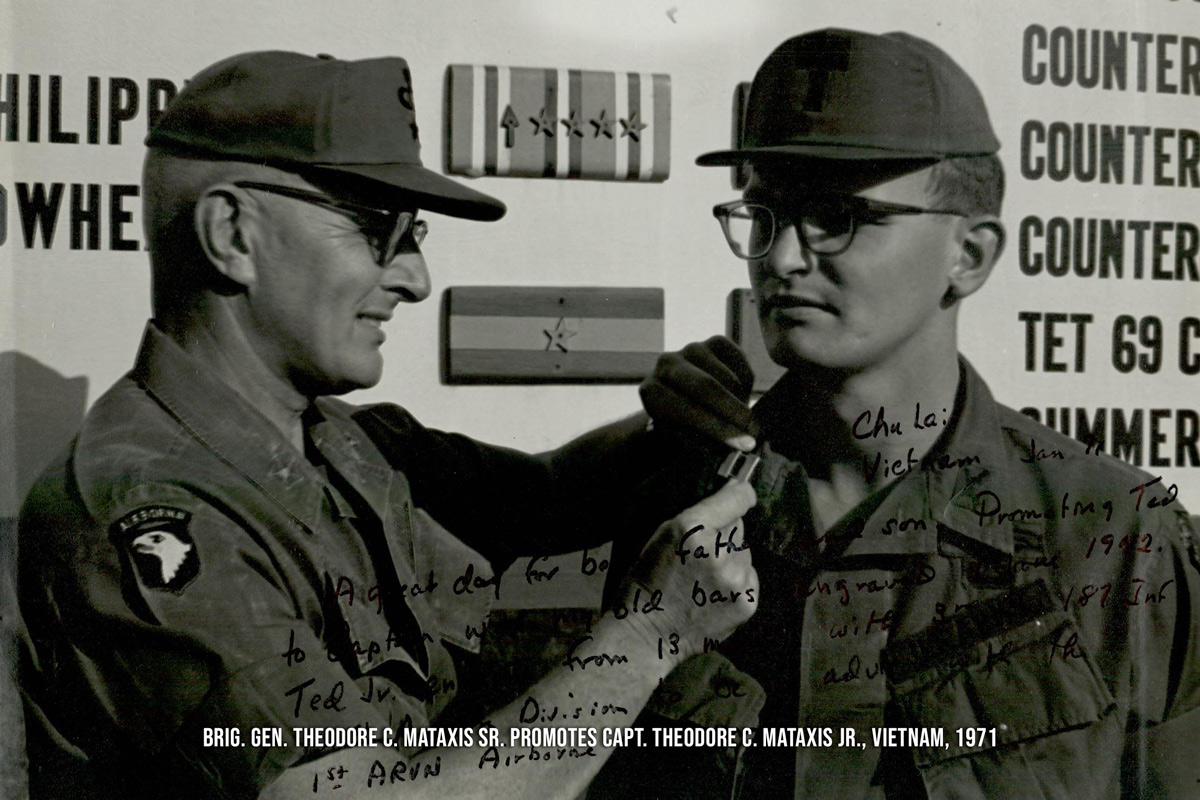
Brig. Gen. Theodore C. Mataxis Sr. promotes Capt. Theodore C. Mataxis Jr., Vietnam, 1971
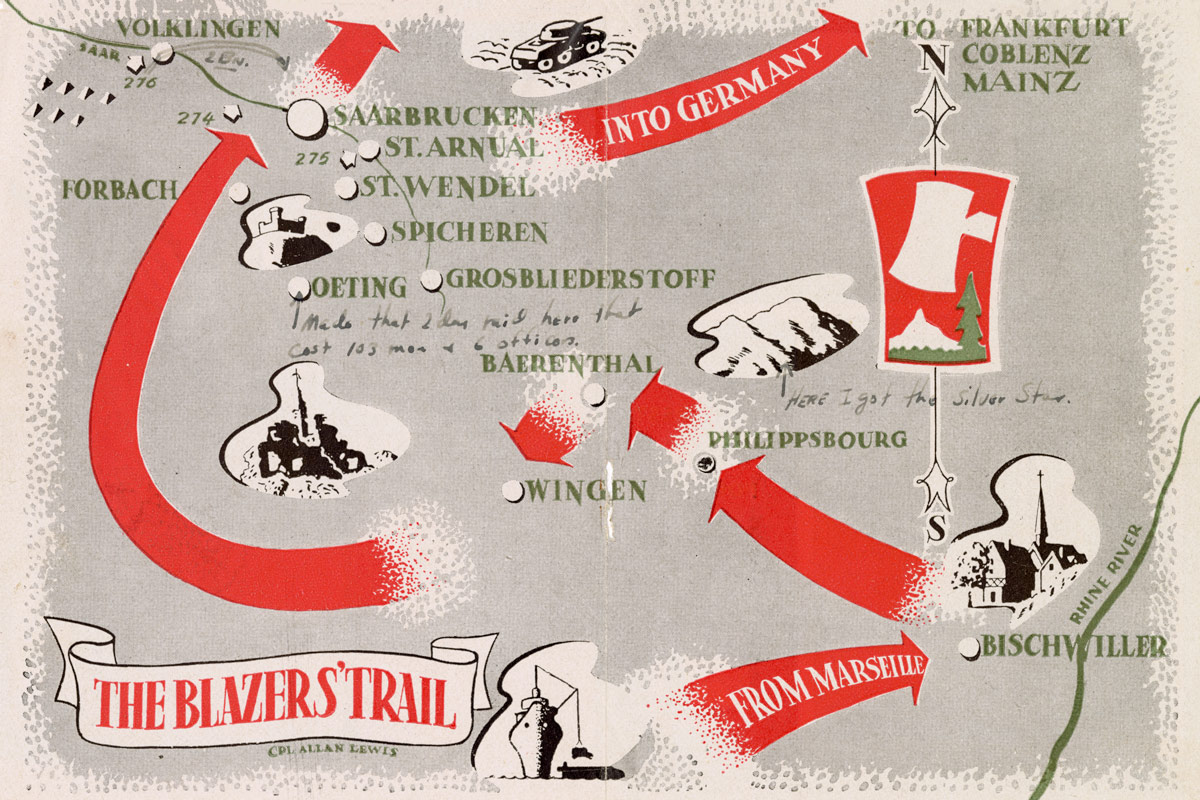
I realize everyone here knows a part of the history that took place in World War II. Keeping that in mind, I would like to review the background and causes in retrospect. The greatest war of world history began on 1 September 1939, with the invasion of Poland by Germany. It ended six years later with the Surrender of the Japanese to the United States in a ceremony aboard the battleship “Missouri” in Tokyo Bay. All the major powers of the world had joined the war, and all the lesser states had enlisted on one side or the other or declared themself as neutrals. All countries felt the impact of the war. The main issue was putting down the aggression by the axis powers. Before the end of the hostilities, nearly 73,000,000 men had been called into the military service, of whom nearly 17,000,000 were dead or missing, and 27,000,000 were wounded. The principal theaters of the war included: Europe, East and Southeast Asia, Indonesia, coastal areas of North Africa, islands of Japan, the North Atlantic, island areas of Central and the Southwest Pacific, and brief encounters in Hawaii and Alaska. Upon the conclusion of World War II, the Soviet Union had taken over by force, subversion, and pressure more than 95 million non-Russian citizens in 400,000 square miles of Eastern Europe.
It did not take long for the Cold War to begin in Berlin’s early occupation. Our family was reunited after 21 months of separation while dad was off fighting in WWII. Dad came home to take us to bombed-out Berlin in November of 1946. My dad, in his late 60s and early 80s, when many people are drawing Social Security and sitting at home, was working with the Afghans in an effort to get the Soviets out of their country. He did this through the Committee for a Free Afghanistan as their field director. There, he assisted in improving tactics and techniques as well as logistical support, calculating the number of mules required to move in ammunition and weapons and move out their seriously wounded. He supported the introduction of the shoulder fired Stinger missiles to combat the heavily armored Soviet Heinz helicopters and jet aircraft participating in bombing runs. Until that time, the Soviets had dominated the air space and were defeating the Muj. After receiving the Stingers, more than 200 Soviet aircraft were shot down, significantly contributing to the withdrawal of the Russians from Afghanistan.
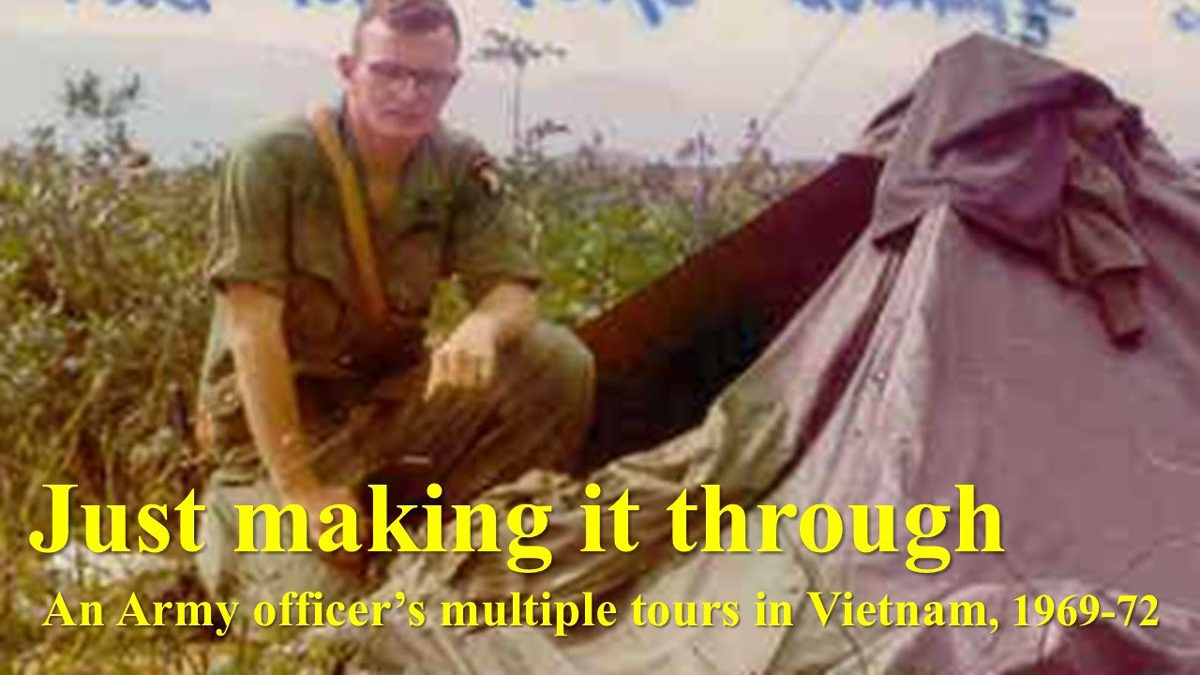
Just Making It Through: An Army Officer’s Multiple Tours in Vietnam, 1969-1972
LTC (ret.) Ted Mataxis was recently interviewed as part of the War & Life Project. Click here to view the episode on the Stuff of Life–War & Life Project YouTube channel.
I arrived in Vietnam in November of 1969, and in June of 1970, my dad arrived for his second tour. We both had extensions in Vietnam. I came back in January of 1972, and my dad retired out of Cambodia in February of 1972. While dad and I were in Vietnam, my mother built their retirement home here in southern Pines in the original Sandhurst development. This home incorporated an apartment on the lower level that had a fireplace, library, bathroom, and kitchen, that was to be my apartment.
Mom and dad lived here for over 20 years. I basically lived in Southern Pines off and on from 1969 until today. Kirby and I raised our family here, and our children all grew up attending Moore County schools. Ironically, they all live here in Moore County. My oldest daughter, Stacey, lives in Whispering Pines; my oldest son, Ted, just built a home at CCNC, Carson, our youngest son just purchased a farm next to our farm here in Southern Pines Horse Country. Ted and Beth’s children are the 4th generation of Mataxis’s here in Moore County..
When I retired, I worked for Moore County schools for 22 years as my second career after serving 31 years in the military. When I got bored again, I went back to work at Ft Bragg at USASOC’s History Office in the “Sensitive Activities Historical Collection.” And then at JSOC, where I was a Plank-holder, working in the J-7 lessons learned section. Finally, I retired at age 77 to write my dad’s book.
Leave A Comment