An Excert From
Textbook Special Ops:
The Son Tay Raid
By Colonel John Gargus, Son Tay Raider, with Cliff Westbrook
An excerpt from Textbook Special Ops: The Son Tay Raid; published by Palmetto Publishing, 09/17/2025, pages 73-87.
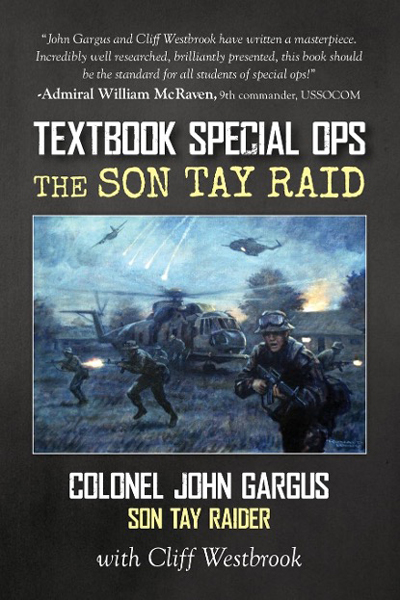
From the editor: This is an excerpt from the new book by John Gargus, a planner and participant in the Son Tay Raid, and Cliff Westbrook.
The super-secret Son Tay Raid to free American POWs from a prison only 25 [miles] from the enemy’s capital, Hanoi, North Vietnam is in full swing. The raiders, including 56 Green Berets and an armada of air force aircraft are sneaking in from Thailand late at night without lights and completely radio silent, following a couple of special Combat Talon C130s that have a new Forward Looking InfraRed device that can let them see in the dark and lead the convoy through valleys to avoid NVA radar detection.
The Navy has enthusiastically agreed to conduct a perfectly timed massive diversion to draw the antiaircraft SAMs and AAA crews’ attention away towards the east. Hopefully, they will not discover the slow flying C130s, Jolly Green Helicopters, A-1 ground support planes and the F4 and F105 jets too early.
You are at 35,000 feet over the Gulf of Tonkin in a RC-135, listening to an enormous amount of voice and data, including often identifiable SAM crews.
Part two will be in next month’s Sentinel.
CHAPTER 4
Airborne Command Post: Listening to the Enemy’s Conversations
We did not know much about RC-135s (program name ‘Combat Apple’) from Okinawa during our air operations planning in Florida. All we were interested in knowing at that time was that they flew round-the-clock missions over the Gulf of Tonkin and Laos from where they monitored and recorded all North Vietnamese electronic transmissions and that voice transmissions were translated in real time by Vietnamese speaking interpreters.
We were well prepared to monitor the North Vietnam’s reaction to the raid. Air Force Col. Norm Frisbie flew in the RC-135 over the Gulf of Tonkin as an alternate JCTG commander to Manor, who directed the raid from the USAF’s Tactical Air Control Center – North Sector at Monkey Mountain near Da Nang in South Vietnam. Col. Frisbie was one of the covert operations planners from the office of the Deputy Chief of Staff for Plans and Operations along with Lt. Col. Larry Ropka (who at this moment was visiting multiple bases around Vietnam and Thailand coordinating the launch).
Accompanying Colonel Frisbie on the primary RC-135 was Lt. Col. William L. Robinson who, as the Army training officer in Florida, knew all the details of the ground assault plan. Air Force Maj. Thomas E. Macomber, operational security officer from HQ USAF Security, who knew everything about the air operations, was tasked to fly on the second RC-135. He was joined by Army Sergeant Major Donald M. Davis from Ft. Bragg. Davis served on the initial planning staff in the Pentagon and was on Colonel Simons’ administrative and training staff in Florida.
Once at Takhli, Captain Tom Stiles and I briefed two RC-135 Airborne Mission Supervisors (AMS) Technical Sergeant Horas E. Haire and Captain Robert Icenogle about the air operations aspects of the raid. They were interested primarily in our activity in the objective area. On the other hand, we were interested in what they would do for us. They disappointed us by not giving us any more information about their capability than we already had. I suspect that they were more forthcoming with Col. Frisbie and Manor. However, at our operational level we didn’t need to know more about RC-135 capabilities and how they operated. This secrecy was not a game of tit-for-tat we played with each other. It was a serious mission that required it. In turn, when the two AMS officers returned to Okinawa, their 6990th Electronic Security Group Commander Lt. Col. Robert W. Throckmorton, wanted to be briefed on their visit to Takhli. They informed him that he had no need to know why their unexpected presence in Thailand was required. He learned about the POW rescue mission later when Col. Frisbie and the three other JCTG staff members showed up at Kadena Air Base in Okinawa to fly in the two RC-135s with fully operational crews which were told to get ready for that night.
RC-135 capabilities remained a very tight secret for many years. I got to know several retired Noncommissioned Officers (NCOs) over the years who would not speak about their in-flight work. It wasn’t until one of them, Robert J. Ruseckas, joined the Son Tay Raid Association, full fifty years after the raid, when I learned how they operated from his informative article that he wrote with Cliff Westbrook for the Son Tay Raid Association. His unpublished article is called, “The Son Tay Raid in the Airborne Command Post: Listening to Every Transmission from 35,000 feet.”
Robert J. Ruseckas’ name appears on the Wall of Honor at the National Air and Space Museum at the Smithsonian in Washington, DC. Click here to read his profile on their website.
Listening to Every Transmission from 35,000 Feet
It’s 8 p.m. We arrive on station above international waters of the Gulf of Tonkin. We are a 30-man team equipped with top secret technologies that allow us to see, hear and detect every transmission of voice, radio, code, and radar in North Vietnam. It’s Friday night, November 20th, 1970. The sun set more than two hours ago and we welcome the protection, stealth, and clarity of this darkness. We need to focus.
We are listeners, an overwatch, sentinels spying on our enemy from a Boeing RC-135M, which resembles the Boeing 707. Our dark-lit workspace spans two-thirds of the arching width of the fuselage. The other third is a partitioned aisle way running the entire length of the port side. That allows pilots, navigators, and others without a need-to-know to pass by without disturbing our work. (All have Top Secret clearances, but not all have a need-to-know.) At two places along the fuselage, we have a doorway to that aisle. From the appearance of our battle station, long and narrow, surrounded by metal, plastic, and colored displays, one might imagine us lurking thousands of feet below Mean Sea Level rather than above.
My station desk is referred to as the ‘11-Op,’ responsible for identifying and monitoring every SAM (Surface-to-Air Missile) site in North Vietnam. Working with a wall of electronics before me, I’m facing toward the partition and the left wing. Centrally among my array of controls arranged in modular black boxes, I have two primary screens that empower me with a sixth sense. Last year, The Who produced a song about “That deaf dumb and blind kid sure plays a mean pinball.” Like Tommy, our sight is beyond the limitations of human eyes and ears. Our existence is electronic.
Unhuman oscilloscopes and tones furnish my mind with a visual that no one can ever see with eyes or make sense of with any one set of ears. We 30 are a band of brothers on a man-o-war that together can see through walls, eavesdropping into the very command centers of the enemy. We detect every signal ever used by militaries: AM, FM, LF, HF, VHF, UHF… and others. Our state-of-the-art electrical engineering has quickly cleaned up those signals. We record every signal of interest but sifting through the recordings later is not good enough—we must comprehend now. We are fluent in the Vietnamese language, so we are listening live to the North Vietnamese Army (NVA) and Air Force (NVAF) commanders speaking with their staff as well as the controllers in their Air Defense Command throughout North Vietnam. Through our work, vapid, chaotic ether is transformed into humans conversing clearly. We know their thoughts.
Other workstations in our aircraft include ‘7-Op’, responsible for monitoring all NVAF fighter aircraft, and ‘6-Op’, monitoring ground vehicle movement along the Ho Chi Minh Trail.
Each operator has a chair that can be locked in any direction. For takeoff and landing we lock it facing aft. Incorporated into the seatback is a parachute that I’m sitting against. Beneath our seat cushions—and attached to the parachute—each of us has a survival kit which includes a small, personal life raft and a weapon. (The world knows well the horrific torture of American POWs held by the vicious communists. I’m of the mind that if I’m ever shot down and in danger of imminent capture, I’ll save my last bullet for myself.)
Aboard our aircraft are USAF Colonel Norman Frisbie and Lt. Col. Bill Robinson, an Army Green Beret. Both these gentlemen, we had never met before. This was most unusual. Our missions are Top Secret, Code Word. We can’t even acknowledge to people what level of code word our missions are—literally, even the code word itself is classified. These guests must be special.
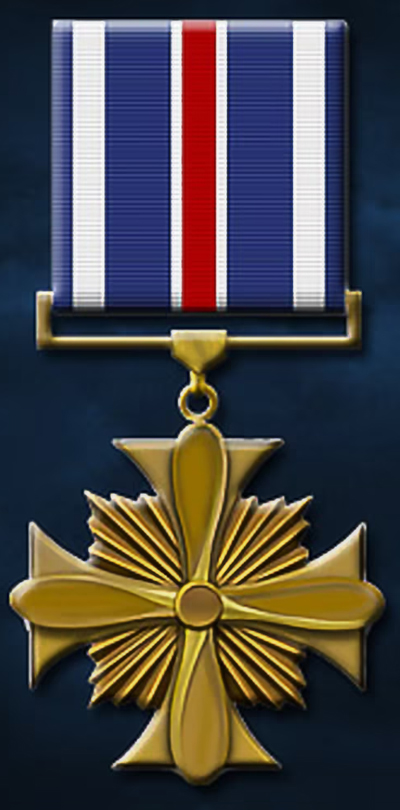
USAF Colonel Norman Horace “Friz” Frisbie. He started his career as a West Point Cadet and was a P-47 pilot with the 368th Fighter Group, 397th Fighter Squadron in the European Theater as part of the Army Air Force, before the Air Force was a separate branch. He was awarded the Distinguished Flying Cross and 11 Air Medals.
After WWII, he flew F-86D’s in the 16th F.I.S., as commander until 1958. Then he was with the 431st Tactical Fighter Squadron, where he flew over 100 missions and helped lead the infamous Son Tay Raid. He retired as a Colonel in 1972.
Click here to read about his Distinguished Flying Cross medal.
For this mission, we knew something was up even at Okinawa, preflight. Our pre-mission crew rest was not normal—it was out of synch and to me it felt like a surprise. The crews that were assembled for the pre-mission briefing were not our normal crew combinations—in fact, there were two RC-135Ms being pre-flighted and launched, a primary and a backup. This was an indication to all that something really significant was going to happen tonight.
Our 6-Op, Bruce McClelland and I look at each other: we are supporting a first-ever POW rescue mission deep in the heart of North Vietnam, near Hanoi. I don’t know what possibly could have been more exhilarating! We are ready to help in any way we can.
Colonel Frisbie was a planner of the raid and is the alternate commander, reporting to Manor, the commander of this mission. Manor will monitor everything, real-time, at the ‘Tactical Air Control Center—North Sector’ on Monkey Mountain, near Da Nang Air Base. We are the airborne command post for the Son Tay Raid.
At 8:45 p.m., Manor arrives at the Monkey Mountain Command Post and establishes secure, encrypted communications links with us. The Green Berets and their aircrews arrive at Udorn Royal Thai Air Force Base (RTAFB) to board their mission helicopters and C-130s, all prepped and readied by their maintenance crews.
Also ready to launch:
- F-105s and EC-121s at Korat RTAFB
- F-4s at Udorn RTAFB
- KC-135s at U-Tapao RTAFB
- A-1Es at Nakhon Phanom RTAFB
- MC-130Es at Takhli RTAFB
Manor and these soldiers and the mission commanders for these air-crews had been secretly holed up at the CIA compound at Takhli for the past few days in anticipation of President Nixon’s launch order, which came through yesterday.
There is nothing unusual at this time. I focus on my two screens, black CRTs (cathode ray tubes, similar to old television screens) with green sine waves. My controls are dials, knobs, buttons, rollers, and switches. The modular units before me are functioning well and, in case of equipment failure, they can immediately be swapped out by the AMTs (Airborne Maintenance Technicians). We are in peak condition.
At 10:25, the MC-130 Cherry Two takes off from Takhli RTAFB head-ed to rendezvous with the A-1Es from Nakhon Phanom RTAFB.
At 11:05, the Navy’s EP-3 ‘Big Look’ aircraft arrives on station over the Gulf of Tonkin for electronic warfare during the massive diversionary raid on Haiphong harbor that the Navy will be providing just prior to the Son Tay Raid.
At 11:17, a formation of two HC-130s (Lime One and Lime Two) and six helicopters (Banana and Apple One through Apple Five) are departing Udorn RTAFB with the 56 Green Berets who will actually set foot on the ground at the Son Tay POW camp. This begins the three-hour chopper flight that paces the entire mission. The timing of over one hundred aircraft is built around the smallest slowest aircraft, the crucial HH-3 Jolly Green Giant, code name Banana, which will land inside the courtyard of the prison in such a surprise that guards don’t have any time to shoot prisoners. The planned H-Hour is 0215.
[NOTE: In his book The Son Tay Raid: American POWs in Vietnam Were Not Forgotten, John Gargus explains that RC-135 Combat Apple missions were America’s means of knowing when radar sites conduct shift change. They were reliably at 2am. 2:15 was chosen as the H-Hour, when the enemy might be at a minimum level of order.]
At 11:18, the MC-130 Cherry One takes off from Takhli RTAFB. This is the special ops aircraft with unique low-level precision navigation avionics. It will take over the formation at the North Vietnam border, leading the helicopters to Son Tay and release the flares over the POW camp at the H-Hour.
Our area is kept dimly lit so we operators can optimally see our screens, a surreal green glow on our faces. Our workstations have a writing table. I write my notes on our special water-soluble paper—it easily disintegrates in an emergency so as not to compromise classified information. There are reel-to-reel tape recorders above the workstations to record intercepts of interest to be studied when back on the ground (or reviewed in flight if necessary).
On my CRTs, I clean the scratchy noise fuzz out of the signals, radio waves emanating from SAM sites in the Son Tay Area. The CRT only shows the top half of the sine wave—that’s all we need. An AM (amplitude modulation) signal looks like a single vertical spike. An FM (frequency modulation) signal has a much wider and more active display with lots of spikes. Tuning for radio frequencies of interest I can tell a lot about what equipment is emitting each signal and its location. At times, monitoring the display for signal strength, we have the pilot modify our orbit (changing the heading or extending the oval) so as not to lose the signal in the middle of a relevant North Vietnamese military conversation.
At 12:35am, the first problem arises. Frog 1 has to abort due to a broken oil line. Frog 1 is an EC-121 College Eye aircraft orbiting over the Gulf of Tonkin like us. It is based on the Constellation airliner and has a role similar to today’s E-3 AWACS (Airborne Warning and Control System). Its role is to shine a radar on all aircraft in North Vietnam—especially on our low-flying assault force tonight, which would be too low for our land- and sea-based radars to follow. In contrast, our RC-135’s role is to monitor every radio wave that the enemy transmits.
As a testament to the excellence in planning, there is a backup aircraft, Frog 2, already on station nearby. Literally, within one minute, Frog 2 takes over that role.
At 12:40, at only 1,000 feet above the ground and according to plan, the six helicopters begin air refueling along their path over Laos with their HC-130 tankers Lime One and Lime Two. In this unprecedented formation are the one HH-3 Jolly Green Giant and five HH-53 Super Jolly Green Giants.
‘Combat Apple’ is the name for our RC-135M missions. We are the 6990th Security Squadron from Kadena Air Base on Okinawa, Japan. These reconnaissance missions were tasked with providing real time tactical and strategic intelligence to battle commanders on the ground—and back in Washington D.C., as you’ll see at the end of this Son Tay Raid mission.
It’s a three-hour flight from Okinawa and we need to be on station for 12 hours over the Gulf of Tonkin, so our missions are long—our shortest mission is more than 18 hours! This allows 24-hour coverage with the two 12-hour shifts in theater. Every mission has at least one or two air refuelings of 80,000 pounds or so, which I love to watch up front in the cockpit when I can. This is a mentally grueling, bumpy 30-minute period, (at moments, terrifying to me at night in monsoonal clouds, rain, and tropical lightning storms). The pilots fly two airliners in formation with 8 to 12 feet of separation nose to tail, maintaining boom contact for half an hour—twice on many missions!
Further, there are overlapping flight schedules with one Combat Apple crew on orbit in the Gulf of Tonkin (referred to as the ‘Gulf bird’) that focuses chiefly on air operations and threats in the Gulf as well as activities over North Vietnam. The second Combat Apple crew is orbiting over northern Laos (referred to as the ‘Laos bird’) where the focus is air activity over North Vietnam but closely covers ground action along the Ho Chi Minh trail from North Vietnam through Laos and Cambodia into South Vietnam.
Our RC-135M is for Signal Intelligence (SIGINT) and, particularly, Communications Intelligence (COMINT). It is designed to intercept virtually anything transmitted into the airwaves, from taxi cabs to tanks, walkie-talkies to facsimile, Morse code to radar signals, tactical airfield communications with aircraft (TACAIR) to Anti-Aircraft Artillery (AAA) and SAM sites. Our linguists interpret the most urgent signals while air-borne, but the recordings are translated, decoded and analyzed later on the ground at the US Army’s Torii Station on Okinawa. At Torii Station, adjacent to Kadena AB, all this transcription and analysis was done at a no- windows facility, with barbed wire and dog patrols at the perimeter.
[NOTE: Many years later, this was all consolidated onto Kadena AB with the construction of a new secure building, Larson Hall, named for our first squadron commander, Lt. Col. (later Maj. Gen.) Doyle E. Larson. Larson became the first commander of Electronic Security Command.]
Behind the ‘front end’ crew’s cockpit is a compartment fully decked out as an electronics workshop manned by the two Airborne Maintenance Technicians.
Then comes the main compartment filled with COMINT linguistic technicians. I’m at the front, on the other side of the wall from the AMTs.
Next you come to the 7-Op, the TACAIR operator. The job here is to monitor the enemy’s air activity. Each North Vietnamese airfield has its radio frequencies used by their Air Traffic Controllers to communicate with their aircraft and pilots. We are so personally familiar with these controllers and pilots that there are many of them that we recognize by their voice alone, even before anyone states the individual’s call sign. Often, we know the name of the pilot, where his home station is and what type of aircraft he is qualified in, and we glean a little about his personality.
[NOTE: Hognose Silent Warrior by George F. Schreader, a former 6990th 7-Op, lists many of the top North Vietnamese pilots and the details we knew about them, through our Combat Apple missions. By the way, ‘Hognose’ is a term of endearment. See the photo at the end.]
Centrally located is the ‘#1’ position, which is the Airborne Mission Supervisor (AMS). He has constant secure communications with battle commanders on the ground in Vietnam and elsewhere. He coordinates all the activities of our crew.
Tonight, each of us will describe what he’s hearing to the AMS who, in turn, will relay warnings to the US aircraft and report the situation to Colonel Frisbie who is on an open line with Manor.
At the very back, at positions 15 and 16 are the two Electronic Warfare Officers (EWOs) who are responsible for defending the RC-135 itself from threats such as missiles and enemy fighters.
The RC-135 pilots, navigators and EWOs are officers, all from SAC (Strategic Air Command). The rest of us are enlisted men from the USAF Security Service (later called Electronic Security Command).
All this sensitive electronic equipment has to be kept dry and temperature-controlled to prevent overheating. My position, just aft of the maintenance compartment, is quite warm right now. Conversely, the aft end where the EWOs are typically too cold. Some of this is due to the aircraft’s slightly nose up attitude in level flight. Heat rises, cold sinks. Often, I unzip my flight suit down to my waist and operate in my t-shirt. In the back, the EWOs are wearing some of their winter equipment. Coffee spilled on the floor back there sometimes freezes!
These three hours during which the helicopters are flying from Udorn to Son Tay must seem extremely long for a helicopter, but we are used to this—and we are busy this entire time.
We understand our Combat Apple missions to be the world’s longest combat missions at this time. Very often our duty day is about 24 hours, arriving two and a half hours before takeoff and then post-mission briefings keep us an hour and a half after landing. Our squadron had one mission in which the flying time alone was more than 23 hours! You may be surprised to hear that there is often very little break time during the flight for certain operators. After your flight, you are scheduled for post-mission crew rest, but then it’s back to work at the secure facility translating, decoding and analyzing the intel take from other crews.
We linguists specialize in a variety of COMINT tasks. Some of our guys who are newer to the mission run positions employing massive tape decks that have at least eight tracks simultaneously capturing eight different intercept signals. These recordings will be broken out as separate tracks when back on the ground and translated/decoded for future action by intel briefers.
At 1am, the battle begins. A swarm lights up our screens.
A massive, lethal armada of aircraft is launched by the Navy.
The carriers USS Hancock, Ranger, and Oriskany had staged seven A-3 tankers and electronic countermeasure aircraft at Da Nang AB. All seven now head up the coast to North Vietnam.
From the USS Oriskany: Twenty-five aircraft launch, including an E-1B, eighteen A-7s, and six F-8s.
From the USS Ranger: Twenty-six aircraft launch, including an E-1B, ten A-6s, nine A-7s, and six F-4s.
The NVAF Air Defense Command immediately has startled to life. They’re entirely surprised, confused, and slow to comprehend the enormity.
The first indication I get that a SAM site is active: I hear the enemy’s long-range radar operator calling out targets in Vietnamese. These are Russian-supplied SA-2 SAMs, known as ‘Guideline’ in NATO’s naming system. (The Soviets’ name for it is the S-75 Dvina.) Its long-range radar is known by the NATO name ‘Spoon Rest’ and picks up targets nearly 150 miles away. That gives them the range to watch all of this US air activity in the Gulf of Tonkin—including us.
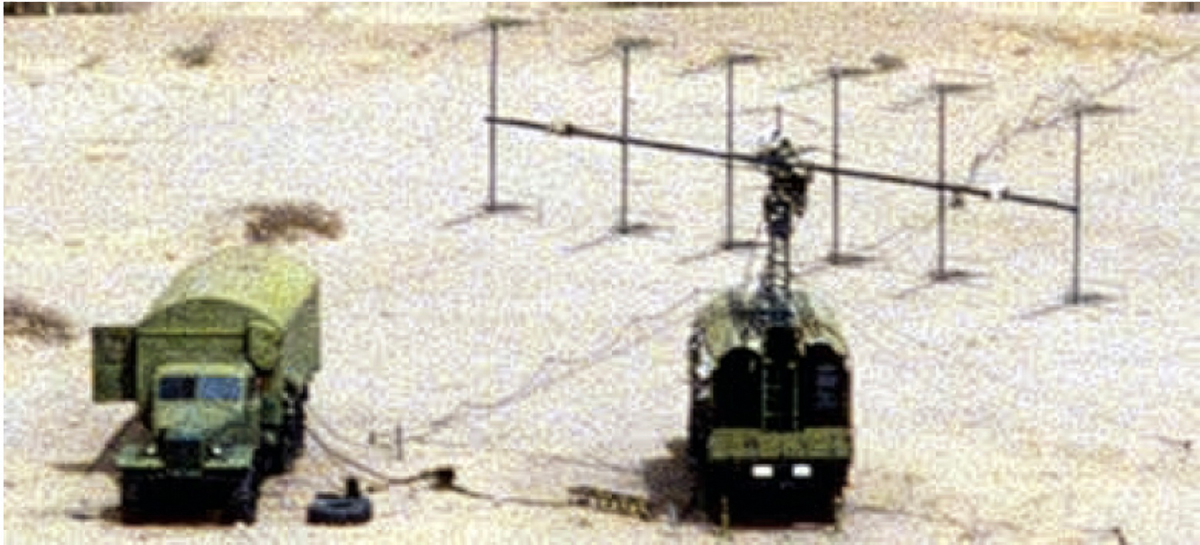
A Spoon Rest radar. (Eastfoto)
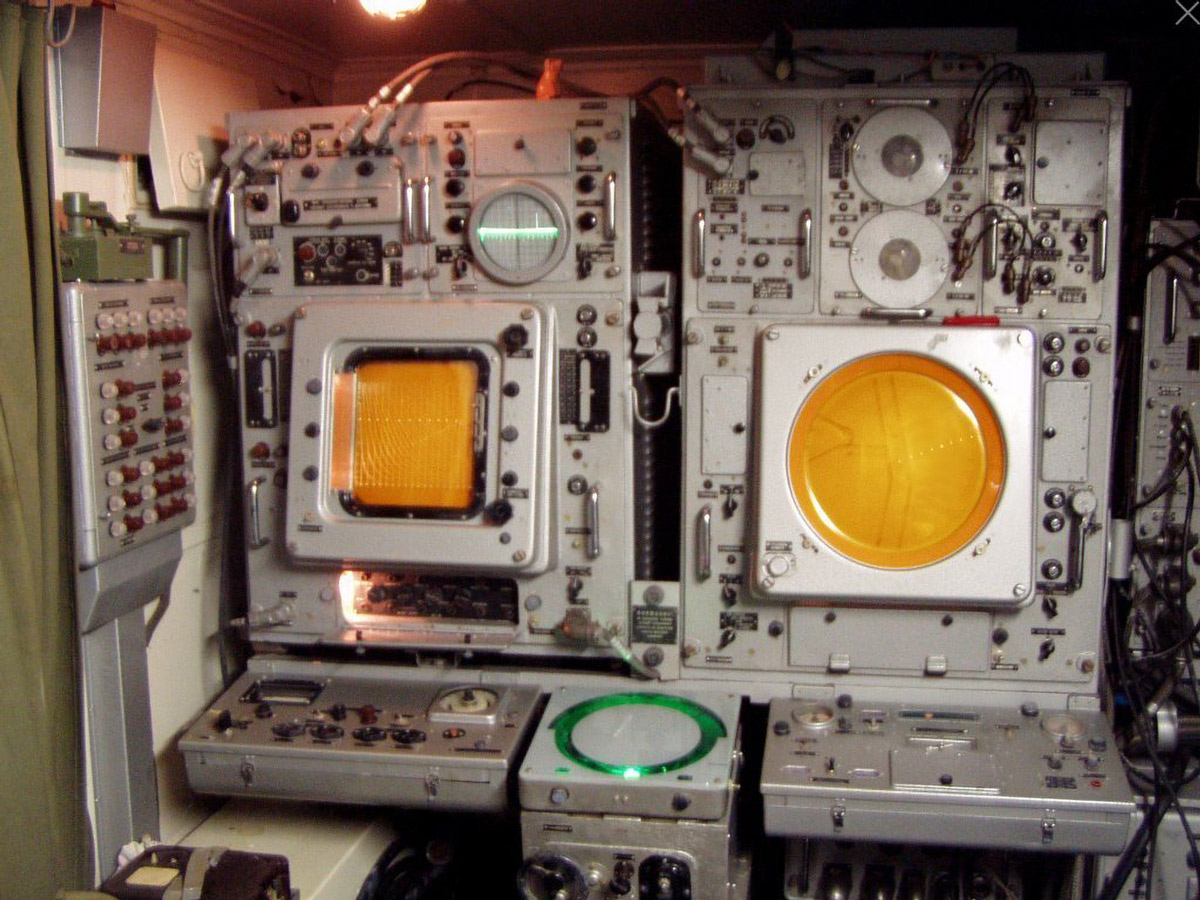
The Spoon Rest radar operator station inside the van. (Eastfoto)
The SA-2 system has six missiles circling a command building, typically spaced about 100 yards apart. They are mobile but are often in fixed positions and we know most of their locations ahead of time. Most of them are around Hanoi and Haiphong.
[NOTE: The SA-2 SAM was developed in the 1950s, continuously improved, and is still in use today in many countries around the world. They are fast and deadly, and the North Vietnamese were proficient in their use. On quiet days, with no airstrike threats by the US Navy in the Gulf, we could see that some Spoon Rest radars would track us on orbit. The NVAF MiG pilots seldom went very far out over water. Our big, slow-moving silhouette on their radar looks tempting for a Spoon Rest operator to share with air controllers. Because of this, we sometimes have US Navy fighters on our wings. The RC-135M has very few fuselage windows so as to keep it dark in the cabin but there was one on the over-wing exit door. I remember looking out one time and waving to a US Navy F-8 Crusader MiG Combat Air Patrol (MiGCAP) pilot just off our wing tip as he waved to me. We saluted each other and I went back to work. In fact, on tonight’s mission there are two F-8s from the USS Oriskany providing protection (BARCAP, Barrier CAP) for us and the five other USAF aircraft orbiting over the Gulf in support of this Raid.]
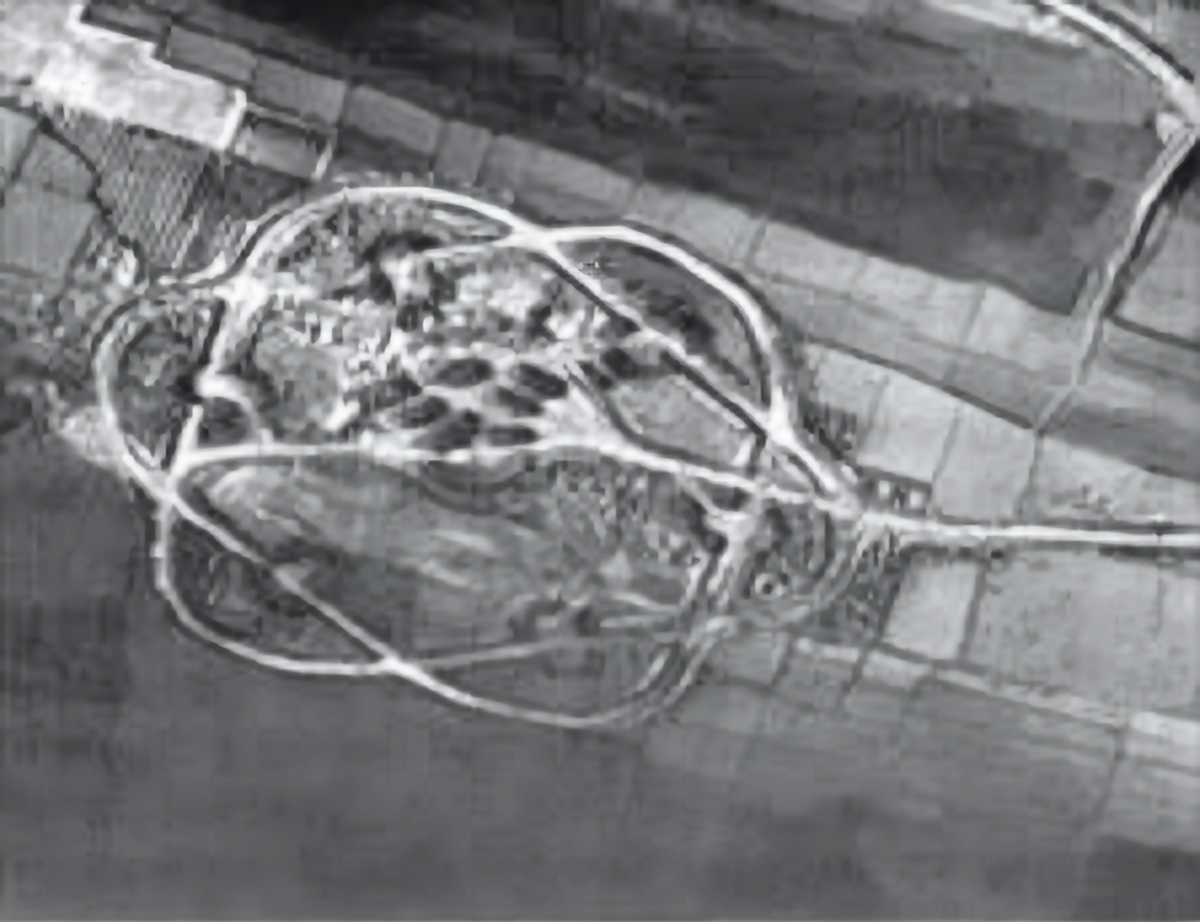
An SA-2 SAM site. (Public Domain)
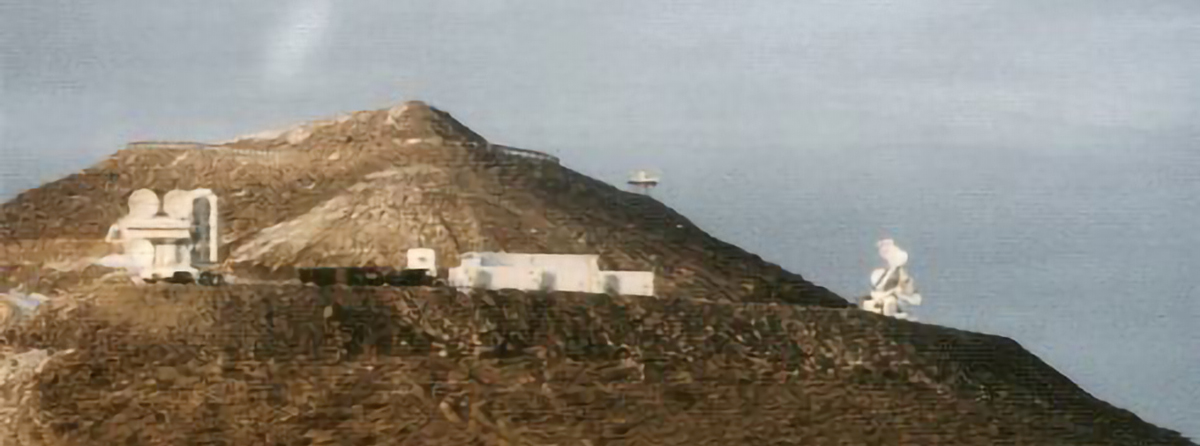
A Fan Song radar (on the left). (Eastfoto)
1:30am. The first flight of six Navy A-7 strike aircraft head into North Vietnam’s territorial waters straight toward industrial targets in the northern parts of Haiphong. Even at this point, the NVAF Command and Control System is only just now getting their wits about them, reaching a level of organization to muster a coordinated defense.
The Spoon Rest operator, tracking them, then alerts the acquisition radar operator. This acquisition radar is referred to as ‘Fan Song.’ This locks on to a target, tracks it, and guides a missile. It can track a target at about 40 miles. The operators call out targets by range, azimuth, and altitude constantly, so we know everything they are doing.
I’m sweating a little, but tonight, it’s not just because my flight suit is zipped to the top. And it’s not because Colonel Frisbie is now watching my screens intently over my shoulder. It’s because this is the largest, most intense mission we’ve had the opportunity to participate in, to this point. Colonel Frisbie plugs his headset into my station to listen in.
I roll onto a promising signal. I hear a radar operator in the SAM site van start tracking a target.
Part 2 in next month’s Sentinel: Experience the intense action.
Textbook Special Ops: The Son Tay Raid, not available in bookstores, can be ordered online from Amazon, Barnes & Noble, Walmart, ThriftBooks, and Better World Books. Copies may also be ordered directly from John Gargus at Gartalon70@gmail.com or by phone at 702-787-5513.
ABOUT THE AUTHORS
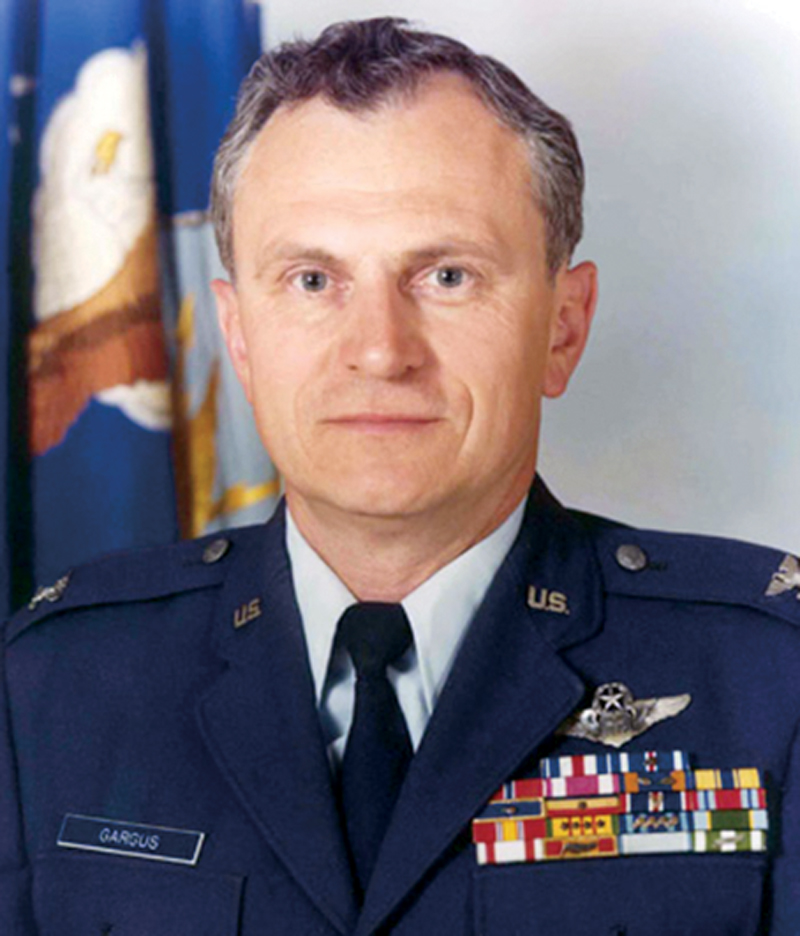
John Gargus, Colonel USAF (Ret.), was a planner of the Son Tay Raid and a navigator aboard the MC-130E(I) Cherry Two in the Son Tay Raid. He has given innumerable speeches about the raid, including many with Lt. Gen. LeRoy Manor, Colonel Bull Simons, and other luminaries of that iconic special ops mission. Born in Czechoslovakia, he was smuggled by his parents at the age of 15 from that Soviet dominated country to live with relatives in America. He is the author of the 2007 book, The Son Tay Raid: American POWs in Vietnam Were Not Forgotten, the most authoritative book on the topic.
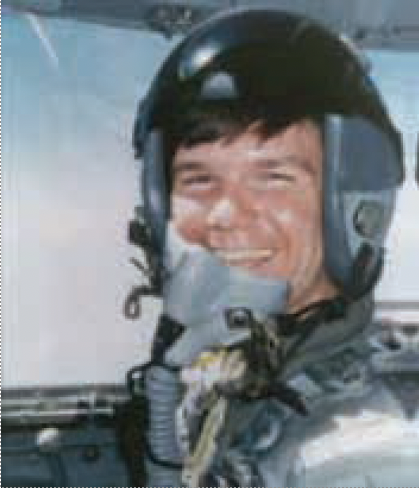
Cliff Westbrook, A 1988 graduate of the US Air Force Academy and a pilot of the B-1 bomber, is the son of Clyde ‘Neal’ Westbrook, the Aircraft Commander of Lime 2 during the Son Tay Raid. As a member of the Son Tay Raid Association, Cliff has interviewed numerous Raiders and helped gather the historical behind-the-scenes facts, including a complete compilation of the radio channels (air & ground) recorded during the Son Tay Raid. Cliff co-authored Who Will Go: Into the Son Tay POW Camp with Terry Buckler. He also co-authored Jakovenko: From the Steppes of Ukraine to the US Army Ranger Hall of Fame with Vladimir Jakovenko.
Leave A Comment