AIR AMERICA WAS NOT ALONE:
There was CASI
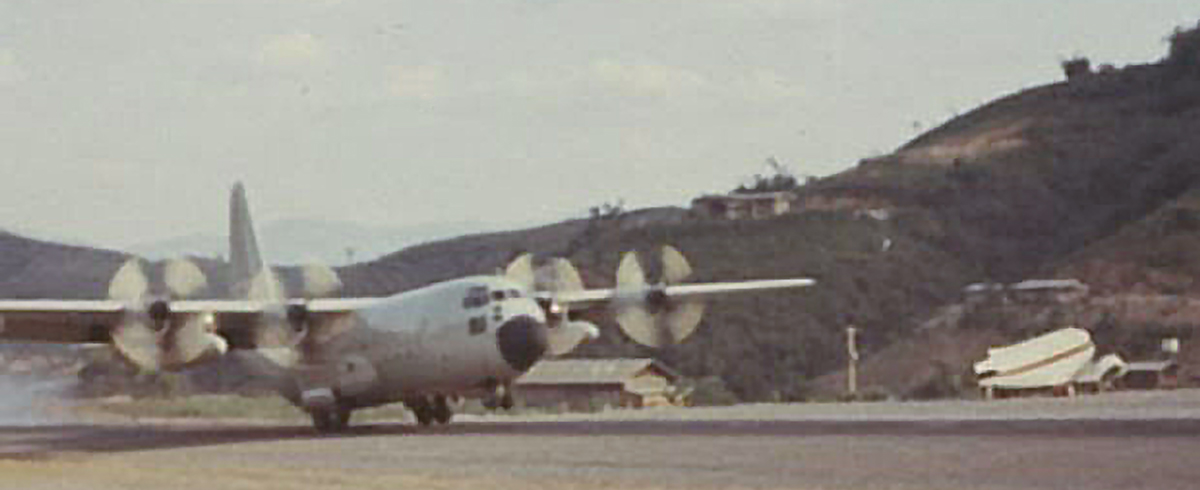
C-130 taking of from Lima Site 20 Alternate, Long Tieng, Laos (Photo courtesy Lee Gossett)
By Marc Yablonka
This article first appeared in the Hmong Daily News on December 21, 2023 (https://hmongdailynews.com/air-america-was-not-alone-there-was-casi-p626-154.htm)
In book after book on the secret war in Laos, Air America gets the very honorable mentions it definitely deserves for the flights it flew with personnel and materiel aboard in support of the Hmong and Lao fight against the Pathet Lao communists. And yet, Air America was not alone in that endeavor. Another airline in Laos at that time was Continental Air Services, Inc., or CASI as it was better known.
CASI was a subsidiary of Continental Airlines established after the latter purchased BirdAir, the aviation wing of Laos-based Bird & Sons Construction Co. from its owner, Willliam H. Bird, in 1965. CASI maintained 22 mainly STOL (Short Take-Off and Landing) aircraft and employed 350 pilots and ground crew, according to www.wikipedia.com,
“CASI’s original purpose was to operate aircraft and ground facilities to support projects involving construction, oil exploration and engineering companies as well as contracts with USAID and other government agencies. Since CASI was operating under US government contracts, CASI had a liaison with the US government, Pierre Salinger [former journalist and press secretary to President John F. Kennedy], who was designated as Vice-President of the operation,” www.wikipedia.com states.
CASI’s missions in Laos were a combination of flying for USAID [the US Agency for International Development], and the CIA.
CASI also operated out of Vietnam, and Thailand between 1965 and 1975, when Laos fell to the Pathet Lao, approximately one month after Saigon fell to North Vietnamese forces and Viet Cong.
One retired aviator who flew for the airline is Lee Gossett of Central Point, Ore. He flew for the airline between 1968 and `72, after multiple careers as a Smoke Jumper for the US Forest Service, and as an Air America “Kicker” [one who literally kicked supplies out of airplanes to the Hmong hill tribes and SGU fighters waiting below].
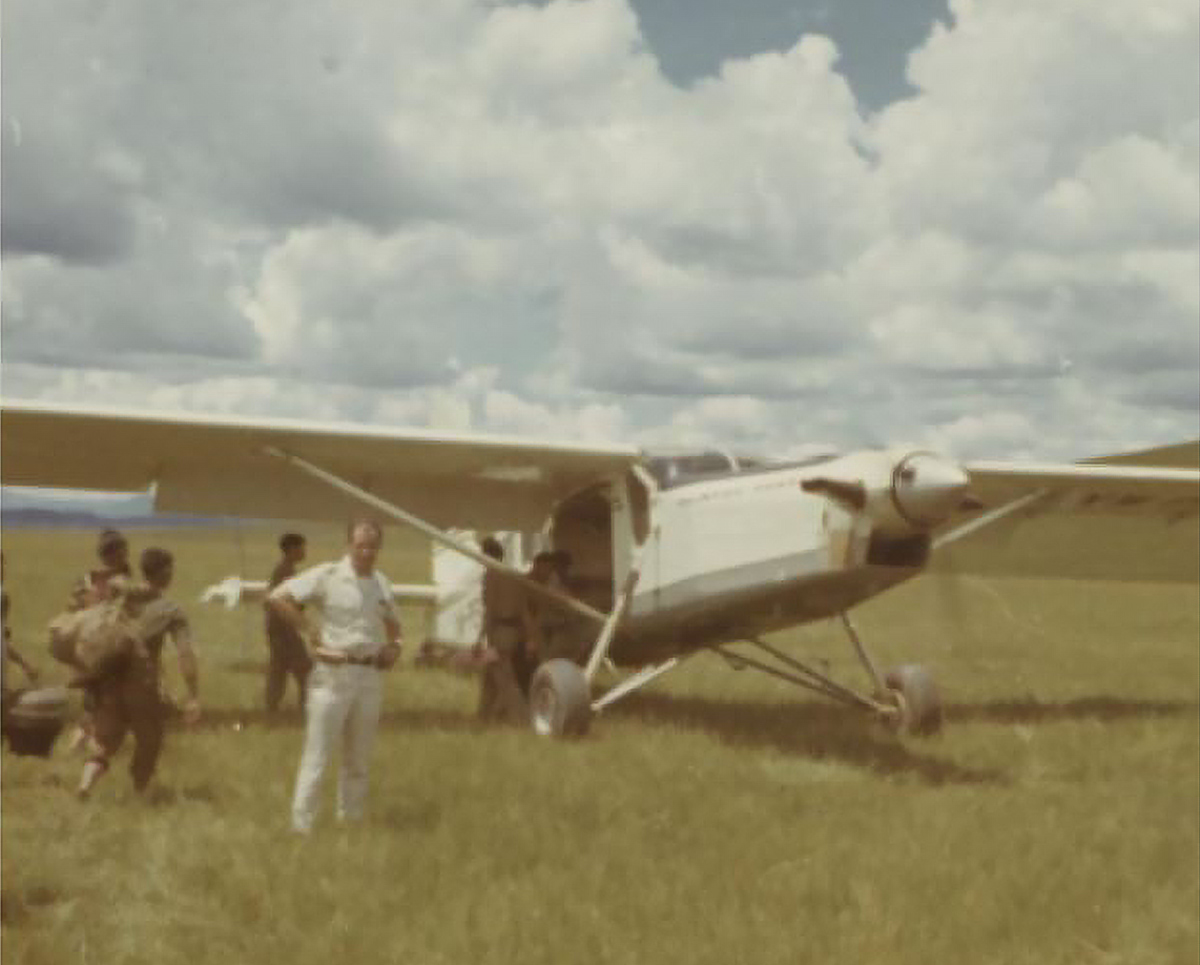
Lee Gossett with Hmong tribespeople beside a Pilatus Porter airplane on the Plain of Jars. (Photo courtesy Lee Gossett)
Gossett had first come to Laos in 1964 to kick for Air America, but then left after a year, first to work as a US Forest Service smokejumper, parachuting down to fight fires, then after flight training, to fly as a crop duster in New Zealand and a bush pilot in Alaska.
“In 1966, Air America contacted me and offered me a pilot position in Saigon on the Caribou program. I later transferred to Vientiane and flew for Air America for 18 months, then crossed over to work for CASI, where I remained until 1972,” Gossett told the Hmong Daily News.
Even though he left Air America, Gossett has nothing but the highest praise for its pilots, especially those who flew helicopters.
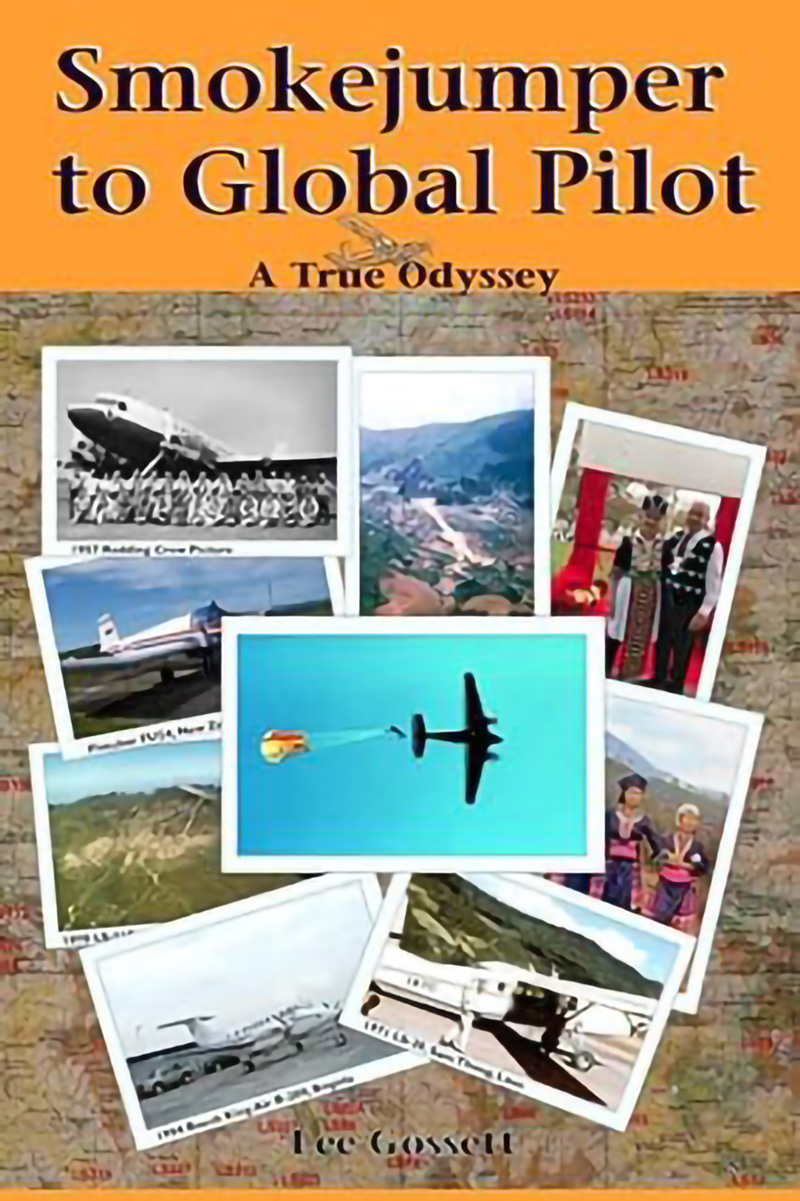
“In my estimation, they were the best of the best. Many US military pilots who were shot down over Laos owe their lives to the gutsy Air America helicopter pilots. I have seen firsthand when the Mayday call came in from a downed pilot, the Air America pilots dropped what they were doing and immediately flew to the aid of downed pilots,” he wrote in his book about his life as an aviator, Smokejumper to Global Pilot: A True Odyssey.
He also estimated that Air America had 60 percent of the fixed-wing business and CASI, which did not utilize helicopters, Had 40 percent.
Gossett, a veteran of the US Army Reserves during the Cuban Missile Crises era, flew the Beechcraft Baron and Pilatus Porter [STOL] aircraft from CASI’s bases in Long Tieng, Luang Prabang, Savannakhet, and Pakse.
“I flew [USAID] for public health, which included American doctors and medics and Hmong medics to remote Hmong villages. Most of my flying was in support of the CIA doing aerial drops, air ground communication and point to point missions hauling Hmong troops and doing ammo and food drops,” he said.
Gossett recounts one very harrowing mission in his book. It consisted of two Hobo Skyraiders, two Pony Express helicopters, and Gossett, who was flying a Beechcraft Baron with a CIA Case Officer known only as Chuck. They attended a briefing to infill a Lao team and exfill another Lao team at a specific location.
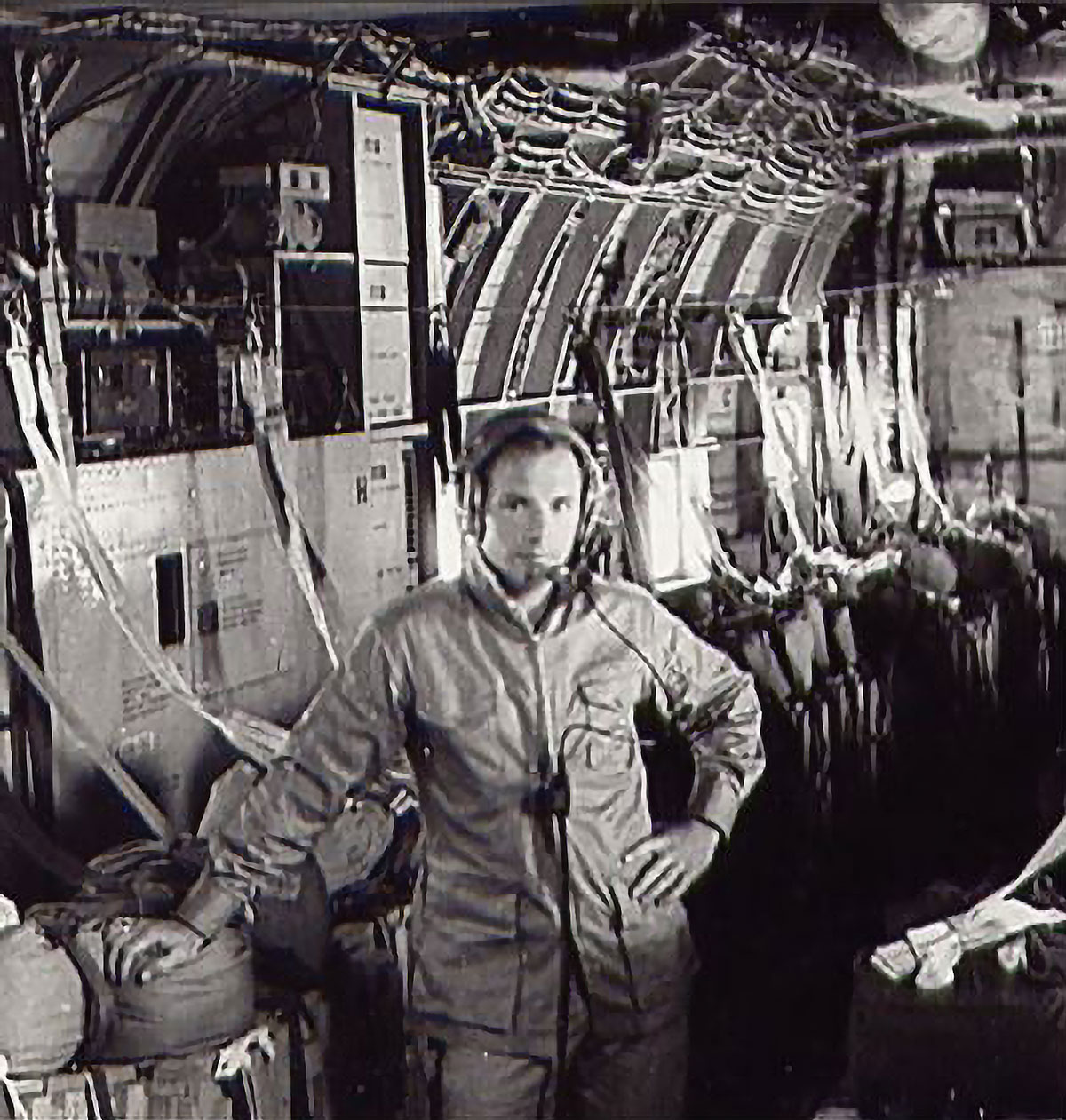
Lee Gossett ‘kicking’ cargo in a C-123, 1964: “You name it, we hauled it, and rigged it.”
“Just as we reached our cruising altitude, and right over Route 7, one of the Hobos called out, `Mayday, Mayday, Mayday.’ The Hobo had a broken oil line, and oil was pouring out of the large radial engine by the bucket loads, streaming over its wind shield and fuselage. The pilot announced he was going to eject,” Gossett wrote.
“The Hobo pilot again announced he was going to `punch out.’ Chuck told him to hang in there for a few more seconds and he would be in a `better area.’ I was beginning to wonder if there was a better area, as we were losing altitude at the same time. Chuck keyed the mike and said, `Now.’ You didn’t have to tell the Hobo pilot a second time. He ejected in a heartbeat, and his ejection seat thrust him upwards. His chute opened immediately and he floated down under a good canopy.”
After leaving Laos in 1972, Gossett continued flying in New Zealand and in Central America during the conflict there for the US Military’s Special Operations Group.
Lee Gossett hung up what he calls his “fly-for-hire wings” in 2003, but, says he, “I continue to fly my beloved Piper Super Cub to the remote Idaho backcountry each summer with my wife, Mary. It’s been a great journey.”
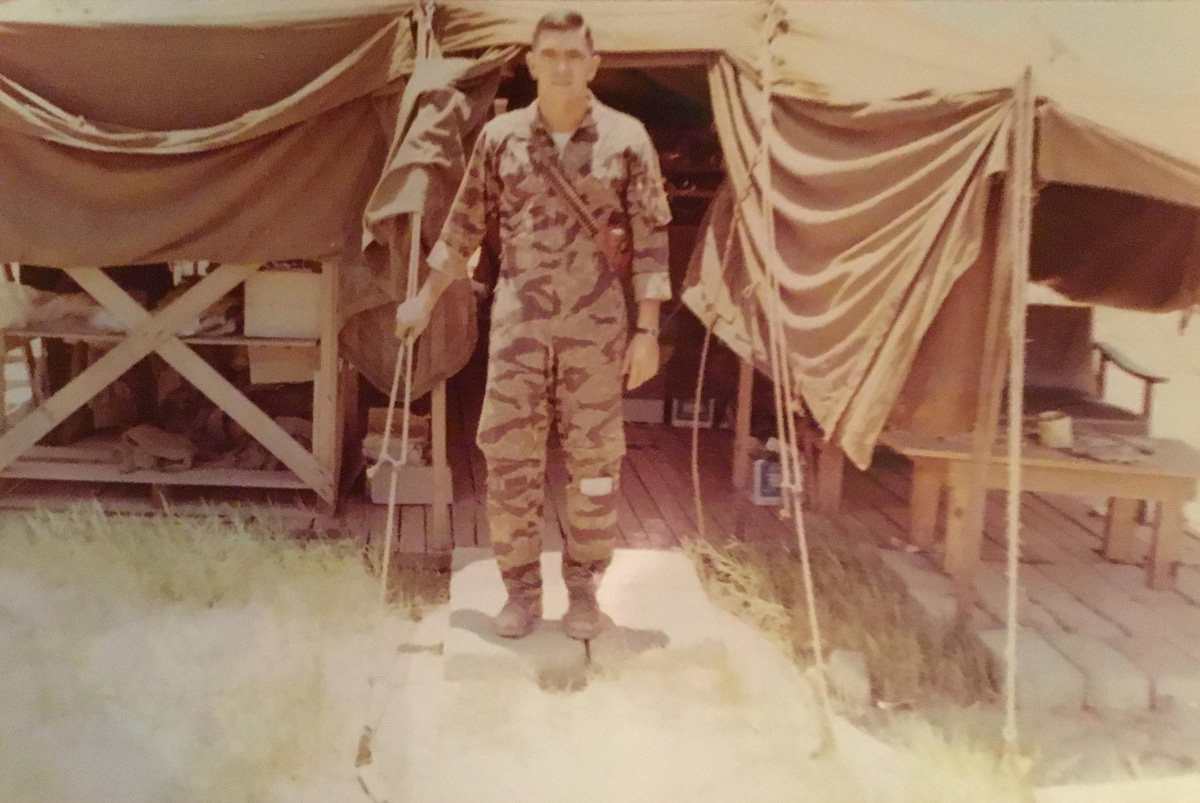
Gene Rainville in Vietnam, 1963 (Courtesy Gene Rainville)
Another pilot with both CASI and Air America on his résumé is Gene Rainville of Hilton Head, So. Carolina. Like Lee Gossett, Gene Rainville came to CASI after serving in the military. In Gene’s’ case as a Marine aviator from 1961-`66, during which he flew the H-34 helicopter. Also, like Gossett, he flew for Air America between 1966 – `68, also piloting the H-34 out of Udorn, Thailand, and then CASI, for which he flew the C-46 Curtiss Commando, C-47 Skytrain, Beechcraft Baron, and Dornier fixed wing aircraft from 1968 to 1975.
Among the “Customers” Rainville flew for CASI were Edgar “Pop” Buell, noted volunteer with the International Voluntary Services agency, and the also noted CIA operative “Tony Poe” (née Anthony Poshepny).
Most of his flying amounted to logistic work, dropping rice bags down to the Hmong who were strategically camped out in the Laotian hills awaiting battle with Pathet Lao and their fellow communist North Vietnamese Army troops, according to Rainville.
1975 was a sad year for him, for he was in all three Indochinese countries when they fell to those communists that year.
“I was in Saigon when it fell in April, Phnom Penh also in April, and Long Tieng [Lima Site 20 Alternate] in May. I witnessed a history that I will never forget. I was left with a creeping depression,” he remembered.
Rainville’s flying in Vietnam prior to that is particularly indelible in his mind so many decades later.
“This week we move soldiers forward to this hill. Next week they’re abandoning it. We were flying young kids in and flying them out wrapped in burlap bags. When we came into an LZ [Landing Zone], we had to be careful not to land on bodies. That was no fun,” he stressed.
Rainville said he enjoyed working with the Hmong in Laos but laments the fact that the US left thousands surrounded by a North Vietnamese Army division to fend for themselves.
One Hmong whom Rainville was able to save, however, was Royal Lao Army General Vang Pao.
“My job that day was to take Vang Pao, his wives and children, out of Long Tieng to a nondescript landing strip `somewhere’ in Thailand,” Rainville recalled. Whereupon they were met by several US government representatives.
“We flew illegally. No flight plan,” Rainville added.
He had flown the General on other occasions while working for Air America and remembers well how they spoke in their shared second language, French.
When he reflects on his time in Southeast Asia, Rainville says, “I felt I was a patriot. That flying for the Marines was a fine thing to do.”
When he thinks back to his time flying for Air America and CASI in both Vietnam and Laos, he says, “Living with and understanding different cultures was the most interesting part of my life.”
And 1975 was definitely a turning point for the life Rainville was leading.
“That was the end of my career in Southeast Asia,” Rainville said. “I was getting reproached from my family. My mother told me to come home and amount to something like my two brothers who had PhDs.”
And that was exactly what Rainville did.
“The CASI fleet was flown to Singapore. I cashed in my chips, came home, and got a job selling Cessna Citation jets. There was no place to play soldier anymore,” he said.
“All in all, my time in Southeast Asia was most precious.”
ABOUT THE AUTHOR — Marc Yablonka is a military journalist whose reportage has appeared in the U.S. Military’s Stars and Stripes, Army Times, Air Force Times, American Veteran, Vietnam magazine, Airways, Military Heritage, Soldier of Fortune and many other publications. He is the author of Distant War: Recollections of Vietnam, Laos and Cambodia, Tears Across the Mekong, Vietnam Bao Chi: Warriors of Word and Film, and Hot Mics and TV Lights: The American Forces Vietnam Network.
Between 2001 and 2008, Marc served as a Public Affairs Officer, CWO-2, with the 40th Infantry Division Support Brigade and Installation Support Group, California State Military Reserve, Joint Forces Training Base, Los Alamitos, California. During that time, he wrote articles and took photographs in support of Soldiers who were mobilizing for and demobilizing from Operation Iraqi Freedom and Operation Enduring Freedom.
His work was published in Soldiers, official magazine of the United States Army, Grizzly, magazine of the California National Guard, the Blade, magazine of the 63rd Regional Readiness Command-U.S. Army Reserves, Hawaii Army Weekly, and Army Magazine, magazine of the Association of the U.S. Army.
Marc’s decorations include the California National Guard Medal of Merit, California National Guard Service Ribbon, and California National Guard Commendation Medal w/Oak Leaf. He also served two tours of duty with the Sar El Unit of the Israeli Defense Forces and holds the Master’s of Professional Writing degree earned from the University of Southern California.
I was with CASI from 69 to 73 worked with lots fine people. CASI never gets much credit but we did same job as AA with much less fame!
Dear Phillip,
Thank you for your comment, which I have just now read. That’s the reason I wanted to write about CASI. I’d also love to write a piece about the Arizona Helicopters and the pilots and crew who worked for them, but thus far have not been able to locate any info about the company or people who worked for them!
Kind regards,
Marc
A great article Marc. Thank you very much for writing it.My father Major Richard E Allen flew Porter’s with CASI from January 1972 until 1975, after he’d retired.
Prior to that, he flew A1-Es with the 1st Air Commando Squadron from late ’65 until March 5th, 1966 when a 37 mm round exploded about 5-10′ from the left side of his cockpit ( on his second pass) over Tchepone. In the confusion he thought his engine was hit and jettisoned his canopies. Only to then did he realize that his left arm was useless and bleeding and that the concussion had thrown him back into his seat, while his left hand was on the throttle located on the left side, that he had pulled power. Once he realized the situation, he used his right arm/hand to push to full power and flew his “convertible” Skyraider to Saravane (LS44) located about 40-50 miles away, landed, stopped, turned off the ignition and passed out loss of blood. Six to eight weeks later while the family was visiting Dad at Wright Patterson AFB hospital, two men excitedly came into the room asking to talk to him. They’d been hunting for him to show him pictures that they’d taken of his plane at Saravane. I remember seeing them as a 13 year old. Two black and white glossy 3″ x 5″ photos. One showed the interior floor covered in blood and the other showed an a lone plane on the dirt strip that was a perfectly in tack A1-E except it only had a windshield. To me, it looked like a “convertible” plane. With his injuries he was told by the doctors at Wright -Pat that he’d never fly again and assigned to Edwards AFB. While there, he then applied and joined the 20th SOS (Green Hornets/Pony Express with the nickname “Sammy Small” and flew with the. from Feb 1968-Feb 1969 when he retired in Vietnam and started working for CASI. The resin I write this story is in hope that one of those two guys are Saravane on March 5th, 1966 who hunted him down six to eight weeks later at WPAFB or their relatives has those photos or information about Dad’s 156th and last mission as a Hobo. For his actions that day, he received his second DFC as a Hobo. Bernie Fisher was his bunkmate at Pleiku. I remember fondly visiting Dad with my sister in August 1972 and meeting other pilots at the Air America Club in Vientiane sitting around their 8′-10′ diameter poker table listening to their stories and drinking Heineken beers. meet Pop Buell and Monty Banks at the Purple Porpoise! I remember a letter that he wrote to me in January 1972 in which he told me about learning to fly Porter’s. He said that although “he was scared, he was fearless”. He got in over 3500 hours in Portes with CASI. I remember him talking about Lee. He married “Kay” who was the owner of the Tropicana in Vientiane. the day we landed there, her bar was the only bar not raided by the local police. Her fried rice and HoChiMen tacos were the best!
Hey guys, my dad flew for CASI in Vientiane. I was really young and didn’t know what to ask him about his time there. There was a person that called me one evening (said he lived in LA) at around my bed time, said he was a crew chief on a 46 or 47 and he said he flew often with Forrest all I remember is that he had a very heavy Asian accent. Anyway, does anyone remember my stepdad Forrest M Watson by any chance?
Hey everyone! I was just curious if anyone has photographs of the Beech Barons that CASI flew during that time period? Were they generally painted like the Porters? I am working on a project to collect CASI aircraft images for an art and history project. Any help would be appreciated.