Book Review
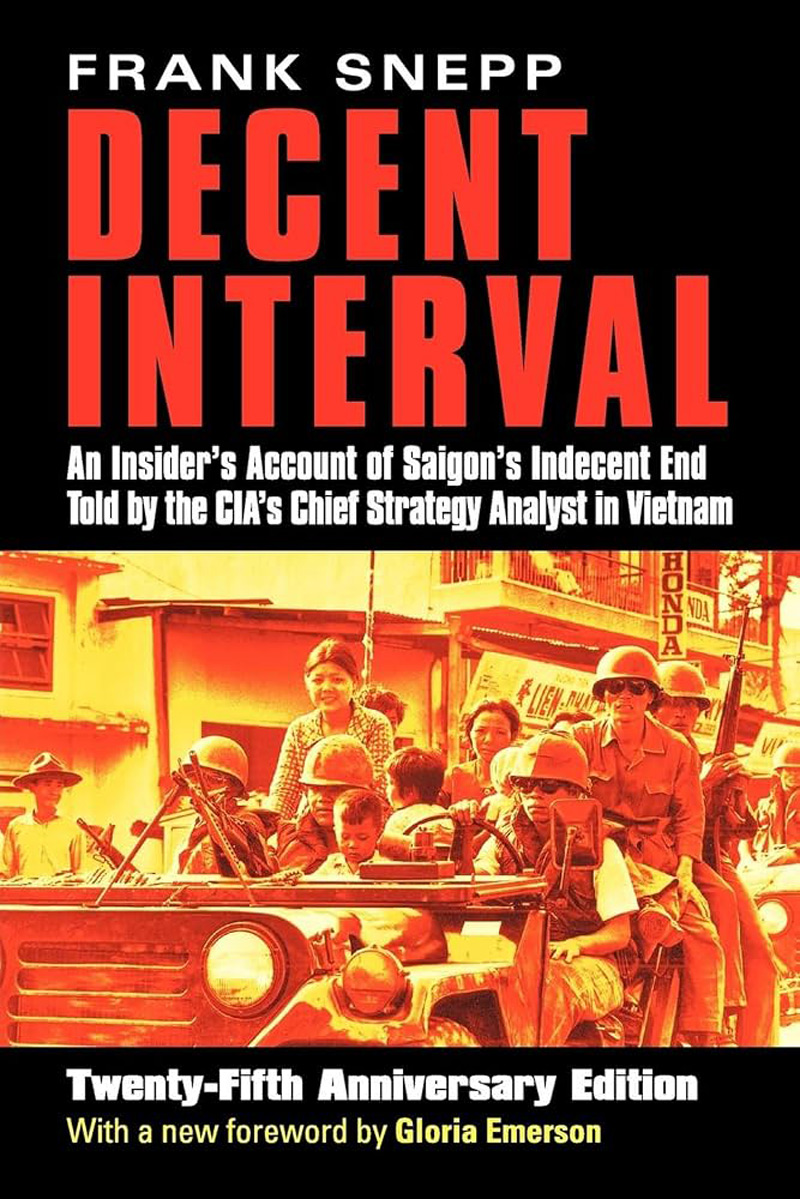
DECENT INTERVAL: An Insider’s Account of Saigon’s Indecent End Told by the CIA’s Chief Strategy Analyst in Vietnam
By Frank Snepp
University Press of Kansas;
25 Anniversary edition
(November 13, 2002)
616 pages
By Kenn Miller
Originally published in the November 2019 Sentinel
Former CIA strategy analyst Frank Snepp’s DECENT INTERVAL is surely one of the most controversial books — if not the most controversial book — to come out of America’s war in Vietnam. Snepp served two tours as a CIA strategy analyst in Saigon and other spots in Vietnam before and during the last days of America’s involvement in Vietnam.
Mr. Snepp is an excellent writer, and despite all the difficulties of his job and his position, one who seems to have liked Vietnam and the Vietnamese people. Although Sentinel readers who fought in Vietnam might not consider a CIA strategy analyst stationed in Saigon to be in the middle of the war — but as a CIA strategy analyst, Snepp had problems and frustrations few combat soldiers were likely to encounter. For example, one of Snepp’s duties was to try to get information from Nguyen Van Tai, who was considered to be one of the most important and high ranked NVA personnel to be captured. It was widely assumed that Nguyen Van Tai was full of secrets and insights, but he was very determined, devoted, and disciplined not to break. If I remember correctly, Snepp respected Nguyen Van Tai but did not think that he knew as much as the rest of those trying to break him did.
The North Vietnamese had offered to trade captured State Department officer Douglas Ramsey for Nguyen Van Tai, but the American officials refused the trade and allowed Ramsey to be imprisoned in a small bamboo cage for an extra year and half because CIA brass thought Tai was a more valuable prisoner than Ramsey was. After seven years of imprisonment, Ramsey was finally released in 1973, but not in a prisoner exchange for Tai.
Nguyen Van Tai remained recalcitrant and was not released. He held his mud until he was killed by his South Vietnamese captors just as NVA tanks were breaking through the presidential palace gates in 1975. It wasn’t until a couple of years after the fall of Saigon that Mr. Ramsey was told that the extra final year and half
of severe captivity was due to the fact that a North Vietnamese officer named Nguyen Van Tai too tough to break.
DECENT INTERVAL is very much the story of the fall of Saigon and the disastrous failing of American plans and intentions to keep those to whom America had promised protection from the Communists. It is a record of blunders, lies, bureaucratic infighting, misconceptions, cultural misunderstandings, dishonesty, cupidity, and bad luck that led up to what is often called the “Fall of Saigon.”
DECENT INTERVAL is an extremely important book, and Mr. Snepp did a thorough and diligent job of recording what happened. But I can not recommend DECENT INTERVAL as a pleasant read. The subject of the book is what some consider the saddest and most shameful national failure in American history. But if you have among your friends and family people who may still have some lingering respect for Richard Nixon and Henry Kissinger, reading DECENT INTERVAL will be an eye opener.
At least in theory, Americans tend to admire those who bravely tell truth to power. But people being people, and powerful people being powerfully protective of their power, truth tellers are often more likely to be targeted than they are to be praised. That was certainly the case of Frank Snepp and DECENT INTERVAL. The U.S. Constitution does not allow the government to censor books, but it does allow the federal government units the right to use lawsuits, and in a 1980 case the CIA took ownership of DECENT INTERVAL, and also — with what seems to me a shocking offense against our First Amendment, the CIA was given the right to pre-censor other publications by Frank Snepp. I hope that at least that last censorious attack on the Constitution has been —and should be—deleted.
The unofficial motto of the Central Intelligence Agency is “And ye shall know the truth, and the truth shall make you free.” ( John 8:32)
Frank Snepp told truth to power, and was punished for it, but is also widely respected as a truth teller.
Click here to read excerpts from DECENT INTERVAL!
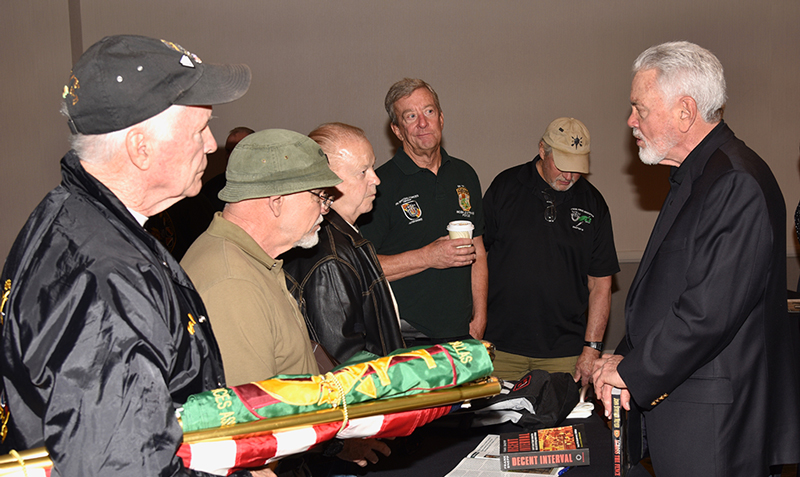
Frank Snepp, at far right, speaking with Chapter 78 members after speaking the November 2019 chapter meeting.

Frank Snepp
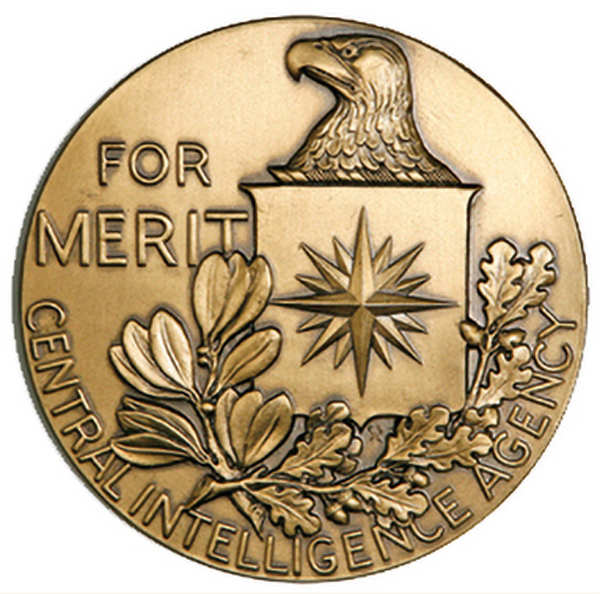
Intelligence Medal of Merit
For the performance of especially meritorious service or for and act or achievement conspicuously above normal duties.
About Frank Snepp
Frank Snepp graduated from Columbia University’s School of International and Public Affairs and was recruited into the CIA in 1968. He was assigned to Vietnam where we spent the six years as a senior interrogator, a counter intelligence operative and chief strategy analyst for VC/NVA activities in South Vietnam. He worked closely with embassy officials, including two ambassadors, and received the Intelligence Medal of Merit for his work. He was one of the last Americans to leave Vietnam in 1975 and witnessed first-hand how poorly the exfiltration of the Americans and their allies was handled.
He later wrote Decent Internal describing this disastrous exfiltration which led to a landmark First Amendment national security decision by the Supreme Court, an experience he describes in his second book, Irreparable Harm.He has worked as an investigative journalist and been on the leading edge of reporting on many stories including the Iran Contra Affair, Seal Team 6, environmental issues, and elder abuse.
He has won every major broadcast award for his work including the Peabody (the highest award for broadcast journalism) and an Emmy. He has worked for a variety of broadcast networks and publications and has provided content and commentary for hundreds of documentaries on national security and the Vietnam War. He has not slowed down at all and is currently working on two books: one about lessons learned from Vietnam which he is co-authoring with Ret. Colonel Henry Shockley, an Army Intelligence Officer he worked with in Vietnam, and another about the highest ranking NVA officer captured during the war – a prisoner he successfully interrogated.
About the Author:
Kenn Miller is a former LRRP and 101st Ranger veteran. He is author of the successful and well-received novel Tiger: The LURP Dog, as well as Six Silent Men, Book Two (101st Lrp/Rangers), also highly regarded. He has been a frequent contributor to the Sentinel. He lives in Southern California.
Leave A Comment