‘‘‘‘‘‘‘‘‘‘‘
The Story of a Navy Seabee and an SF Medic
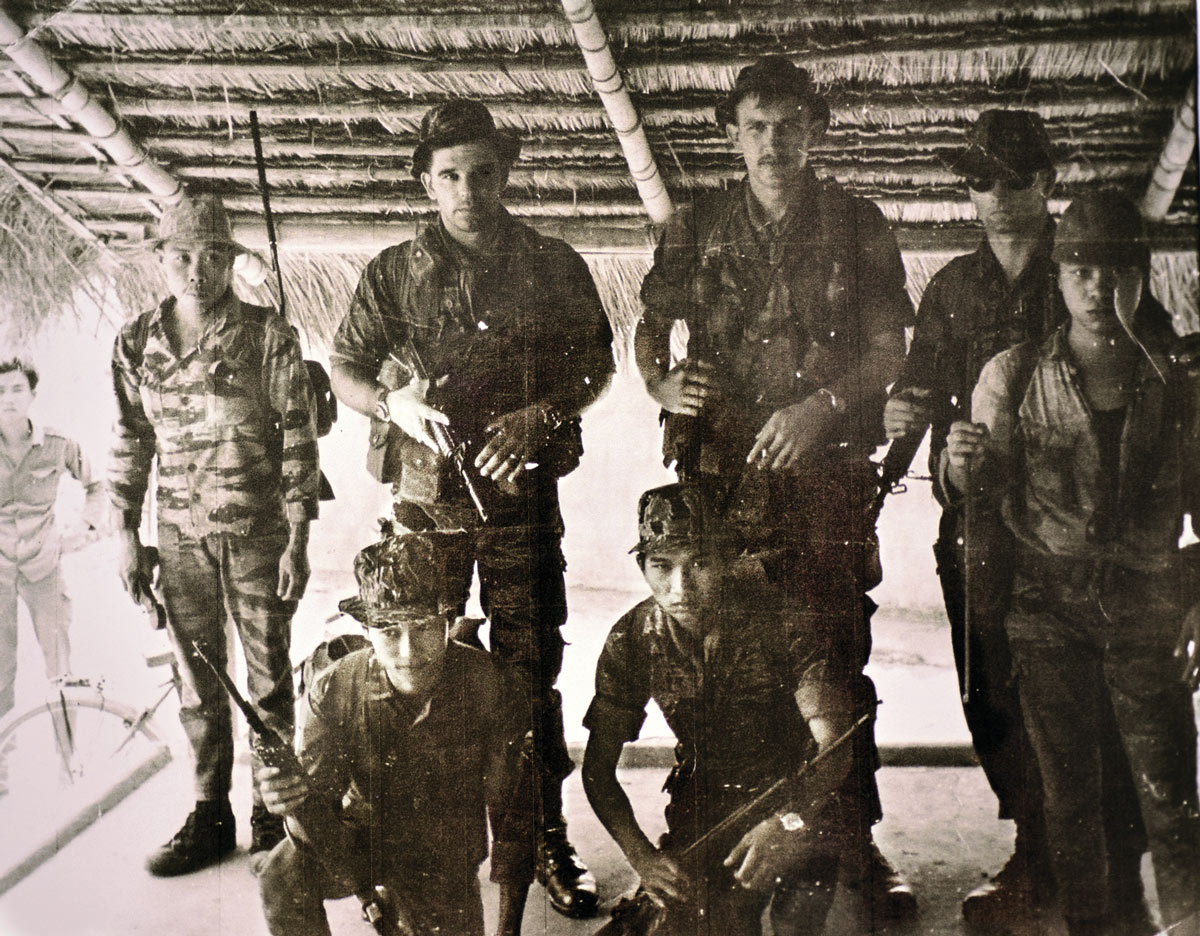
Three members of A-102 at Tien Phuoc, I Corps Vietnam getting ready to go on operation with the camps Montagnard strikers, top L to R, then bottom row. Indigenous (Montagnard) radio operator, Cpt Cleckner, SSG Cashion, LT Dan Schulte, and three Montagnard Strikers.
From the notes of John E. Cleckner Sr.
Originally published in the October 2015 Sentinel
Laying in a rice paddy in early January 1969, Captain John Cleckner, Commanding Officer of A – 102, Tien Phuoc in I Corps Vietnam, was leading two indigenous companies of Montagnard troops and their recon platoons in an operation when they encountered a large NVA troop movement. Heading East bypassing his camp, moving toward the South China Sea and the towns of Tam Ky, An Hoa and Chu Lai, CPT Cleckner counted hundreds of soldiers and porters carrying combat gear, rockets and large bundles. His first thought was this could be an African Safari except for the large amount of combat equipment.
Realizing that this large unit must be eliminated he contacted the artillery battery comprised of 155 mm guns located at his A Camp and they began a fire mission including HE and WP to destroy the NVA column. Following thirty minutes of sustained fire CPT Cleckner called the LLDB Commander (Vietnamese Special Forces) for a BDA. He refused. No followup was done much to his dismay.
Little did the members of A-Team 102 realize at the time, but this operation was the beginning of an attack on their camp that would last until September 1969. On February 23, 1969 a month and half later Camp Tien Phuoc was hit by a NVA Heavy Weapons Regiment. The prolonged battle was on!
Beginning in late 1968 thru early 1969 intelligence reports repeatedly noted the build up on North Vietnamese forces in the area adjacent to A-102. This also consisted of elements of the 3rd Regiment of the Second NVA Division. CPT Cleckner and the members of his team began in earnest to reinforce the camps defenses. One problem the team could not directly address was the rebuilding of their dirt runway which provided the team with supplies and reinforcements. Requests were repeatedly made to the C-Team in Da Nang and higher headquarters for combat engineers to upgrade the runway for use by C-123 and other aircraft.
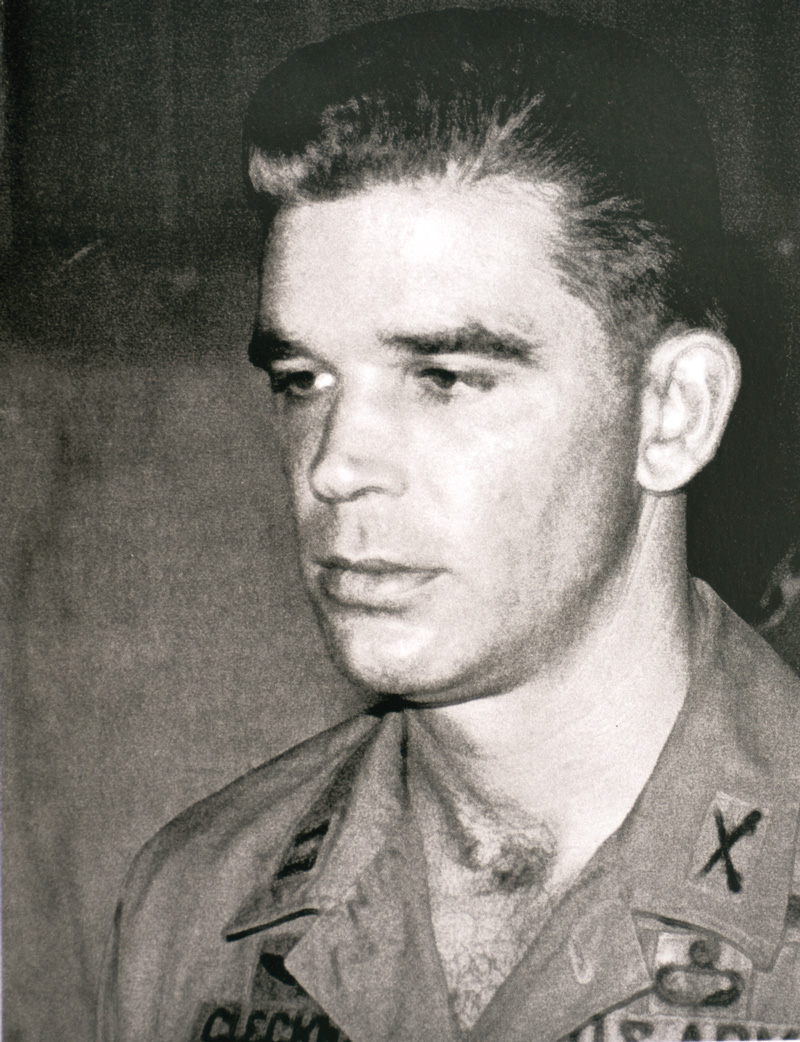
A-102 Team Commanding Officer, Captain John Cleckner
In early 1969 a huge Sikorsky “flying crane” flew into camp and deposited engineering equipment adjacent to the runway. One man climbed out of the huge “chopper” and began moving the equipment. CPT Cleckner was following this individual with his binoculars and asked his team who this guy was! His and their comments were “this guy is going to get himself killed.”
Several members of A-102 jumped into team vehicles, 3/4 ton trucks, and locked and loaded the .30 caliber machine guns and sped to the rescue of this lone figure on the runway. On their arrival the individual was getting out of a dump truck wearing a uniform no one recognized. CPT Cleckner asked him who he was. “I’m Godfrey” and some unit that the team members did not recognize. CPT Cleckner then asked him what he was doing. “I am here to fix your runway.” “Where is the rest of your crew” spoke Cleckner. Godfrey then said “I am the crew. I am a Navy Seabee and can do the job!”
So Cleckner asked him what his rank was. Godfrey replied in Navy terms and Cleckner again was mystified! So trying to clear the mystery in military pay grade terms Godfrey said he was an E-4. CPT Cleckner and members of the team then informed the Seabee of the danger of rebuilding the runway due to frequent incoming rounds and interdiction by the NVA and suggested that the two SF Engineers and camp security “help.” Godfrey was pleased at this support from the Green Berets!
Petty Officer Third Class “Seabee” Godfrey worked from daylight to dark every day and his work became routine. “I had nearly forgotten about him until the night and early morning hours of February 22-23, 1969,” said CPT Cleckner. “Just after 2am we came under heavy attack by the NVA with artillery fire then frontal assaults on the camp. During a heavy rocket attack just after dawn the camp XO…LT. Denny Drewry and Senior Medic…SSG Bob Cashon were both seriously wounded.” Petty Officer Godfrey approached CPT Cleckner and said, “what can I do to help?” He mentioned that his heavy equipment had been destroyed and that he was trained on the .50 cal. machine gun. Cleckner then assigned Godfrey to work with the Team Sergeant, MSG Ramon Mori, to man a .50 cal. bunker on the east side of the TOC. For the following nine days and nights they fought together with great valor.
At this phase of the assault on Tien Phuoc it was estimated that over 4000 rounds of indirect fire landed on the A-Camp. By intelligence the NVA suffered over 900 killed and wounded.
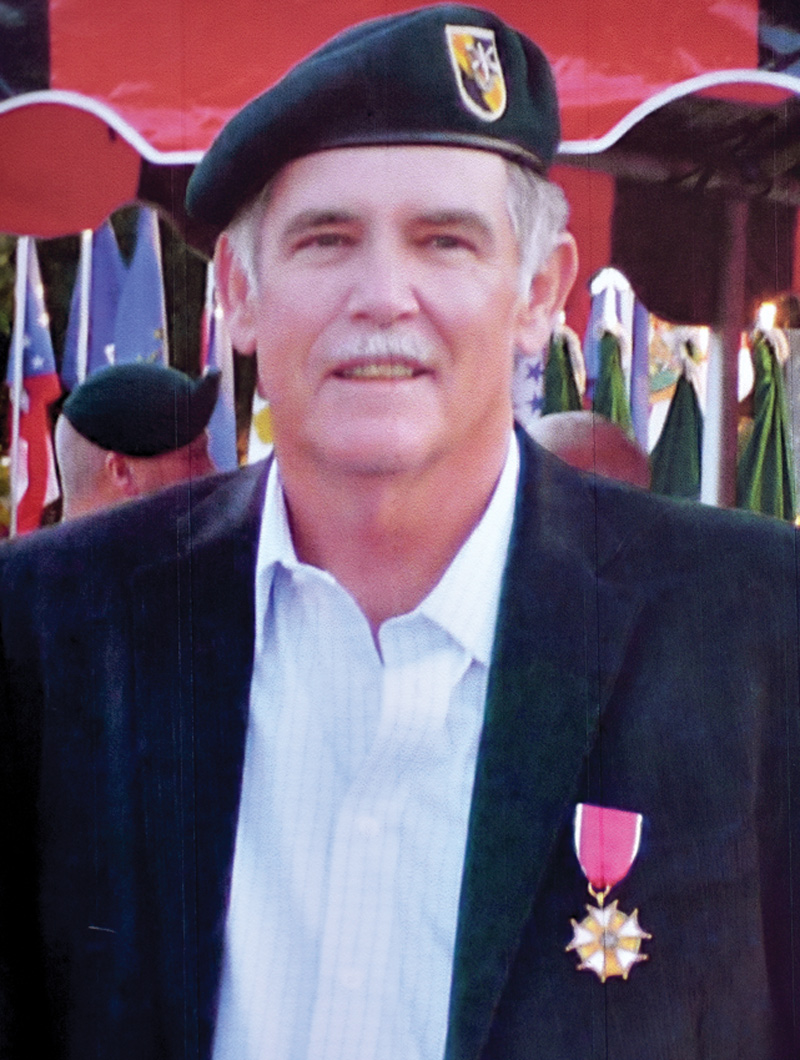
SF Team A-102, Tien Phuoc Medic SGT Cliff Neill at a SF function wearing his Legion of Merit award from Vietnam.
On March 6, PO Godfrey was seriously wounded but continued to man the .50 cal. machine gun during assaults. “When I heard of his wounds I had him medevaced” said CPT Cleckner. Following evacuation of Godfrey, Team Sergeant Mori told CPT Cleckner of the heroics performed by the Navy Seabee. Impressed with his team sergeants comments Cleckner recommended PO Godfrey for a Silver Star and a Battle Field Promotion.
The fighting continued and intensified despite support from The Americal Division and the 101st Airborne. TAC Air support was provided by all services which included the Air Force, Navy and Marines. “By the 15th of May we had been fighting for two and a half months against the NVA. Many SF Team members, especially the medics were wounded and required medevac and thus replacement.
SGT’s Cliff Neill and Francis Fox arrived as a replacements for Jim O’ Donnell.
By early May the NVA’s assault on A-102 had resulted in the Green Beret’s losing possession of their badly needed airstrip. On May 13-14 CPT Cleckner decided to organize an assault to retake their airstrip. MSG Mori, MSG Lloyd Lampkins and CPT Cleckner would each take a Montagnard Company and attack the NVA holding the airfield from the NW and SW.
Cleckner said, “I always take a medic with me on combat operation and decided on the new man, SGT Cliff Neill. I warned Cliff that there would be casualties.”
“On May 15 we went into the attack from a linear position on high ground above the NVA who were dug in along the airstrip from west to east. Firing down on them and tossing numerous grenades put a momentary halt on their resistance. One C-123 swooped in and low-lexed its load and turned on its jet assists to leave when it began taking small arms fire. Another bird came in on a fast run and took a B-40 rocket thru the fuselage without exploding. The gutsy pilot dropped his load and left. A third aircraft was not so lucky and lost an engine but made a swift exit.”
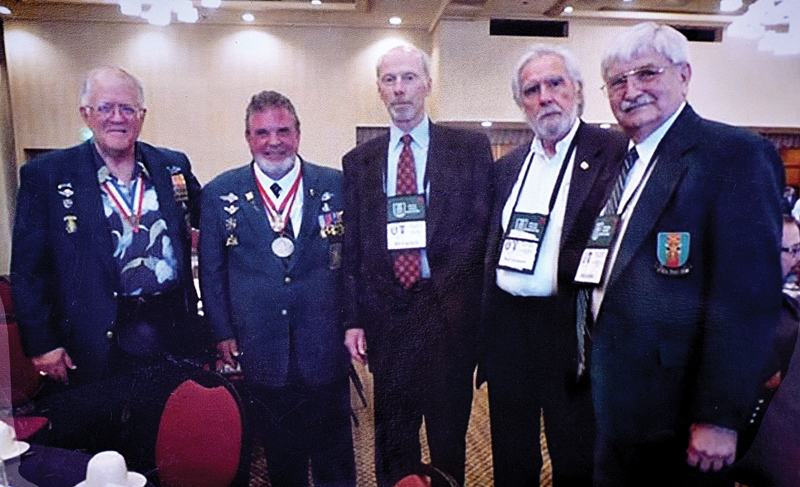
Left to Right: Barry Archer, CAPO Officer; John Cleckner, CO; Bill Laprade, XO; Phil Jacques Commo; and Bob Keller, CAPO Officer, attending SF National Convention.
Ready to call in close TAC Air Support, CPT Cleckner was at the relocated CP speaking with the FAC when a B-40 rocked exploded killing everyone except him. Unfortunately his left leg was hit by shrapnel on the inner thigh resulting in a severe vascular injury.
SGT Neill responded immediately from about twenty yards away dodging small arms fire and stabilized CPT Cleckner, applying tourniquets and starting IV’s to infuse serum albumin. Viewed by members of the team to be near death, Cleckner was called in KIA.
However SGT Neill continued to provide excellent care and had the CPT moved to the camp helipad for rapid evacuation.
Arriving at the Americal Evac Hospital to a waiting team of doctors, who responded with surprise to see he was still alive, he replied “hell yes I am.” They told him he would loose his leg but would survive. Following several surgeries to include a vascular graft on the femoral artery John Cleckner survived. And his leg was preserved and functional.
Later during the battle SGT Cliff Neil was brought a badly wounded villager requiring an amputation of her leg to survive. Her recovery was monitored by doctors at the Americal Hospital and the C-Team Surgeon.
For his exemplary efforts as an SF Medic SGT Cliff Neill awarded the Legion of Merit. A very rare award for an enlisted man.
Medic Jon McCloud preformed heroically and was awarded the Silver Star and Purple Heart. Bob Cashon fought hard and was severely wounded….. Jim O’Donnell was awarded three Bronze Stars with “V” for Valor. He graduated from medical school after discharge. The Medics of A-102 had performed magnificently.
Casualties from February 24 thru March 24 1969: SF KIA -1, CIDG KIA-54, SF WIA-12, LLDB WIA-3, Navy WIA-1, CIDG WIA -136*
The Seabee Command downgraded PO Godfrey’s Silver Star to a Bronze Star with “V” for Valor, and awarded him a Purple Heart and promoted him to E-5, Petty Officer Second Class.
“My Team and I honor Godfrey to this day as part of our team and as a brother Warrior. That is my Seabee Story, about a guy named Godfrey. I never did know his first name, but he was one hell of an Engineer. He rebuilt our runway, enabling us to be resupplied during a five month siege of our A Team and he still had time to kill a whole bunch of bad guys while wounded.
*Green Berets at War by Shelby Stanton, P-192; Story edited by Lonny Holmes
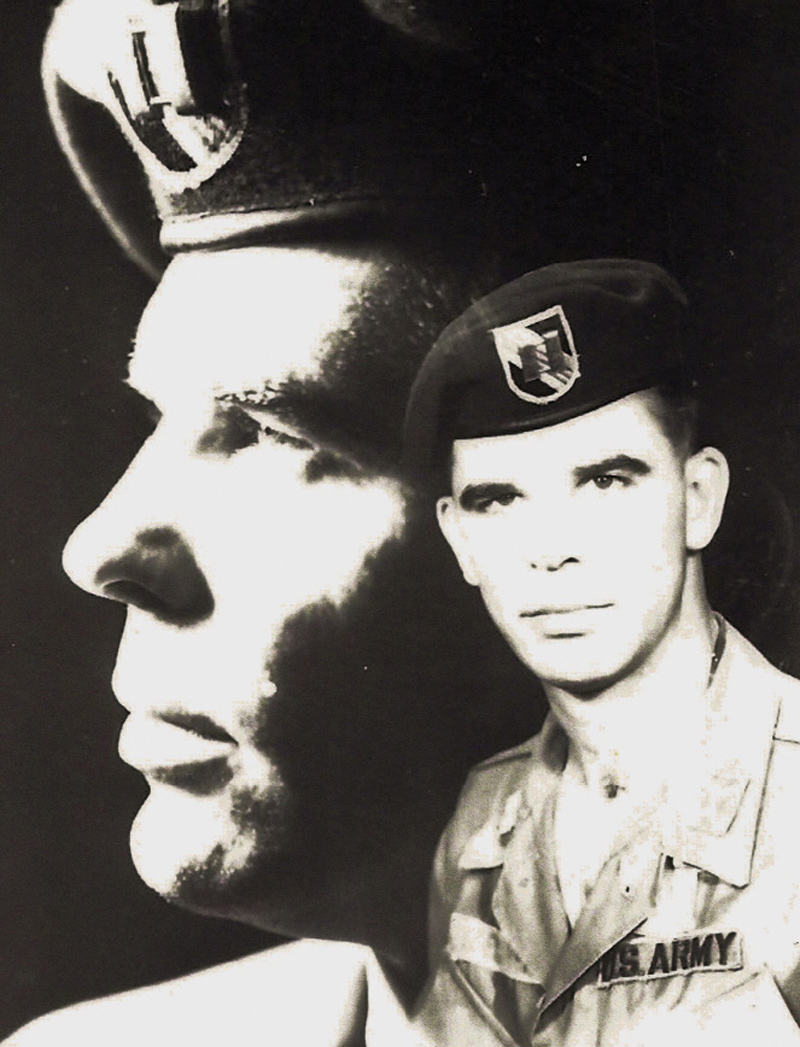
ABOUT THE AUTHOR —
John E. Cleckner passed away on Saturday, May 11, 2019 at Mercy Medical Center in Redding, California after a short illness. Major Cleckner enlisted in the United States Army in July of 1957 and served for over 22 years in U.S. Army Special Forces.
Major Cleckner Initially trained as an Infantry Soldier, Cleckner attended Airborne School, where he was the honor graduate of his class. He served with the 82nd Airborne Division, and 3rd Special Forces Group after completion of SF Training. He then graduated from OCS, was commissioned a 2nd Lt., beginning his career as an officer with the 82nd Airborne Division eventually commanding HQ & HQ Company of the 508 PIR. He then returned to Special Forces having several choice assignments in CONUS. He was recruited for the Phoenix Program in Vietnam and ultimately Commanded two different A-Teams. He was then appointed 5th Group briefing officer by Colonel Rheault.
Major Cleckner was retired medically from the 7th Special Forces Group in June 1979.
His decorations include the Soldiers Medal for Heroism, Bronze Star for Valor, Bronze Star for Meritorious Service, Purple Heart with two Oak Leaf Clusters, Army Commendation Medal, Armed Forces Expeditionary Medal with Bronze Star, Combat Infantry Badge and Master Parachutist Badge plus service and foreign awards.
Major Cleckner was appointed a member of the Special Forces DMOR and has been awarded the Saint Phillip of Neri Medal and the Ohio Medal of Valor.
After retiring from the Army, John continued his service through a multitude of veterans’ service organizations that included authoring and coauthoring Local, State and Federal legislation, consulting on programs and projects that directly benefit veterans and their dependents, raising funds in excess of $1,500,000.00 to support veterans, their dependents and communities as well as civilian programs benefitting children and their families. John even returned to school at the age of 62 to obtain a degree as a Legal Assistant just so that he could provide help to veterans in need with their legal issues at no cost to the veteran.
During his life, John earned five college degrees; two of which were presented with honors. He strongly supported the community and veterans issues since his retirement. At his passing he left legacy of veteran advocacy in Northern California.
For further information see his DMOR biography.
Leave A Comment