Primum Non Nocere
By David Daugherty, DMin, MA
An 18D medic getting involved in US Army Special Forces as a young man was less about patriotism than it was about self-actualizing. Some differences between active-duty and National Guard Special Forces Groups are how units in the Guard Groups are manned by people of the same ilk. Active-duty units draw in different cultures and backgrounds from around the country. But my first Special Forces unit essentially represented the same New England culture.
My first SF Company Commander was also a Special Agent with the Immigration and Naturalization Service. We also had police officers, firefighters, entrepreneurs, chefs, city council members, tradesmen, you name it. And we all had the same accent that hints at a subtle sarcasm no matter how serious the conversation. Yet you will find the same grit, determination, and physical toughness among the men as any active-duty Green Beret—sometimes even more because of the various chosen lifestyles (yes, there are stories that could make nearly anyone double back).
My immersion with active-duty soldiers in the Q-Course was a culture shock. The irony should be obvious because we are supposed to be cultural experts, capable of perceiving and integrating foreign values of indigenous populations to multiply local forces in Foreign Internal Defense missions. Even in the post-9/11 era, what sets US Army Special Forces apart from any other Special Operations Force in direct action missions is our cultural expertise. So, I can say that as a young National Guard soldier in the Q-Course and having my corporal bars punched in, I knew how not to make cultural differences more complicated: Primum Non Nocere.
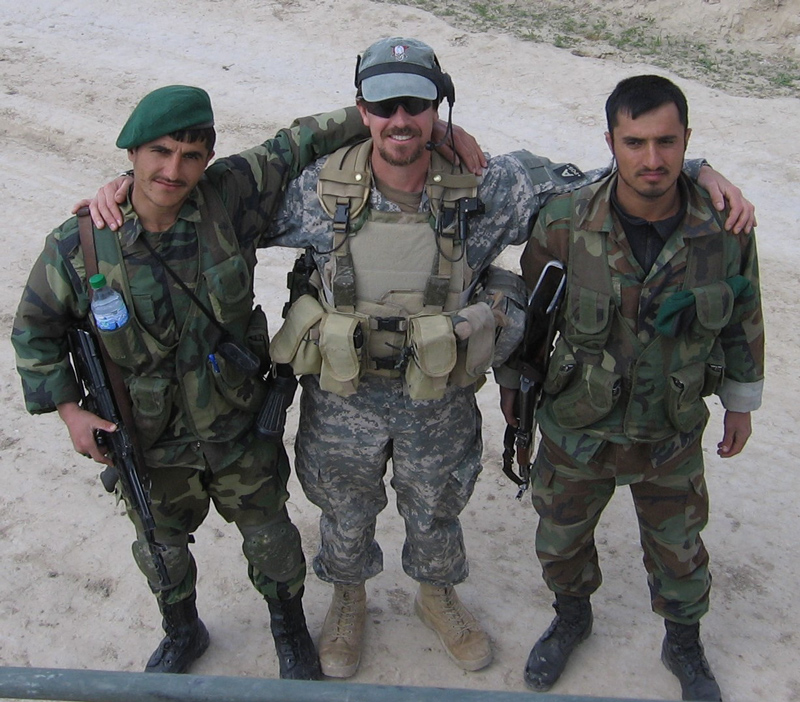
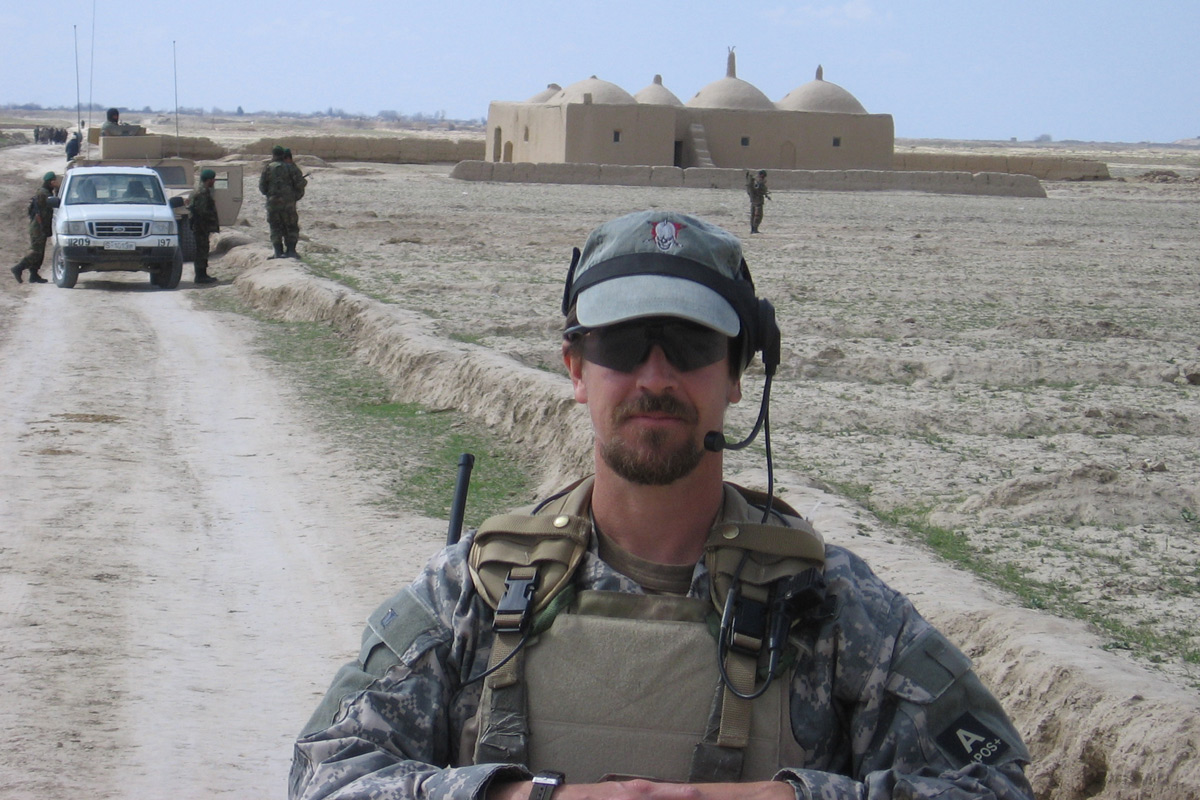
On patrol with Afghan National Army. (Photo courtesy David Daugherty)
Being culturally immersed in the active-duty military with other Special Forces candidates from every kind of Army unit—many with combat experience in 1997—showed me that I had very little to contribute to the conversation. I kept my mouth shut. I listened. I discovered that men had joined the Army because of family tradition, patriotic conviction, and basic familiarity. Their individual soldierly skills were superior to mine, as were how they carried themselves. And I was most surprised at how selfless they could be when the moment called for it. Don’t get me wrong, I was no slouch. I had earned my way on a faster track to Camp Mackall. But I had a lot to learn.
Ideologically I was good to go. I was determined to become the warrior diplomat that I was told I could be as a Special Forces medic. Attaining the knowledge, power, and ability to both kill and heal seemed like the perfect way to do good in the world. But with a young man’s attitude, I sometimes put the cart before the horse and temporarily forgot the importance of those values my active-duty counterparts brought to the table. Nonetheless, the overarching ideology to Free the Oppressed and do them no further harm, along with pure determination, drove me to Robin Sage.
It may not be entirely bad to be so high-minded that it takes a certain amount of ego to earn your place. So, my counterparts demonstrated a balance of ego and humility with realism that influenced my focus and maturity. These men had a more realistic outlook on what was expected of them, and over time I learned to follow suit even when my mind traversed elsewhere.
Though it takes considerably more resources to make a Special Forces soldier than, say, an infantryman, these men still had a better understanding of the sacrifice they may have to make. They were more intuitive that their sacrifices could be much more costly for them and their families than the impact of their potential death could have on the mission they would be sent to. This kind of understanding came later and fully for me in the realities of how America fights her wars.
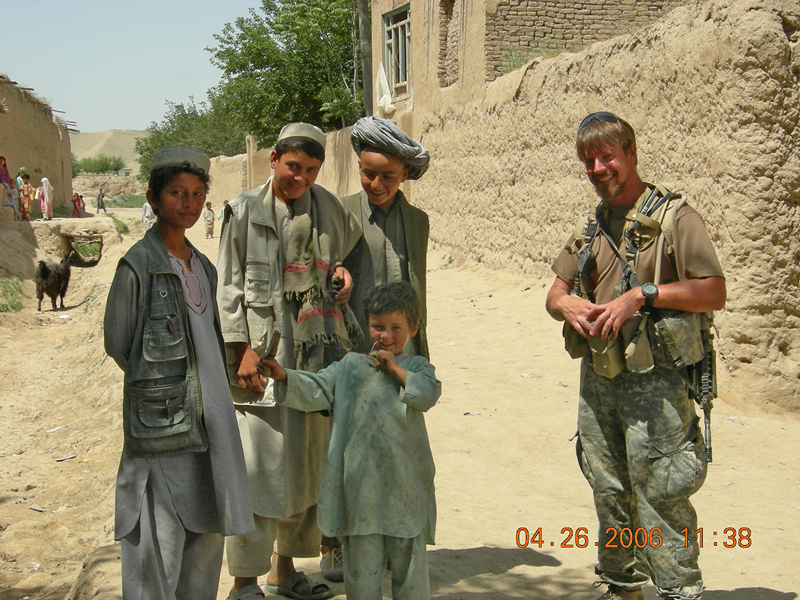
Afghan kids having fun with a slingshot. (Photo courtesy David Daugherty)
I did progress in the skills and the mindset of being a warrior diplomat. The ideal of winning the hearts and minds of the people to live the motto “De Oppressor Liber” never left me. In pursuit of it, I learned invaluable lessons for the mission but for life beyond as well. I learned about the permanence of death. I learned that one cheap bottle of antibiotic for a child amputee could turn a village. And I learned that the 18D is a unique position indeed; the Special Forces Medic has developed and been entrusted with an autonomy like no other.
An ODA is expected to have the capacity to function independently. While Command and Control strategy has changed significantly in SOF since the Vietnam War, largely due to communications technology and expansion of command structures, our leadership and critical thinking skills remain intact. This creates tension. And that tension can manifest like no other in the Special Forces medic. I believe this is a direct result of our medical training.
The training of a soldier wires the brain to integrate into a unit. The training succeeds in orienting a soldier to function synergistically under the Commander’s intent. Special Forces training capitalizes on mature soldiers’ capacity to think critically without compromising that synergy. But the “Force Multiplier” concept does require a greater amount of autonomy, marking our distinction from conventional command structures.
Special Forces Medic training, in my opinion, takes this even further. To learn medicine in the Q Course with such depth and intensity means we begin to understand the “practice” of it philosophically and creatively. We train in hospitals alongside medical residents and develop independent decision-making processes with equal measure—diagnosing, prescribing, and weighing outcomes. We are entrusted with the life and well-being of American lives.
I manifested this critical thinking and decisiveness almost accidentally on a deployment to Afghanistan in 2006.
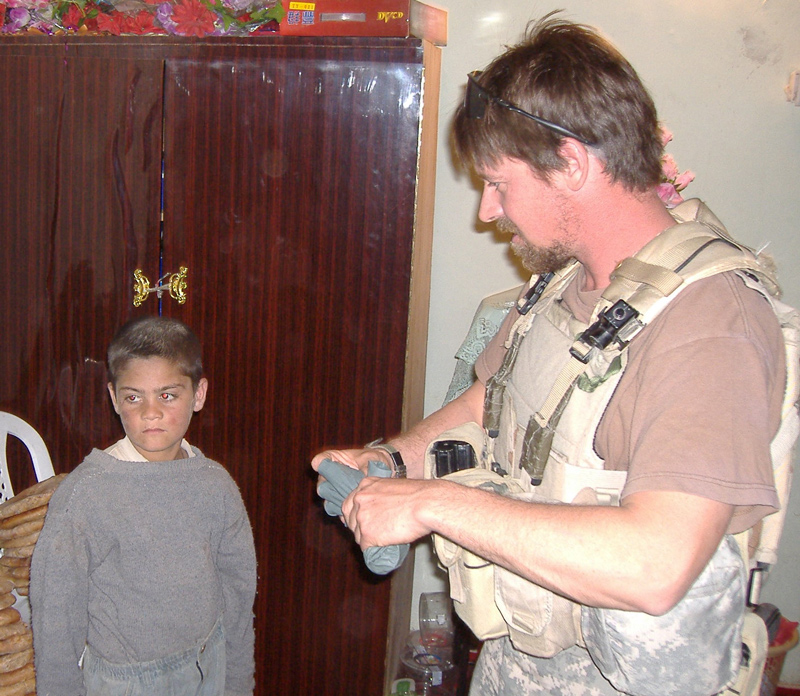
Providing medical care in a local orphanage. (Photo courtesy David Daugherty)
There was major flooding in villages near our Forward Operating Base. The ruling warlord was exploiting the population and making it even more difficult for villagers to survive. Specifically, we were getting reports of life-saving resources being taken from women and children. I also learned that we had access to up to $1M worth of humanitarian aid. I turned to the Team Sergeant about the warlord bullying and plight of the indig. His response was my education. He told me that planning and executing a humanitarian mission had been my choice all along. You mean to tell me I get to manifest as the warrior diplomat I’d striven to become—to self-actualize in an obscure Afghan village, helping women and children and putting a warlord in his place? Say no more.
The mission was a huge success. We supplied the villages, developed stronger bonds with our Afghan National Army counterparts, and revealed corruption. I was, of course, acutely aware that I had a lot to learn about leadership, planning, and execution. I was totally dependent on every area of expertise that the ODA brought to the table. To be sure, this was a National Guard team, and we drew from our civilian experience as well—law enforcement, IT, sales, and supply chain management, and all that creativity was mobilized. However, the fact that it happened was the result of my own ideals developed as a young National Guard soldier in the Q-Course.
I still had a lot to learn about power. I did come face-to-face with that warlord. Some interpreters introduced me to him, then quietly exited the room. The power to handle justice emotionally existed in that moment. He stood from his chair and walked out a back door. I stood just outside the doorway watching him disappear into obscurity when another member of the ODA came into the room to stand beside me (thanks, Bob). Ultimately, the autonomy of an 18D may only be as effective as the astuteness of his teammates.
About the Author:
Since serving in Special Forces and Pararescue, David Daugherty has been a behavioral health clinician and chaplain specializing in veterans and adolescents.
Every memory and feeling that you shared brought up another hundred for me that you didn’t. That “Ah ha!” moment when you realized that you and only you could change the lives of the people in your AOR was a wonderful description of how rewarding being an 18D is and how much you bring to the mission. It also speaks to the spirit, bravery, sacrifice and humility of the great men who wear the Green Beret – Active and Guard. Walking alongside Great Americans such as you has been the greatest privilege of my life. Thank you for sharing your story.