By Emma Spencer
Welcome Home, Sister Director, Producer, and Director of Photography
“I never expected that my one year in Vietnam would follow me for the last 55 years.” — Penni Evans
Welcome Home, Sister is an upcoming documentary feature film that explores the overlooked story of the American Red Cross Donut Dollies, civilian women who served alongside America’s troops in Vietnam, and the enduring consequences of their service—from possible Agent Orange exposure to decades without recognition—told through the life of Penni Evans.
The Pinion Pines trailer park sits in a high valley, the peaks of Colorado’s sheer mountains keeping the once-promising mining town in a kind of isolation. Penni Evans lives there, alone, and with the memories of war the guiding ethic of her trailer’s décor. In 1970, Penni Evans went to Vietnam as a Donut Dollie: an American Red Cross volunteer sent into the war’s combat zones to boost the morale of American troops. Unlike their military counterparts, she and the other Donut Dollies received no health or pension benefits upon returning to an America ambivalent about the war’s moral and strategic legacy. More than five decades later, Evans lives alone in a remote Colorado valley, fighting breast cancer potentially caused by wartime Agent Orange exposure—a forgotten casualty of Vietnam and a living testament to the enduring and unequal ways the United States treats those who serve its wars.
Between 1965 and 1972, 627 recent college graduates volunteered to serve in Vietnam with the American Red Cross’s Supplemental Recreation Activities Overseas Program, better known as the Donut Dollies. Following the program’s success during World War II and Korea, the U.S. military requested its deployment to Vietnam to help sustain troop morale. Traveling by helicopter and jeep, these women logged more than 2.7 million miles throughout South Vietnam, bringing games, conversation, compassion, and a touch of home to American troops serving in some of the war’s most dangerous places.
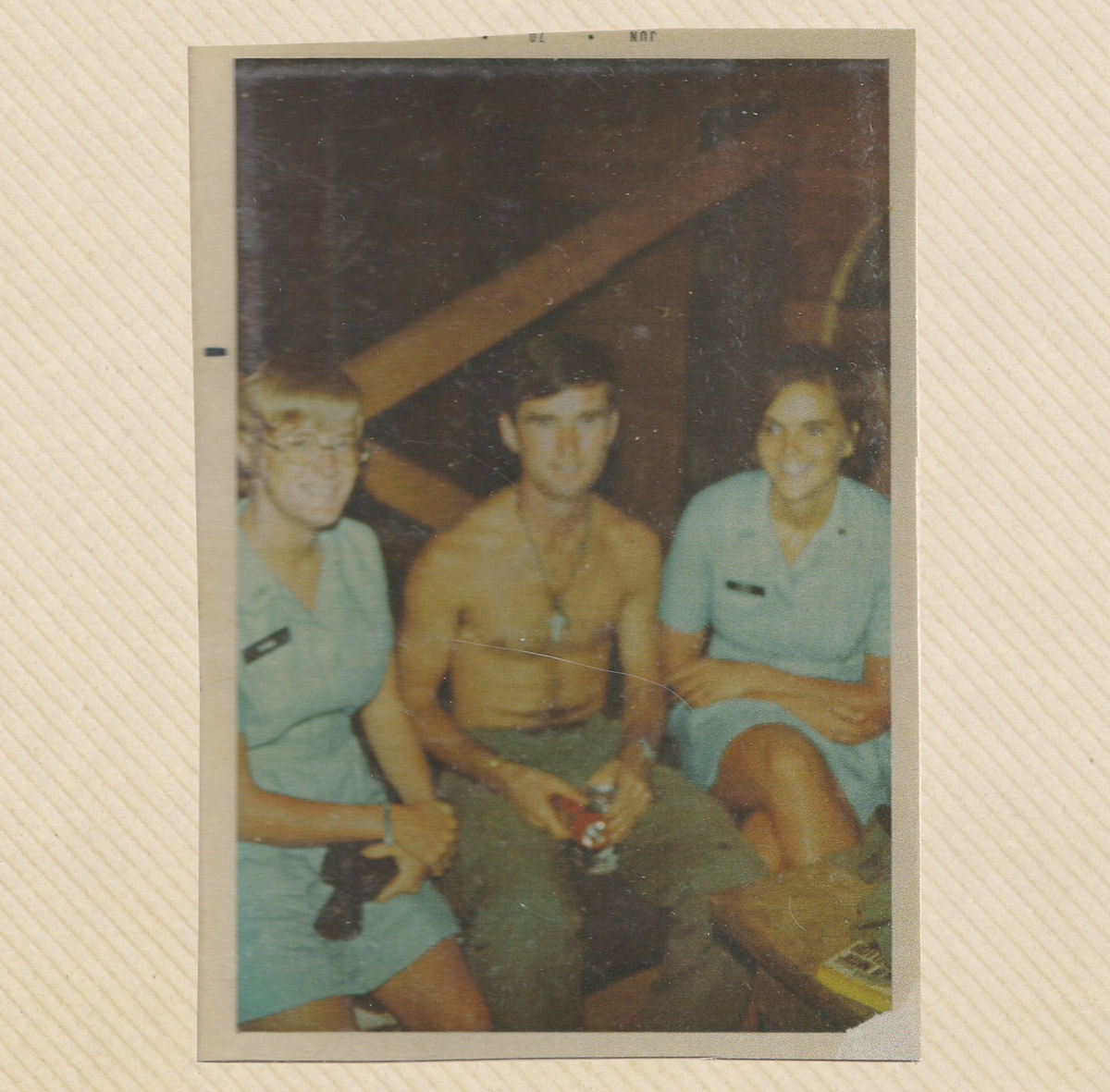
Penni Evans and Terry Harmon visiting Special Forces. (Photo courtesy Emma Spencer)
In fact, Evans visited the 5th Special Forces in Ban Me Thuot to bring comfort to their daily hardships. She bonded with the men, and revisited the unit several times during her tour. Photographs of Penni visiting these troops, as well as Special Forces in Na Trang, are featured in the to the right and on the following page.
Despite serving alongside the military under hazardous conditions, the Donut Dollies were excluded from the health and social welfare benefits afforded to military personnel. Among the most significant disparities, they were excluded from congressionally mandated benefits related to Agent Orange exposure granted to service members who served in Vietnam.
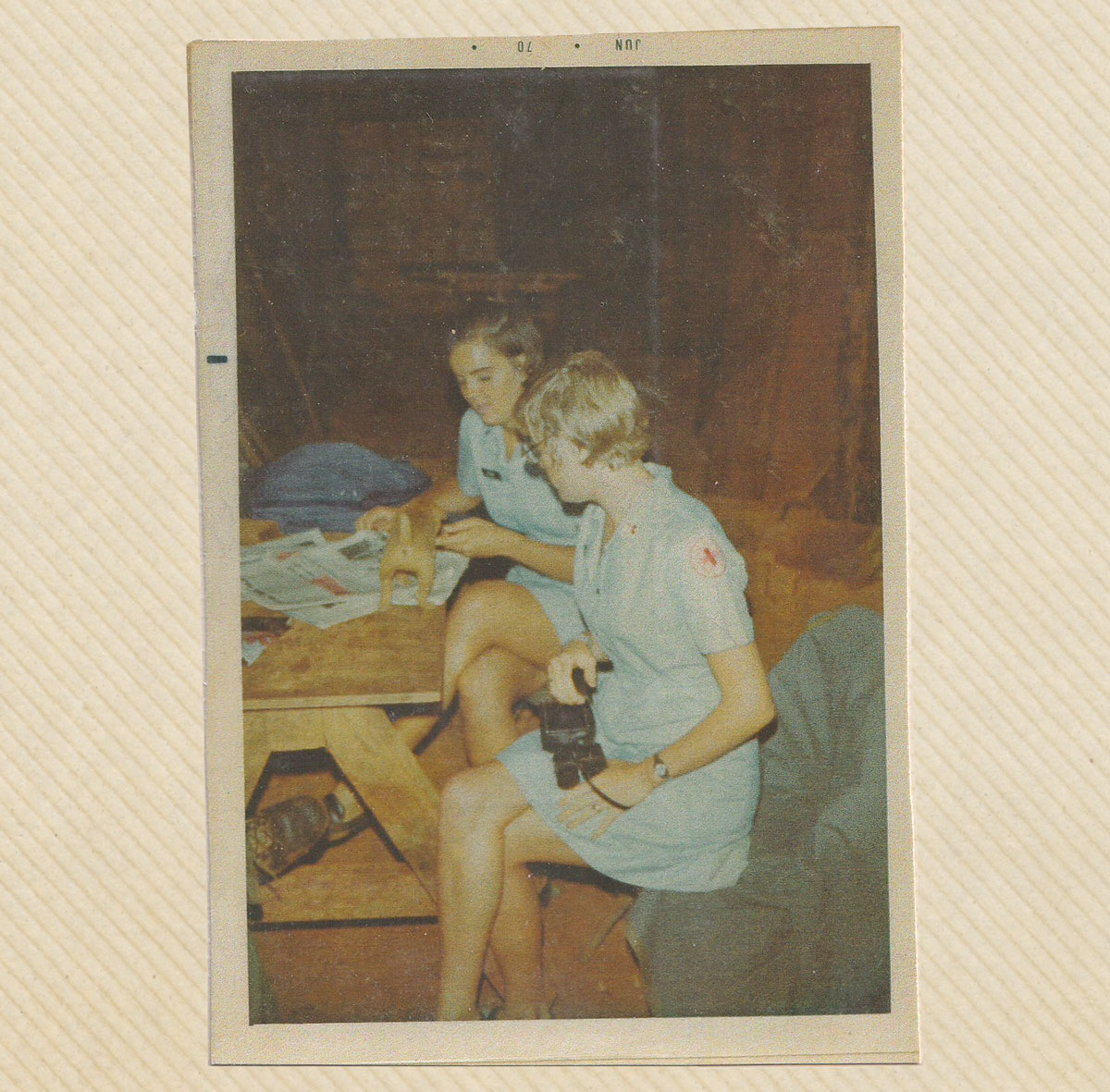
Penni Evans and Terry Harmon (Photo courtesy Emma Spencer)
Emma Spencer, the director, producer, and cinematographer of Welcome Home, Sister, became fascinated with the Vietnam War during her senior year of high school at the Harvard-Westlake School. Spencer realized that many American Vietnam War veterans rarely had the opportunity to share their stories due to public disdain toward the war, so she set out to give the veterans a platform and help American civilians and her generation better understand the war’s realities. Inspired by the Vietnam War’s 50th anniversary and her grandfather, Naval Officer Scott Wilson Sr., she launched Vietnam War Veterans: Then and Now with support from several veteran organizations (including Vietnam Veterans of America, Associates of Vietnam Veterans of America, Vietnam Veterans Against the War, The United States Vietnam War Commemoration, and The Witness to War Foundation).
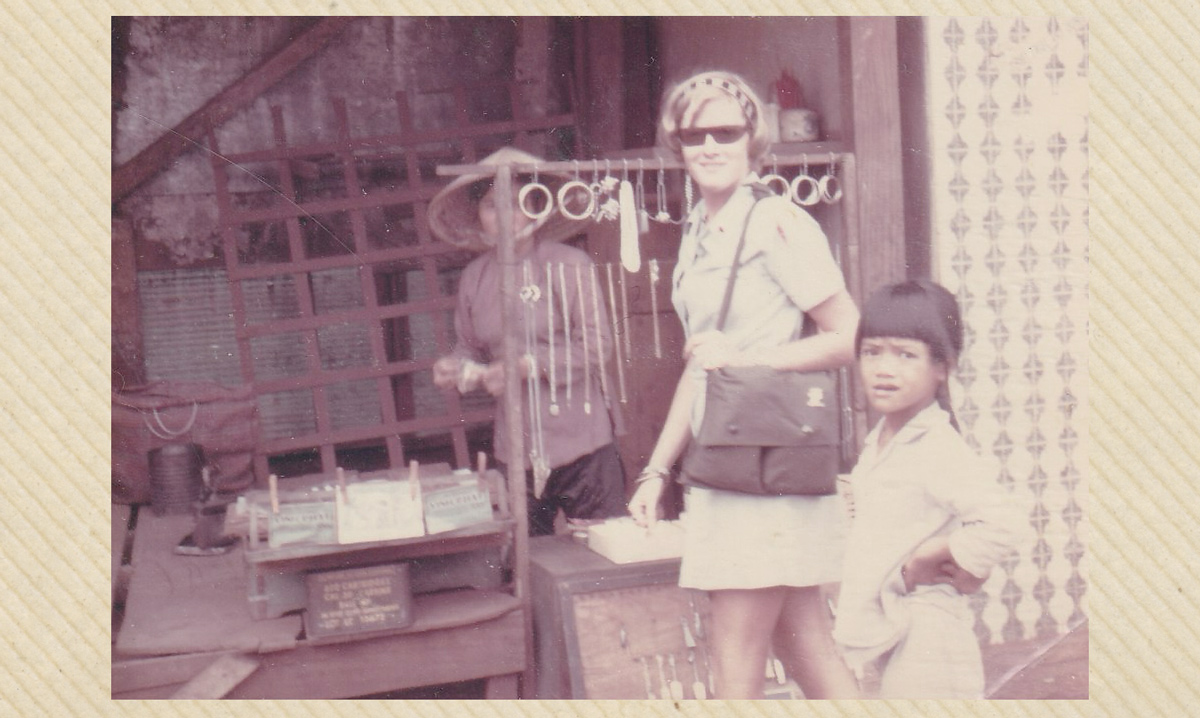
Penni Evans in country. (Photo courtesy Emma Spencer)
In 2022, Spencer created her Amherst College senior thesis exhibition, So, What’s a Nice Girl Like You Doing in a Place Like This?, earning Summa Cum Laude honors. Collaborating with Diane Carlson Evans, founder of the Vietnam Women’s Memorial, Spencer established an archive dedicated to women Vietnam veterans.
Two years later, Spencer decided to archive all oral histories she had recorded, both male and female, to the Library of Congress Veterans History Project. To her dismay, the Library rejected all civilian women’s stories, including those of the Donut Dollies, stating that as civilian veterans rather than military veterans, the Library could not accept their stories. Upset, Spencer called Penni Evans, one of her thesis subjects, and a few weeks later Penni received her rare breast cancer diagnosis. They decided to make a documentary film about the government ignoring and erasing Donut Dollies from Vietnam’s history.
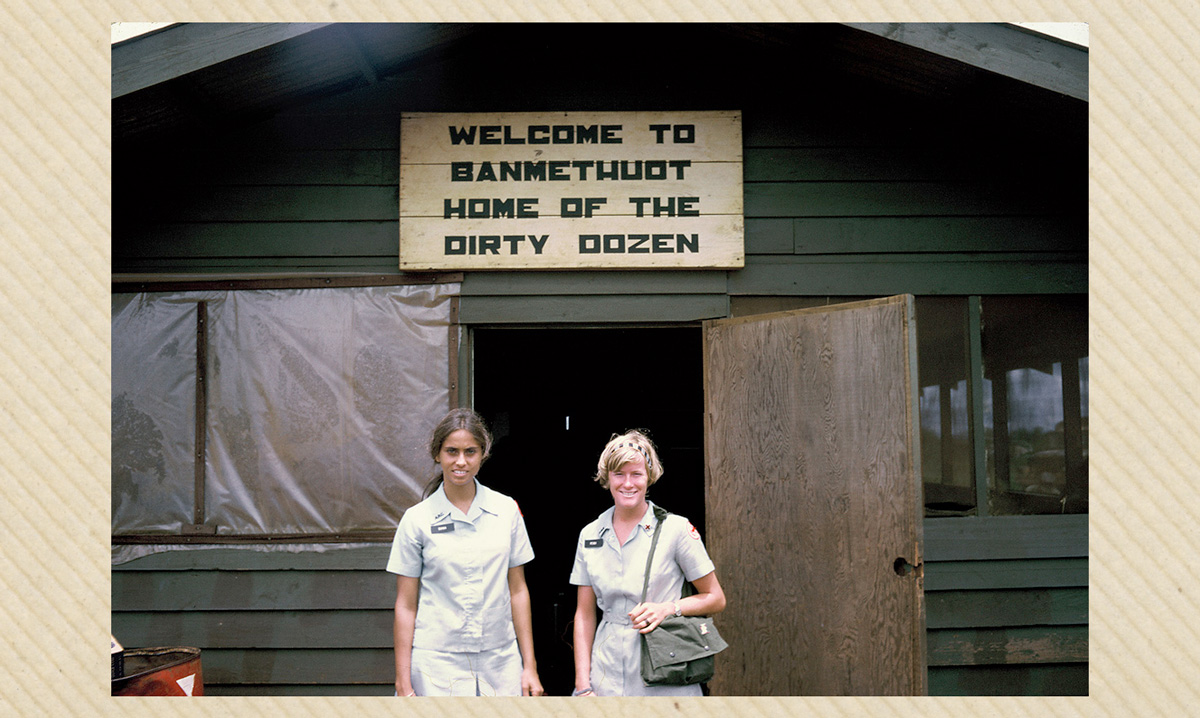
Penni Evans and fellow Donut Dollie in Banmethout. (Photo courtesy Emma Spencer)
Welcome Home, Sister brings this double standard to light: government benefits for those who served in the military, no benefits for those who served alongside them in these technically civilian roles.
If you are interested in learning more about Welcome Home, Sister, or watching the trailer, visit the website www.welcomehomesister.com. Spencer is currently raising finishing funds for the film to ensure Penni and the Donut Dollies’ stories reach the audiences it deserves. If you are interested in making a donation to help Spencer and her post-production team finish the film, you can make a tax-deductible donation through their fiscal sponsor, the International Documentary Association, by clicking “Donate” on their website (Welcome Home, Sister is a fiscally sponsored project of the International Documentary Association (IDA), 501(c)(3) nonprofit arts organization. Contributions in support of Welcome Home, Sister are payable to IDA and are tax-deductible as allowed by law.
Watch the Welcome Home, Sister Trailer!
Visit the website to learn more about this event and to RSVP.
Leave A Comment