An Excerpt From
On The Ground:
The Secret War in Vietnam
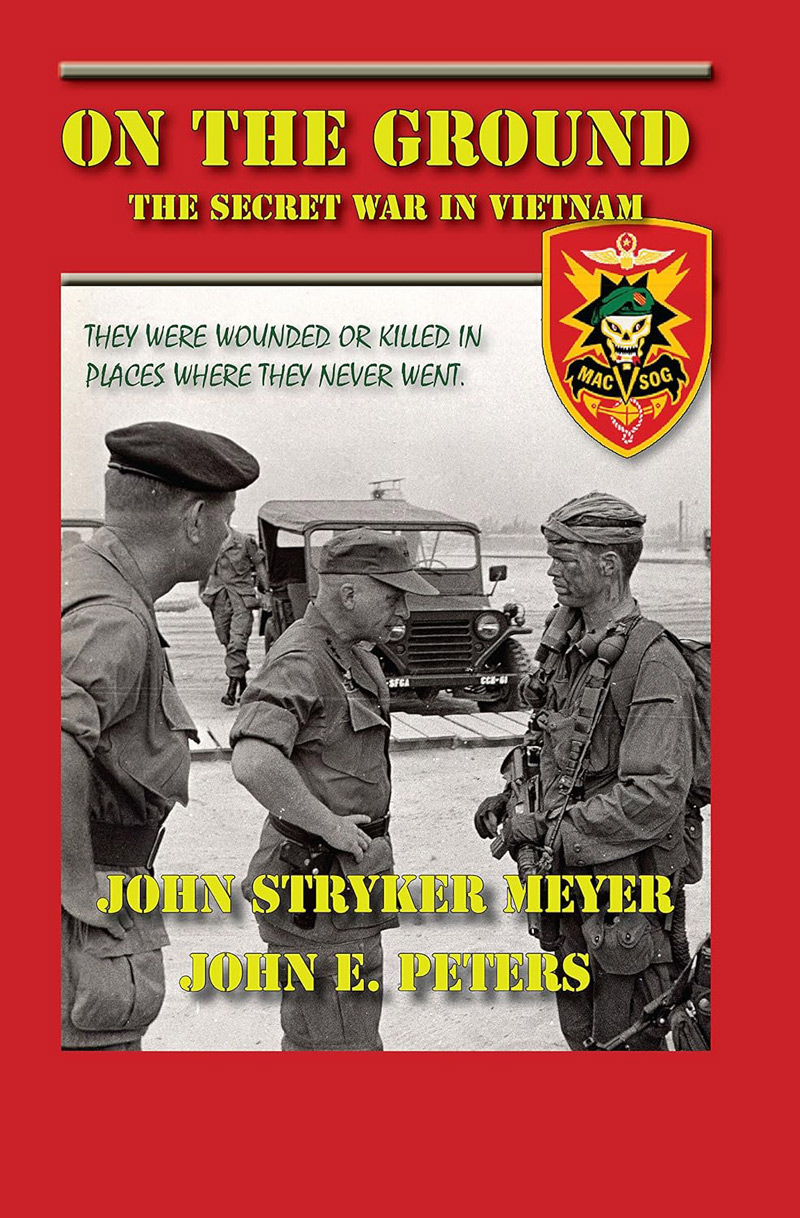
By John Stryker Meyer and John E. Peters
On The Ground: The Secret War in Vietnam; published by SOG Publishing, July 2, 2018; pages 6-18; Reprinted with permission
From Chapter One: “It’s Your Time”
With Watkins, Godwin, and three Bru in the leading 1st Air Cav helicopter and DeSeta and four Bru trailing in the second, the team flew west at just 600 feet off the ground. They soon crossed the Tchepone River into Laos. They could see NVA troops scattering for cover as they passed over and watched as green tracer rounds tracked their flight. It’s going to be a long day, Watkins thought to himself. A very long day.
But then he smiled. DeSeta was wearing his communist “boonie hat,” a black floppy thing with a bright red star on it. DeSeta had claimed it from a dead NVA solder while he was with the 173rd and now wore it faithfully, like it was a good luck charm. What made Watkins smile was DeSeta’s habit of having the red star face forward whenever he was on point and face to the rear when he was in the tail-gunner’s slot. Lou DeSeta was definitely something.
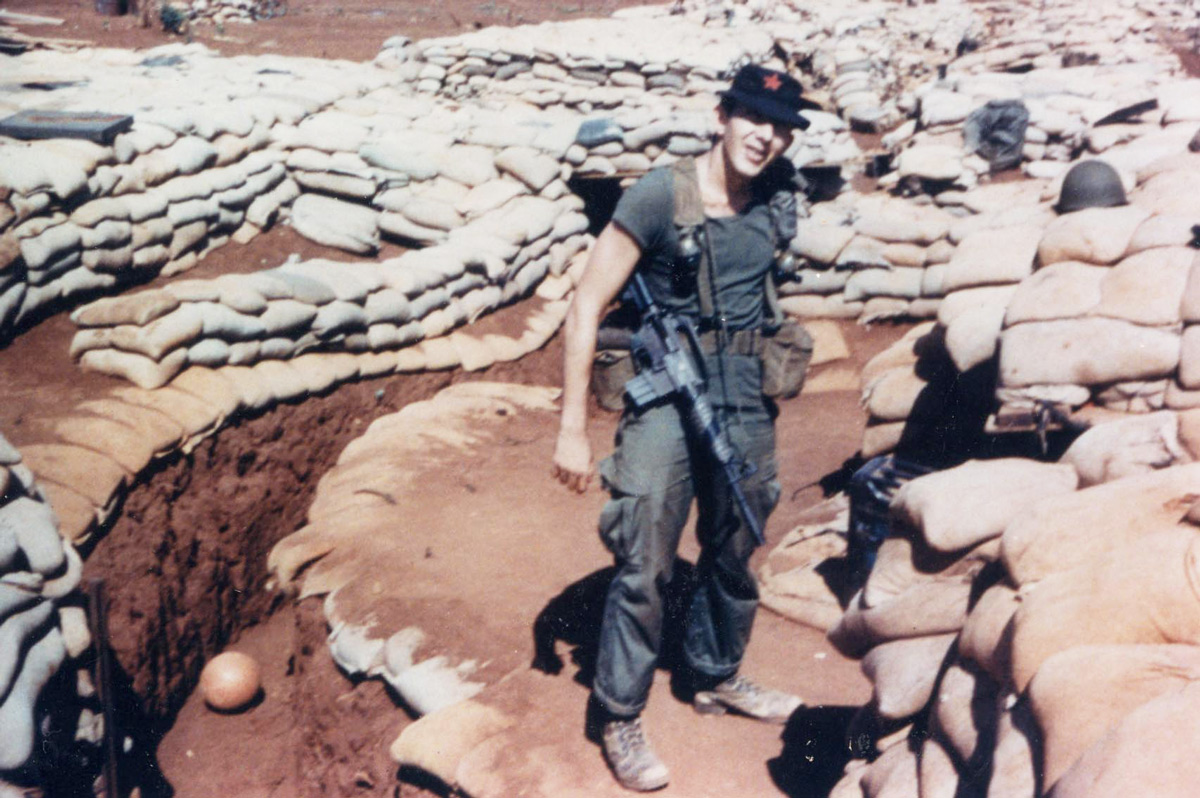
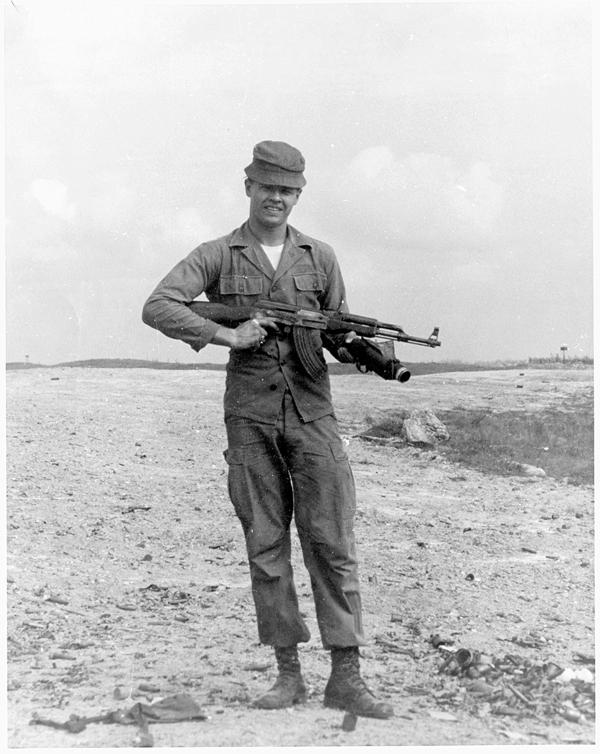
Lou “Jake Three Zero” DeSeta (photo courtesy of John Stryker Meyer)
Louis “Lou” DeSeta passed away peacefully on Monday, September 30, 2024. This video is a 20-minute excerpt of a longer interview that Lou gave in 2010 to the Special Operations History Museum. He discusses the June 1968 mission into Oscar 8 at 15:51.
Watkins was brought back to the business at hand when he got word they were approaching the LZ. He looked out and marveled at what he saw below him. Because Oscar-8 had been worked over so many times by B-52s and other bombers, it resembled nothing so much as a cratered moonscape. Trees were almost nonexistent and what cover there was tended to be low and sparse, the exception being the elephant grass, which could grow to heights of six to eight feet.
Based on what he could see, Watkins was not overly surprised to discover that the team was going to be dropped off on the rim of a substantial bomb crater. There was not a hell of a lot of choice, except perhaps for the size and depth of the things.
Once on the ground, the 10-man team quickly formed up and, led by Watkins on point, moved smartly away from the open terrain around the crater and about 50 meters into the underbrush and elephant grass. As the team moved south into deeper cover, NVA anti-aircraft artillery opened up on the departing choppers.
Watkins made sure the tail gunner was concealing the team’s tracks and then he made his first contact with Covey 265, the team’s overhead air traffic controller and communications lifeline. Covey was there for one reason and one reason alone, to protect the team and keep it alive. If a recon team had a god to which they directed prayers of supplication, Covey was it.
Unfortunately, communications with this airborne deity were immediately put into serious doubt, if not jeopardy, when Covey told Watkins they would have talk “in the clear” because he, Covey, did not have the encryption code book he needed for secure commo.
Jesus fucking Christ. Watkins needed a precise fix on where the team was located and this was definitely not the kind of information you wanted broadcast in the middle of Oscar-8, or anywhere else for that matter. But what could he do? The team had to know exactly where it was, especially if they had to call in air support. Watkins got the coordinates and relayed them to DeSeta, who marked their position on the map.
In an additional blow, Covey informed Watkins that one of the gunships had been shot down near Highway 92. Fortunately the crew, including two wounded, had managed to escape and had been picked up. Nonetheless, Covey was going to have to divert an A-1E Skyraider away from RT Lion in order to destroy what was left of the downed Huey. In short, God’s eyes were being taken off the ball.
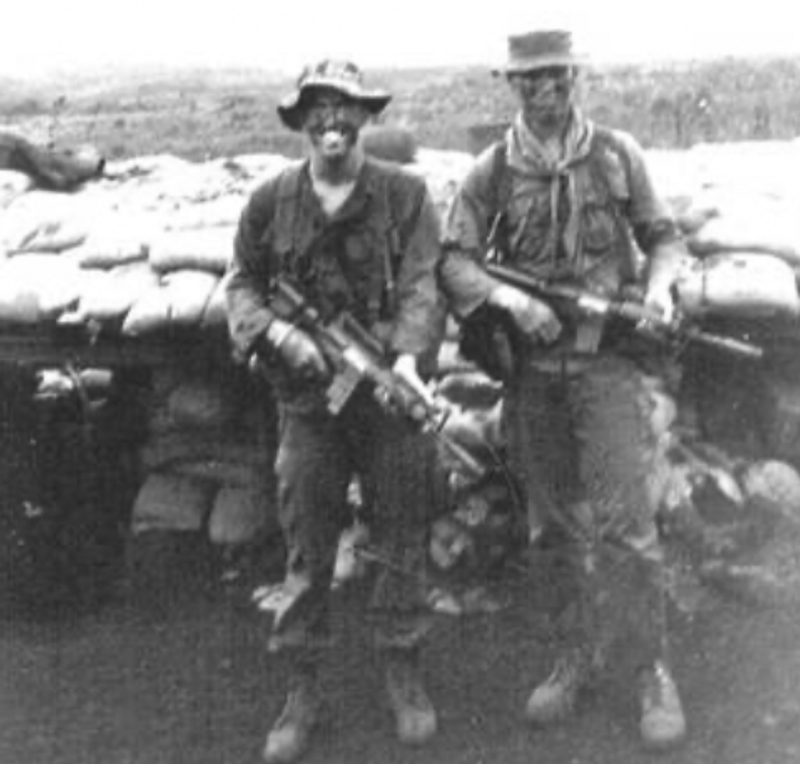
Sgt. George Godwin, left and Staff Sgt. Pat Watkins, at FOB 3, Khe Sanh prior to launching into Oscar 8 target in June 1968. (photo courtesy of John Stryker Meyer)
Realizing things were rapidly moving from bad to worse, Watkins instructed DeSeta to set out three claymore mines and get ready for possible enemy contact. He also informed everyone that the crater they had just left behind would be their first rally point should they get hit and separated. The young Bru looked scared and none too confident.
After what seemed a minor eternity, the team heard a large explosion about a kilometer-and-a-half away. Now, thought Watkins, we’ll get some covering support. This made him feel a little better until Covey came back on the radio with the news that there was a minor problem. RT Lion had been inserted at the wrong location. One bomb crater looking pretty much like another, it seemed they had been mistakenly inserted very near the junction of Highways 92 and 922. Jesus, they were sitting at the pulsing heart of Oscar-8.
But not to worry, Covey said. He was busy talking to the aircrews about the possibility of coming back, picking up the team, and reinserting it at the right LZ. He suggested the team “hold tight,” as if it might inadvertently wander off or relax into beach-party mode.
When the shit comes, it comes in buckets. As a thoroughly pissed Watkins was explaining the situation to an incredulous Godwin, DeSeta crawled over to tell them that Man-Loi, the tail gunner, had spotted beaucoup NVA swarming around the LZ. Watkins contacted Covey, informed him of the enemy activity developing around the team, and asked how long it would be before the choppers arrived to get them out. After making a pass over them, Covey helpfully confirmed there was indeed lots of enemy activity around RT Lion, but that all the helicopters were returning to base in order to drop off their wounded and refuel. Sit tight. The only things tight were Watkins’ jaw and maybe an asshole or two among the teenage Bru.
With an enemy attack now almost inevitable, and night fast approaching, Watkins thought it best to try and move the team to higher ground. They needed every advantage, however slight that they could finagle, manufacture, or pray into existence. Sitting tight was not going to cut it.
The team pulled in their claymores and began a slow and dangerous trek toward what looked to be a slight rise in the ground. As they moved for 10 minutes and listened for 10, they could hear enemy voices on both sides of their line of march. The team was nearly surrounded. Like being threatened with a hanging, being surrounded has a marvelous way of focusing the mind and suddenly RT Lion moved with a much greater sense of stealth and caution. They managed to reach the rise undetected and secure a perimeter.
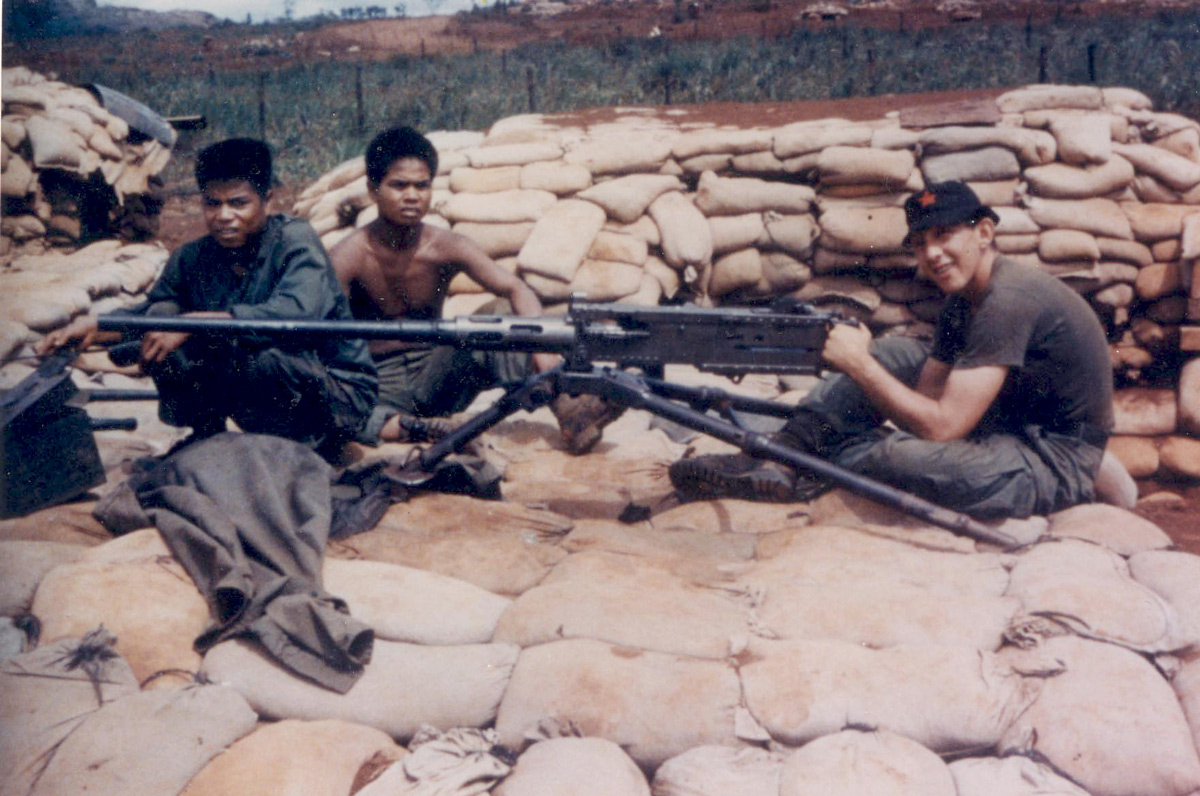
Lou “Jake Three Zero” DeSeta, behind a .50 caliber heavy machine gun at FOB 3, with two members of RT Lion. (Photo courtesy of John Stryker Meyer)
With the team settled in its RON (Remain Over Night), Watkins told DeSeta and Godwin he was not happy with doing nothing. He didn’t like the idea of just sitting and waiting for the enemy to attack. So he’d decided to take two of the Bru and move forward to Highway 92, set up an observation post, and see what there was to see.
It is not recorded what Godwin or DeSeta thought about Watkins’ idea, but he was the One-Zero and if he wanted to wander off into the night surrounded by enemy troops and take a little look-see at Highway 92, well, what could they say?
Before he moved out, however, Watkins checked their commo situation. Covey had retired for the evening and turned RT Lion’s health and happiness over to Moonbeam, the mysterious phantom of the night who always seemed to be there when needed. When finally reached, Moonbeam assured RT Lion they were loud and clear and that in future commo checks all they need do was break squelch (key the mike without speaking) three times to indicate they were alive and well.
The last thing before moving out was to ensure everyone understood what the night’s password was. Watkins didn’t want to be hosed down returning to his own team. When the Bru going with him looked confused regarding the password Watkins decided it would be best if he took point, walking the lead position in the patrol.
The trio cautiously moved forward about 150 meters where they ran into Highway 92. They could hear voices and vehicle traffic. Then, their luck continuing its dismal descent, the sky cleared and a bright moon came out to cast an iridescent glow over everything.
Even though they had heard voices and vehicle noise, once they reached the road there was no traffic in sight so Watkins boldly stepped out onto the highway. Several One-Zeros quietly turned over in their graves as Watkins stood there in the moonlight looking around. He could see nothing, but he could hear lots of voices and activity on the opposite side of the road. He immediately melted back into the brush about 10 meters and set up an observation line, with Er about 30 meters to his right and Rong the same distance to his left. Er and Rong put out claymores facing up and down the road. If they needed to they would set them off and buy time as they made a run for it.
Watkins was nearly blinded when the first set of headlights rounded the bend not five minutes later. This was stark evidence of NVA confidence in the fact they owned the night, at least in Oscar-8. The first vehicle was soon followed by three trucks packed with supplies. They passed so close to Watkins he could clearly see the soldiers in the cabs, smoking and chatting. He could also make out the foliage that had been draped and fastened across the tops of the trucks to camouflage and conceal them from American aerial reconnaissance flights. The NVA were clearly confident in their control of Oscar-8.
In short order 10 more fully loaded trucks passed. Interspersed between them were dozens of soldiers and civilians pushing rickety bicycles piled high with everything imaginable, from live chickens to weapons and ammunition.
To Watkins’ utter amazement, the next vehicle was a goddamn bulldozer, its blade up in the air, and an NVA soldier signaling directions with a flashlight. Watkins was barely over the bulldozer when along came two Russian T-34 tanks, their gun barrels facing aft, and their external fuel tanks mounted just as the manual said.
“Un-fucking-real,” he whispered. This was going to make some REMF’s (Rear Echelon Mother Fucker) day. Images of a special R&R (Rest & Relaxation) reward flight to Taipei played through his mind.
In John Stryker Meyer’s SOGCast 023 he interviews Pat Watkins. This is Part 1 of the interview and he discusses the Oscar 8 target.
It took more than three hours for the NVA parade to pass. As the last of its rumblings grew faint, Watkins came out of his daze and looked around. He immediately saw Rong crawling toward him with a panicked look on his face. Watkins had been so mesmerized by all the traffic he had forgotten about young Bru team members, Er and Rong.
When Rong reached him he could barely talk. Not proficient in English under the very best of conditions, what he was now attempting to tell Watkins bordered on incoherent. Watkins calmed him down as best he could and made him start over. Rong said he’d been watching the road traffic, just like Watkins, and had been as taken with it as he was. While he was staring at all the vehicles passing by, a hand had reached out, and given his arm a shake. A Montagnard soldier, one of those the NVA had pressed into service, said, “It’s your time for guard duty.” Fortunately Rong was too stunned to do anything but nod his head and grunt a kind of acknowledgment. It was enough, however, and the Montagnard moved off into the brush. Rong was badly rattled and of the definite opinion that the three of them ought to abandon Highway 92 and get back to the rest of the team as fast as possible. Watkins agreed.
He let Er take point as they tried to maneuver themselves out of the tight fix they were in. The sun was about to come up and they could hear voices all around them. They could even smell food and coffee being prepared. Making an exit unseen was going to take some serious doing.
As luck would have it, Er took a slightly different track than the one Watkins had taken and he stumbled into a 37mm anti-aircraft position almost immediately. The crew was sitting behind a stack of ammo crates around a small fire, cooking rice and talking. Before Watkins could tell Er to bluff his way past, the 16-year old, NVA-loathing kid opened up with his CAR-15 on full automatic. As if this wasn’t bad enough, he failed to hit a single enemy soldier, so Watkins quickly tossed two grenades into the breakfast circle while Er reloaded and Rong opened fire.
Watkins shouted for them to follow him as he took point and went crashing off through the thin vegetation toward their RON site. Despite the noise they were making, they could hear NVA troops hollering at each other and sounding the general alarm. All unholy hell was about to break loose.
As they approached the RON site in the near dawn Watkins heard DeSeta demand the password. He responded and asked if DeSeta had made contact with Moonbeam. “Affirmative,” DeSeta replied.
“Then tell them we’re declaring a Prairie Fire Emergency and we want out of here ASAP.” While DeSeta radioed the distress call to Moonbeam, Watkins and Rong quickly buried three M-14 “toe-popper” anti-personnel mines behind them and then moved forward to join the rest of RT Lion.
The Prairie Fire Emergency was the fabled and ultimate “force multiplier” that gave SOG its astounding kill ratio of hundreds and at times thousands to one. If a team was not overrun and wiped out in the first few minutes of contact, the enemy knew with dead certainty there was going to be hell to pay. A rain of bombs and fire was headed their way and there was nothing they could do to stop it.
Moonbeam came back with the word that two F-4 Phantom jets were on station and armed with 500-pound bombs. They were asking to be directed to any “hard” targets that needed attention. “Tell them we have a 37mm position and storage area they can work,” Watkins said to DeSeta.
Watkins then asked Godwin if he had the exact coordinates for the team’s location. With 500-pound ordnance about to fall out of the sky, being exact was a matter of life or death. Godwin assured him they were right where he had marked them.
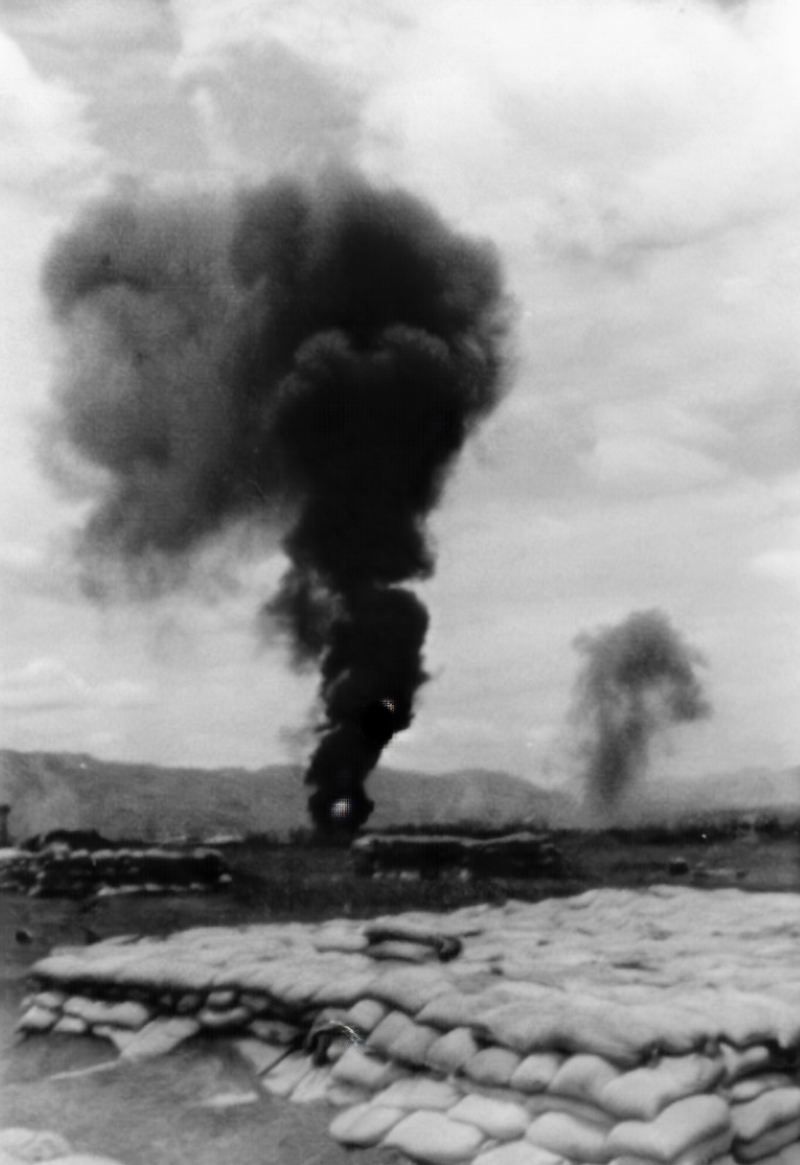
While the team’s position was being passed to Moonbeam, Watkins took the opportunity to deliver a pep talk to the Bru, who were looking a little green around the gills. He told them they had traveled far and trained hard for this day, and now the gods were about to reward them with an opportunity to kill beaucoup NVA, those lousy bastards who had burned their villages and raped their women. By the end, he was pretty worked up himself. All he needed was a chalk board and he could have been Knute Rockne. The Bru looked better, if not impressed.
Godwin interrupted Watkins’ speech to tell him Moonbeam had passed the team’s location to the fast movers and they planned to deploy their ordnance using the Sky Spot method. This meant that owing to the heavy anti-aircraft activity they were being forced to release their ordnance at high altitude, which was to say out of sight.
For a team on the ground, the real translation of Sky Spot was, “We’ll be way up here in the sky moving very fast and hoping to hell we hit the spot, and that the spot we hit is not you or something you cherish.” Sky Spot wasn’t exactly Russian roulette, but the difference between the two was debatable.
With bombs on the way, Watkins directed the team into a crater and told the Bru to keep their heads down. In the distance they could hear long bursts of AK-47 fire coming from Highway 92. This meant the NVA were not sure where the team was and were conducting a “reconnaissance by fire,” which consisted of massacring the underbrush with automatic weapons fire to either a) force the team to reveal itself by returning fire or b) kill or wound the team members where they hid. Inelegant, but effective, and they were getting closer.
Watkins was wondering what had happened to the F-4s when there was a series of furious explosions. Each one lifted the team off the ground and bounced it around like being tossed around in a skillet. One minute it was relatively quiet and the next it was like the end of the world. Dust and smoke blotted out the morning light.
Almost immediately, a series of secondary explosions began to erupt. Watkins raised himself into a crouch several times, thinking he could begin to move away from the crater, only to be blasted back down. Moonbeam reported that even the Phantoms could see the secondary explosions. It was obviously a successful strike. But it still left RT Lion on the ground and in jeopardy.
Just when he was needed most, however, Covey 265, a Cessna O-2 flown by Captain Gregg Hartness, came on the radio to say he was about 15 minutes out and would soon be over their position. He’d been monitoring the team’s radio frequency all the way up from Da Nang and was fully aware of the urgency of the situation. He would try and locate an LZ and have extraction assets on the way as soon as possible.
Hartness was as good as his word. Once he was on station, and had pinpointed the team’s location, he dropped down to 1,000 feet and began making passes looking for an area where choppers could either set down or hover while the team boarded them. At 1,000 feet the slow moving O-2 looked as vulnerable as a low-flying goose. Not surprisingly, he drew both small arms and 12.7mm anti-aircraft fire. Watkins watched in amazement and admiration as Covey 265 made repeated low and slow passes, green tracers arcing up toward him all the while. He had to be taking hits.
Finally Covey reported he had located a useable LZ about 500 meters away. Now all the team had to do was reach it. Covey gave them the direction in which to move and the team started making its way through the elephant grass. Every few minutes they would give Covey a “shiny,” or a brief mirror flash, to let him know their progress and so he could make any needed corrections to their line of march. With it being June, it was already hot even this early in the morning and the ground felt like cement under their boots.
Suddenly DeSeta signaled for the team to halt and told Watkins the tail-gunner had sighted NVA troops behind them. Watkins told him to set out a claymore with a four-minute delay-fuse attached. In addition, Watkins told DeSeta to place a white phosphorous grenade in front of the claymore. This was a neat little trick Watkins had learned from Medal of Honor recipient Fred Zabitoski. The idea was that when the claymore detonated, it not only cut a murderous swath through enemy troops up to 50 meters away, but the flash and bang of the phosphorous made the NVA think they had been hit with a marker rocket fired by a FAC (Forward Air Control, or Covey) aircraft. Hopefully this would make the advancing NVA believe they were about to become the targets of an airstrike, which naturally would make them have second thoughts about remaining in the area. At the very least, it would give the recon team valuable minutes while the enemy tried to figure out what it was up against. Four minutes later the claymore went off and the air was filled with white phosphorous smoke and the cries of wounded NVA.
Moving as quickly and as silently as they could through the elephant grass, RT Lion finally made it to the LZ and took up a defensive position in one of the larger craters. Watkins quickly counted heads and pointed where he wanted each team member to go. He peeked over the crater’s rim, took a good look around, and decided he’d been in better places. What he could see was not encouraging, but what he could hear was music to his ears. It was the low, growling roar of approaching A-1E Skyraiders.
With 2,700 horsepower to call on, a Skyraider’s reciprocal engine was one of the most powerful ever placed in a single-engine aircraft. A lumbering Skyraider could carry a massive payload of bombs, rockets, mines, and flares. Moreover, it could deliver them all on a dime. It was the answer to every team’s prayer when it came to close air support. It was also the most terrifying weapons system the NVA faced when they took on a recon team. When the Skyraiders arrived on station, the enemy body count skyrocketed.
The A-1Es arrived just as the team started taking incoming mortar fire. Godwin quickly calculated the coordinates for the mortar’s location and the information was passed on to Covey, who in turn relayed it to the A-1Es. A laconic, whistling voice came back down the line. “It’s crispy critter time, so ya’ll keep your heads down.”
Within seconds the area in front of the team exploded into flame, the deadly napalm coating everything in its erupting path. Flaming NVA soldiers ran briefly toward the team before falling to the ground in agonizing death throes, the hand grenades and ammunition they carried cooking off like firecrackers. The elephant grass was also on fire.
The napalm had definitely slowed the NVA advance, but it had not stopped it. Covey reported that the extraction choppers were five minutes out and the team needed to be ready to move fast.
Bud Gibson interviewed Lou DeSeta for his The Reconnaissance Cast YouTube Channel. This is part one of two interviews. Click here for the 2nd interview.
Two gunships from the 7th Air Cav roared over the LZ. Watkins put out two bright orange marker panels and the gunships confirmed they had the team in sight. As they looped back to make their first strafing run, the gunships reported that a large enemy force was moving toward the LZ and they were going to attempt to discourage it. As they made their run, pouring M-60 machine gun fire and 2.75 rockets into the enemy, RT Lion could see the air fill with green tracers hitting the helicopters. They were taking a real beating, but they hung in there and kept pouring fire down on the NVA. It was an incredible show of raw guts and determination.
Covey came on the radio to say the gunships had taken casualties and were leaking fuel, oil, hydraulic fluid and just about everything else, so they were being forced to head home, but the extraction slicks were on station. RT Lion looked around and could see its salvation coming toward them, nose on. Although they were flying at a good clip, it appeared as if they were moving at an agonizingly slow speed. As with the gunships before them, they were taking a horrendous amount of fire. One chopper was hit badly and began losing fuel. After a brief confab, the rescue package suddenly broke off their approach and headed back the way they had come, leaving nothing but smoke and RT Lion’s hopes for rescue behind.
When Watkins asked Covey what this meant in terms of time on the ground, all Hartness could do was say he’d contact the S-3 and ask for a new set of extraction assets ASAP. In the meantime, he promised to get more tactical air support over the team and do all he could to keep them alive. While Watkins appreciated the sentiments, this did not do much to raise his spirits. In his heart-of-hearts he felt the team’s position was very bad and likely to get much worse, and quickly. The NVA had literally thousands of men it could throw at the team, while the team had only so much ammunition and not much by way of cover.
What he told his team members, however, was there was going to be a slight delay and reminded them to keep vigilant and be ready for an attack. He didn’t have the heart to tell them was it could be hours before another rescue attempt was made. Their stay at Oscar-8 was far from over.
One of the Bru suddenly signaled that NVA troops were crawling toward the team through the elephant grass. The news was passed on to Covey who responded that he had two A-1Es standing by, one loaded with CBUs (Cluster Bomb Units) and the other with rockets. Both aircraft had their deadly 20mm cannons locked and loaded. Watkins told Covey to bring in the CBUs as fast as possible and to lay it down as close to the team as they could get.
In less than two minutes the team saw an A-1E appear in front of their position, its 20mm cannons roaring away. It flew so low they could see the pilot turn his head to locate the team as he released his ordnance. Unfortunately, some of the mini-bombs exploded so close to RT Lion that two Bru received light wounds. This was lamentable, but Watkins considered it one of the acceptable prices a recon team paid to keep from being overrun by a superior force.
As the A-1Es departed, a small group of NVA suddenly rose up out of the grass behind the team and charged into them, AK-47s blazing on full automatic. De Seta, his red Communist star facing forward, rose up and opened fire at near point-blank range. The Bru joined in as other groups of NVA popped up from the elephant grass and attempted assault after assault.
What followed was several hours of deadly cat-and-mouse with the mouse hunkered down in its little hole and the NVA cat making paw swipe after paw swipe in an attempt to claw it out or do it in. An ironic situation for a team named Lion to find itself in.
While RT Lion fended off attacks, Covey directed airstrike after airstrike at the NVA troops, the storage area, the anti-aircraft guns and anything else he could draw a bead on. Throughout the day, primary and secondary explosions followed one after another, as the strikes found their mark. Whatever the team’s fate might turn out to be, the NVA were paying a hellacious price for messing with it.
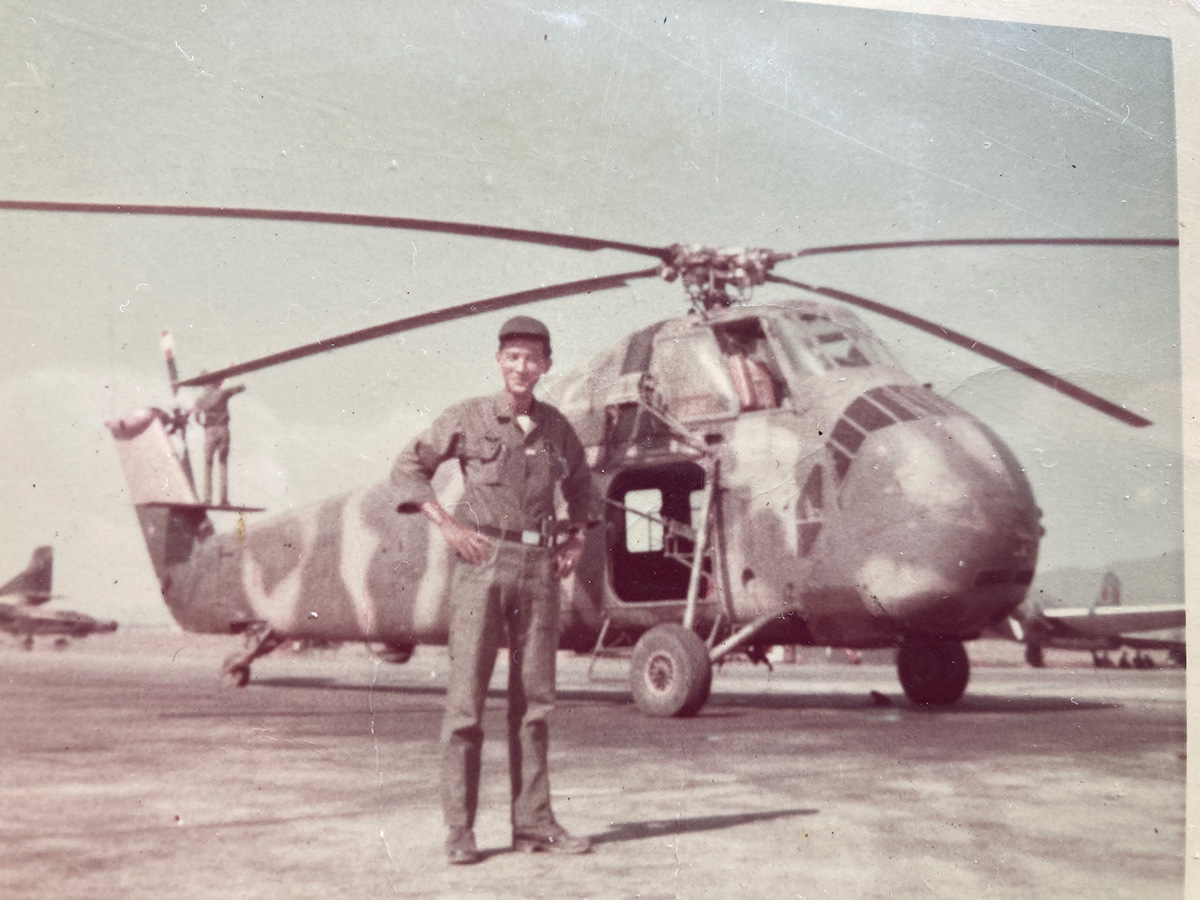
Capt. An and his Kingbee. (Photo. courtesy of Maj. Nguyen Quy An)
With daylight, ammunition, and ideas fast running out, it was like a true message from God when Watkins heard Covey report that the South Vietnamese Air Force’s 219th Special Operations Squadron had one of its legendary Kingbees en route. For once, Watkins’s spirits actually rose. Not that he didn’t love the living bejesus out of the 7th Air Cav, but the Vietnamese of the 219th had time, after time, after time proven themselves to be about the most daring, most imaginative, most aggressive, and all-around finest pilots on the face of the globe. If RT Lion had a chance in hell of getting out, a Kingbee pilot was the one who would find it and exploit it, no matter how slight that chance or how deadly the odds. That was simply what they were pledged and committed to doing, day after day.
More good news followed when Covey relayed that the lone Kingbee would be escorted by Marine gunships from HML-367, a bad-ass bunch of fliers that went by the code name “Scarface.” Things were definitely going to rock and roll with them on station. Scarface enjoyed nothing more than kicking NVA ass and taking names, and then coming back around to kick more ass just for good measure, on general principle, and for the sheer fun of it.
Covey splashed a healthy dose of cold water on Watkins by reminding him it was very nearly dark and that despite all the bombs dropped, rockets fired, and gun runs made, the enemy was still pumping out an enormous amount of fire and still moving forward. Pulling RT Lion out of Oscar-8 was going to be as difficult and dangerous an extraction as could be imagined. And they would have just one chance to pull it off. If they muffed it, RT Lion would be spending the night and would most likely not see the next morning.
Sobering information indeed, but Watkins did not want to discourage his team, so he just gave them his best grin and said “Let’s get ready to go.”
In the distance, Watkins could hear the distinctive sound of the old nine-piston Sikorsky H-34 Kingbee chugging its way along, a steady base note to the higher whop whop whop of the Hueys. He squinted into the twilight and when he could finally make out their dim silhouettes, he flashed his strobe light through the barrel of an M-79 grenade launcher so as to mask it from enemy sight.
The helicopters acknowledged having RT Lion’s mark and the Hueys immediately divided and made a split run, one raking the team’s forward perimeter with rockets and machine gun fire and the other working its rear. It was a beautiful show.
Watkins yelled over the noise to blow all the claymores. By setting off all the claymores at once, he hoped to avoid having any uninvited NVA join the team. They went off in a deafening blast and blinding flash. The little mouse had roared.
As the Scarface duo looped around to make their second and final run, they confirmed there were dozens of dead and dying NVA scattered around within feet of the bomb crater. Unfortunately, they also saw more troops advancing. It was down to the short strokes.
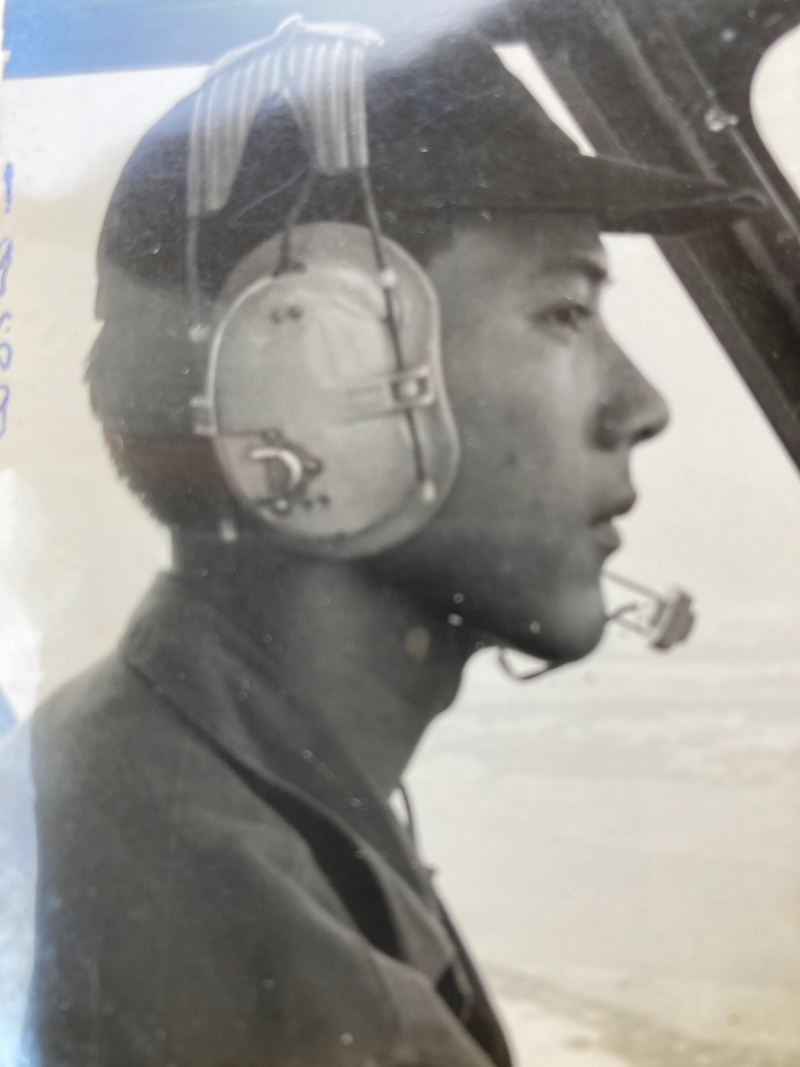
Then-Capt. Nguyen Quay An (Photo courtesy of Maj. Nguyen Quy An)
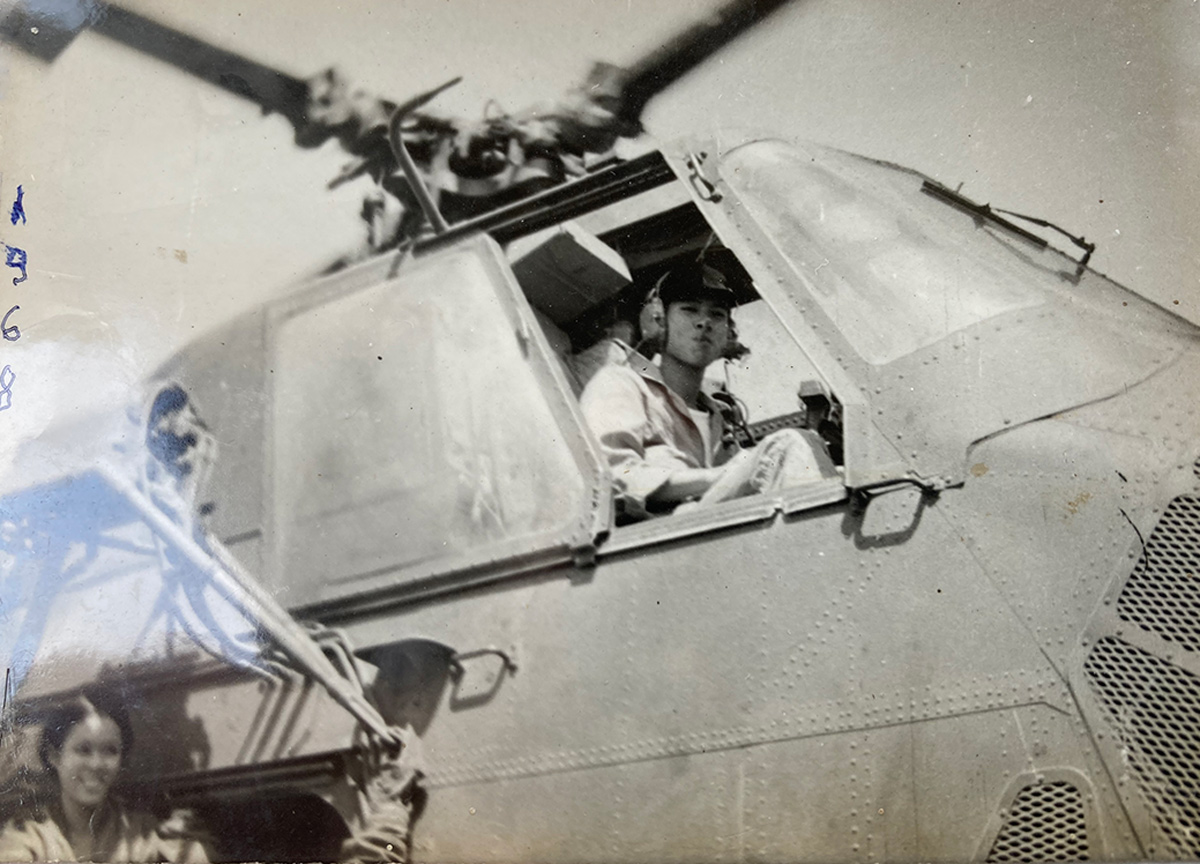
Capt. An posed in his Kingbee along with a friend in this photo. (Photo courtesy of Maj. Nguyen Quy An)
As the Scarface gunships began their last pass, the Kingbee tucked itself in behind them and came roaring on. But rather than set down outside the crater and have the team come to him, as Watkins fully expected, the pilot pulled up and hovered over the crater. As the team looked up in disbelief, the old H-34 warbird began gently settling itself down toward the team like a mother hen about to cover her chicks. By the light of burning elephant grass, Watkins was able see into the Kingbee’s cockpit and was startled to find the co-pilot’s seat empty. In the pilot’s seat, however, was his much-admired friend Captain An, a man who had saved Watkins’s bacon on many other difficult occasions, but none quite like what he faced here at Oscar-8.
Capt. An lowered his Kingbee toward the team with a precision and steadiness that gave an entirely new meaning to the word cool. His face was smooth and calm, but there was steel in his eyes as he worked both feet and hands to maneuver his chopper as close to RT Lion as he could. At one point Watkins could have sworn that An nodded to him as if in casual greeting. The whole scene bordered on the surrealistic, what with the LZ lit by a flickering brush-fire, the sounds of gunfire and explosions, the smell of cordite and burned human flesh, and this improbable savior hovering above.
As Watkins had experienced before, the action took on a dreamlike quality; sounds faded as if someone had turned down the volume; the air thickened; movement appeared to be in slow motion and the brain snapped individual frames that would never, ever be forgotten: looks of fear or pain on other faces; bodies being blasted backward; a piece of someone on the ground; a scrap of cloth; one’s own hand clutching a weapon, or shaking wildly as it tries to execute some simple, well-rehearsed, but now impossibly difficult task. This is what war looks like when the mind is under stress.
Watkins could hear small-arms fire thumping into the Kingbee’s body and he fully expected that at any moment it would either pull up and exit or come crashing down on them. But it did neither. It settled into a stationary hover; its front wheels placed delicately inside the crater. And there it sat, an unbelievable vision, a picture postcard of an old warrior taking a pounding but refusing to falter.
Watkins, DeSeta, and Godwin began heaving Bru into the chopper. Godwin followed. DeSeta, after taking an anxious look at his team leader, was next; his bright red star pointed over his right ear, as if he wasn’t quite sure whether he wanted to be going or staying. Finally, in accordance with the time-honored rule and hallowed tradition, the One-Zero’s feet were last to leave the killing-ground of Oscar-8.
With the door gunner and team pouring small-arms fire and M-79 rounds into the perimeter beyond its rim, the Kingbee lifted up and out of the crater. As a last defiant gesture, Watkins threw a red smoke grenade onto the LZ. This signal was universally understood by anyone who supported SOG recon; the team was out and the LZ was clear, so everyone could pound the living shit out of it.
But they were not home free, not yet at least. Anti-aircraft rounds were bursting around them like World War II ack-ack fire. Capt. An was dipping and juking in an effort to dodge the bursts and make himself harder to track. He still looked as calm, cool, and collected as if he was making a routine flight. For these guys, thought Watkins, maybe this was a routine flight.
When the Kingbee touched down at Khe Sanh, DeSeta, Godwin and the grinning door gunner walked around counting bullet holes, but soon gave up. There were too many, and besides it was just too unsettling to contemplate what might have been.
Watkins learned later that Capt. An had chosen to fly solo into Oscar-8 because he knew exactly how dangerous it was. He’d lost Kingbees there before and was determined not to risk more lives than necessary. He figured if his ship went down while trying to save RT Lion, it would just be him and the door gunner. To him it seemed a simple and perfectly logical decision; no big deal.
Incredibly, everyone who participated in the mission was alive and well. RT Lion was home, a seasoned veteran of Oscar-8.
It had been their time, after all.
On December 9, 2020, Jocko Willink and John Stryker Meyer interviewed Major Nguyen Quay An. Jocko began his interview by reciting from On the Ground a portion of the excerpt you have just read, which describes An’s next-level heroism on that day in June of 1968 when he extracted RT Lion. He flew countless insanely dangerous missions in support of American and South Vietnamese SOG teams. Retiring as a Major in the Republic of Vietnam Air Force, he earned the U.S. Distinguished Flying Cross and Silver Star.
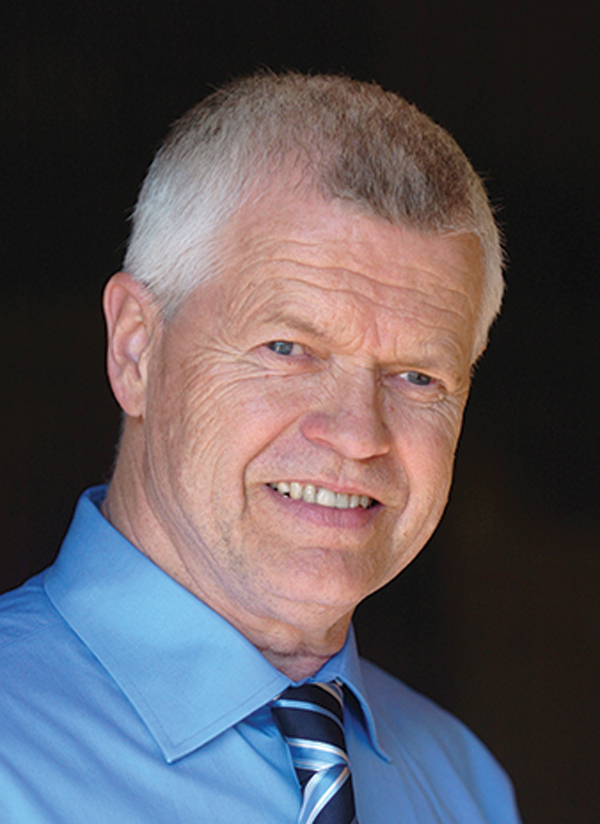
ABOUT THE AUTHOR — John Stryker Meyer, a decorated Green Beret and highly respected military historian, is best known for his firsthand accounts of the clandestine operations conducted by Military Assistance Command, Vietnam – Studies and Observations Group (MACV-SOG) during the Vietnam War.
He entered the Army on December 1, 1966. He completed basic training at Ft. Dix, New Jersey, advanced infantry training at Ft. Gordon, Georgia, jump school at Ft. Benning, Georgia, and graduated from the Special Forces Qualification Course in December 1967.
He arrived at FOB 1 Phu Bai in May 1968, where he joined Spike Team Idaho, running missions as the 1-0 and 1-2 from May 1968 to April 1969, which transferred to Command & Control North, CCN, in Da Nang, January 1969. He remained on ST Idaho to the end of his tour of duty in late April, returned to the U.S., and was assigned to E Company in the 10th Special Forces Group at Ft. Devens, Massachusetts, until October 1969, when he rejoined RT Idaho at CCN. That tour of duty ended suddenly in April 1970.
He returned to the States, completed his college education at Trenton State College, where he was editor of The Signal school newspaper, for two years. He worked at the Trenton Times, the San Diego Union Tribune, and The North County Times before focusing his efforts entirely on the veterans community at two separate non-profits.
As a veteran, author, and speaker, John has dedicated his post-service career to preserving the history and sacrifices of the elite warriors who fought in the shadows of the war. Thanks to the expiration of the 20-year secrecy agreement, he has authored Across the Fence: The Secret War in Vietnam, On the Ground: The Secret War in Vietnam, and SOG Chronicles, which reveal the stories about the secret ops that occurred across the fence in Laos, Cambodia and North Vietnam.??
In 2021, Meyer and his wife of 26 years, Anna, moved to Tennessee. where he is working on his fourth book on the secret war, continuing to do SOG podcasts, working with battle-hardened combat veteran Navy SEAL and master podcaster Jocko Willink.
Visit John’s excellent website sogchronicles.com. His website contains information about all of his books. You can also find all of his SOGCast podcasts and other podcast interviews. In addition, the website includes stories of MACV-SOG Medal of Honor recipients, MIAs and a collection of videos.
I have read all of Tilt’s books; and the dangerous missions the Warriors of Sog went through is just unbelievable. I read the Sentinel every month thoughtfully to understand what The Special Forces personal are a terrific Brotherhood to belong too. I’m a Vietnam Era Veteran myself, wishing I could have been a part of the Warriors also.
Thank God they all came back from the mission. When is John’s fourth book coming out
I know he’s working on it and has been for a while. Not sure when it will be published.