FULRO at Lac Thien
(A236, II Corp, RVN) 1966
(A236, II Corp, RVN) 1966
By Don Gonneville
Originally published in the April 2018 Sentinel
Those whom we know as the Montagnard peoples of Vietnam are actually descendants of two separate migratory groups that made their way to what is now Vietnam centuries ago. The Malayo-Polynesian tribes, originating in Polynesia and Indonesia, consist of the Rhade, Jarai, Chru, Rai, Roglai and Hroy. The Mon Khmer tribes who migrated from Burma, include the Bahnar, Rengao, Sedang, Halang, Jeh, Monom, Koho, and Chrau, Katu, Phuang, Bru and Pacoh. There are over 28 tribal groups within 5 major tribes.
These groups originally settled along the coastal regions, but later moved up into the central highlands. There they lived peacefully for centuries.
During the French colonization period of the nineteenth and twentieth centuries, the French Federal Government recognized the territorial sovereignty and integrity of the Montagnard people. There were no ethnic Vietnamese and others living in the Central Highlands during that time. In 1946, the French created an autonomous country for the Montagnard population of South Indochina called “Pays Montagnards Du Sud Indochinois” (PMSI), granting self-administration and self-determination to the Montagnard people of the Central Highlands.
When the French Indochina War between the French and the North Vietnamese Communists began, the French Federal government recruited thousands of Montagnards and formed 13 battalions of Montagnards who were armed and recruited to join the French Forces in their fight against the North Vietnamese Communists, the Viet-Minh.
Fast-forward to 1954. The defeat of the French Army at Dien Bien Phu led to the withdrawal of the French from Indochina, the creation of a divided Vietnam (North Vietnam and the Republic of South Vietnam), and the accession of Ngo Dinh Diem as the first president of South Vietnam. That was a major turning point for the Montagnard civilization. The autonomy granted by the French was eliminated, and the area was annexed by the South Vietnamese government. The Montagnards were classified as an ethnic minority, and were subjected to an ethnic cleansing with the goal of complete assimilation without the benefits of civil rights. In fact, they were considered as “Moi”, savages, and were treated accordingly.
When our Special Forces units were given the mission of interdicting the flow of North Vietnamese soldiers and equipment on the “Ho Chi Minh” trail along the Laotian and Cambodian borders, we found the Montagnards willing and able to serve with us. Those of us who had the good fortune of working with the Montagnard CIDG forces knew them as fearless fighters, generally fiercely loyal to the American Special Forces with whom they served. Many of the older Yards still spoke some French, which made it easier for me to form relationships with them.
The desire for freedom and autonomy did not disappear, however, but resurfaced in a movement known as the United Front for the Liberation of Oppressed Races (FULRO). This was a movement among the Montagnard peoples of South Vietnam to regain autonomy from the governments of North and South Vietnam, and after 1975, from the Socialist Republic of Vietnam. There is sufficient information online to provide the reader with a comprehensive history of this movement, so I will focus on a single incident in which I was a participant. It occurred on 18 December 1965, and was relegated to a single paragraph in a Wikipedia summary of the movement:
“Political tensions rose again and in December 1965, a second FULRO uprising broke out, in which thirty-five Vietnamese, including civilians, were killed.39 The rebellion was put down in a day; four of the FULRO leaders were condemned to death and publicly executed, and fifteen others were imprisoned.40”
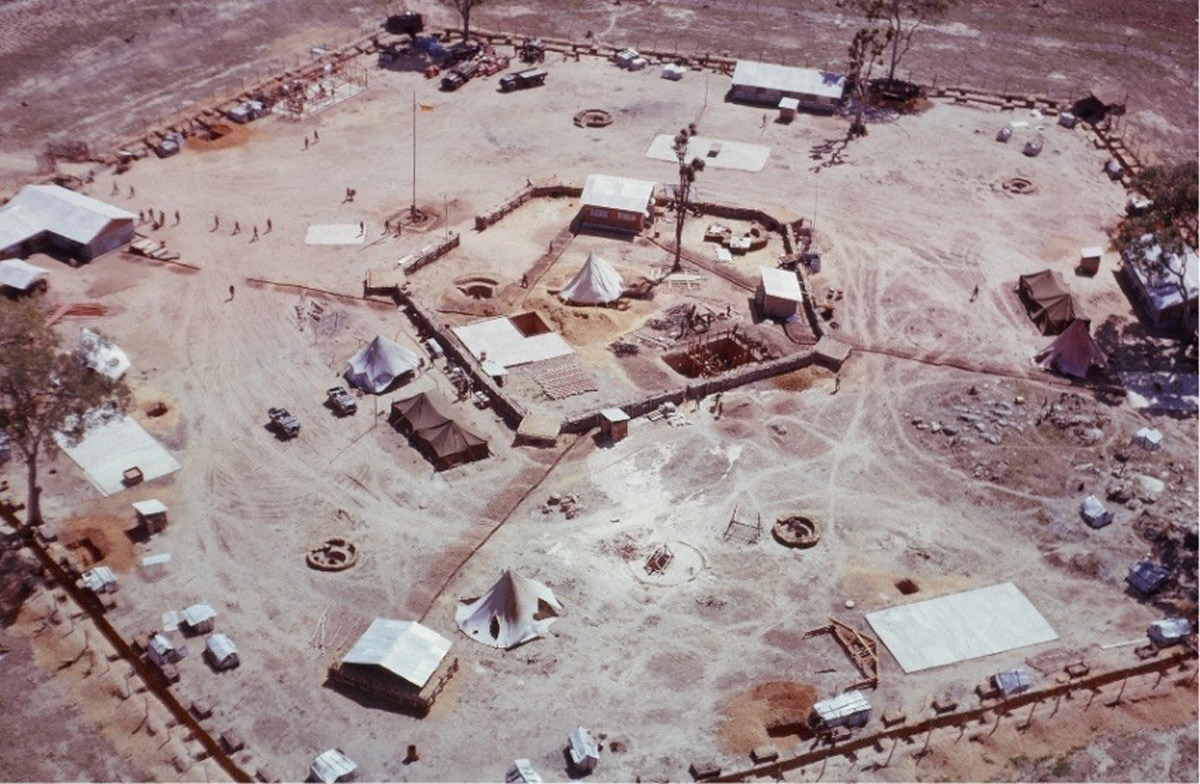
Lac Thien (A-236) Under Construction
I arrived in country on 1 December 1965 and quickly moved through group headquarters in Nha Trang, the C Team in Pleiku, and the B Team in Ban Me Thuot, and was assigned as the XO of Detachment A236 in Lac Thien. The camp was about six months old, having moved from Bu Prang in June. It took its name from the district capital, rather than from the nearby village of Buon K’Die.
At 0700 on that fateful Saturday morning, I walked out with several teammates to oversee the morning formation and to organize the days’ activities. However, the usual formation failed to materialize, and our CIDG troops were milling around. When I asked our interpreter the reason for the delay, he simply said “FULRO” and pointed to an individual behind me, who promptly saluted me and informed me that he was taking over the camp. The .45 on his hip told me that he was not one of ours. I immediately told him that he would NOT be taking over the camp, and was met with the intense stares of several well-armed Montagnards who obviously knew our new friend. At that moment, the team CO, CPT John McKinney, joined our group and I quickly briefed him on the situation as I knew it. The five Vietnamese Special Forces soldiers being led out of the camp at gunpoint accentuated the seriousness of the situation.
We were then informed that our A Team would be taken hostage, and that our CIDG Force would attack the district headquarters at Lac Thien. At that point, they would join a larger force from several other camps to take over the provincial headquarters at Ban Me Thuot. We were instructed to cease all communications with the B team, but the CO informed our “captors” that to do so would incur serious consequences from the ARVN forces. We knew that our most serious threat did not come from our Montagnard forces, who continued to treat us cordially, but from the ARVNs who nurtured an intense dislike and fear of FULRO.
Throughout the day we never felt threatened, and everyone on our team acted very calmly and professionally. We did inform the Yards at some point early on that the ARVN were more concerned with the threat of FULRO than they were with the well-being of an American A team.
At this point it is not clear exactly what happened, or how the FULRO elements were able to communicate with each other. During the day we were not restrained in any way, but we were largely ignored while long discussions took place with and among the 200 or so CIDG troops. By mid-afternoon, however, it became obvious that the odds of success were stacked against them, and their mission was aborted. The FULRO leader politely took his leave, and the Vietnamese Special Forces soldiers were returned to the camp unharmed.
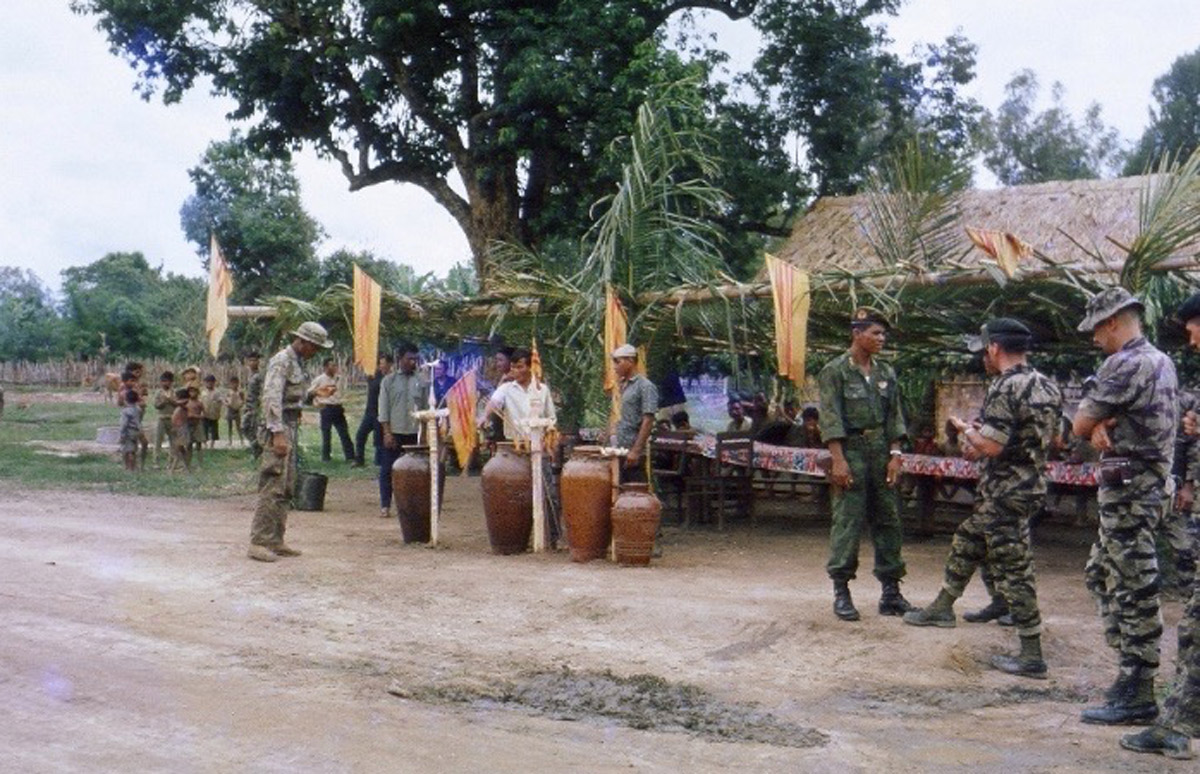
The negotiations.
That probably should have been, at minimum, an uneasy truce between FULRO and the Vietnamese leadership in Ban Me Thuot.
However, as in most situations, politics looms larger than what we may perceive as a more important mission, that of defeating the Viet Cong and the NVA moving down the HCM trail.
Early Sunday morning, when we thought everything had returned to normalcy, our camp was suddenly “buzzed” by two menacing Hueys, sent by the Vietnamese with the knowledge and consent of our B Team. In fact, we believe our B Team commander was on board one of the Hueys. They obviously did not believe our reports that the situation was very much under control. When they were satisfied that the threat had passed, they left without further fanfare.
Shortly thereafter, the VN LLDB (Vietnamese Special Forces team) left, never to return. They were eventually replaced by a Montagnard captain and a smaller team.
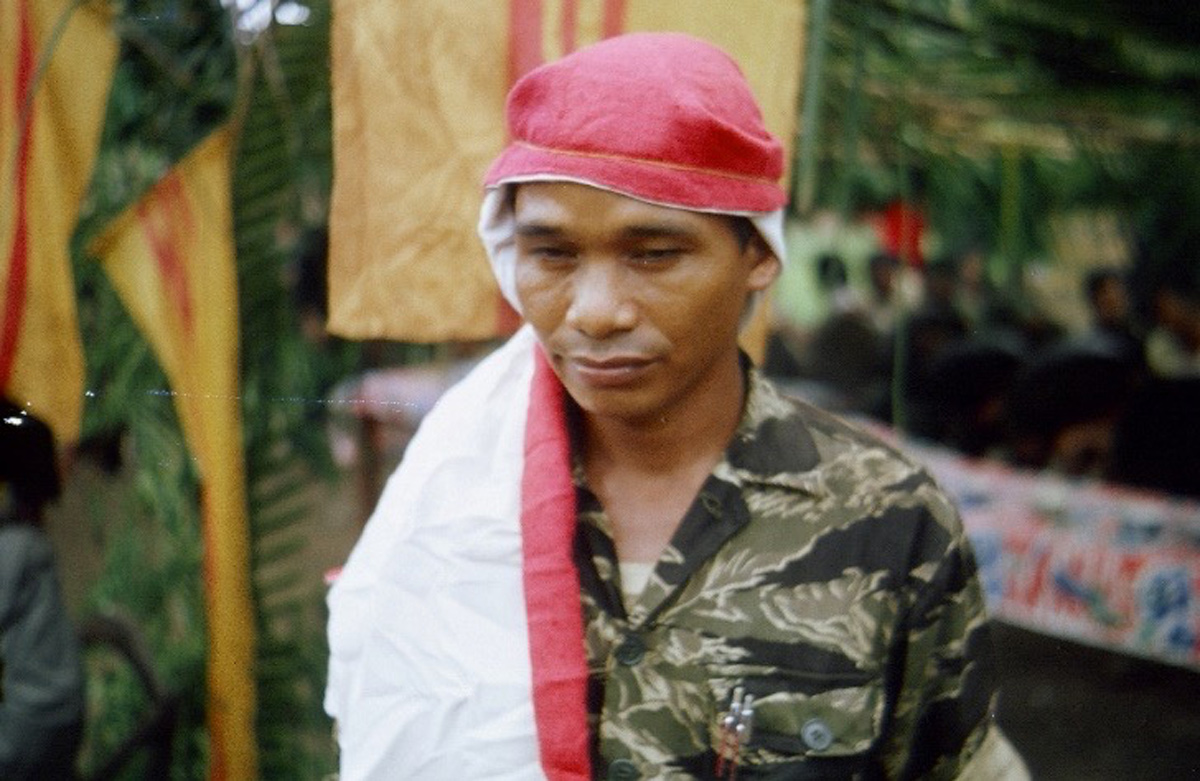
Our lead interpreter.
What happened next is a situation that, to this day, I have never come to grips with. Our B Team sent us a list of about twelve of our Yards, the leaders and interpreters, who were asked to go to Ban Me Thuot to help prepare an after-action report. Hueys would be sent to take them there, and to return them soon after. We assured them that everything would be OK, because our B Team was involved. On arriving in Ban Me Thuot, they were turned over to the Vietnamese, and we were never able to contact them again. Our repeated requests to the B Team were met with silence or worse. We have to this day no idea of their fate, these loyal Yards who believed in us. As soldiers, we obey orders unless these orders are unlawful. In retrospect, what should we have done?
The FULRO movement never succeeded, and the Montagnard civilization continues to be decimated and scattered throughout the world. I sometimes think that we are more concerned with the survival of a subspecies of rodent than we are with the promulgation of a people who have a rich history, and who were without a doubt very loyal friends to us, Special Forces veterans, many of whom owe our lives to them.
About the Author:
Colonel Don Gonneville (US Army, Ret.) is a past Vice President of SFA Chapter 78, a highly-decorated former Ranger, Special Forces, and Airborne Vietnam disabled veteran. A recipient of the Bronze Star, he was an instructor at West Point and the U.S. Army Airborne liaison with the French Army. He is also a past-president of the Disabled Veterans Business Alliance and one of the craftsmen of federal and state laws providing business benefits to disabled vets. He is active as CEO of Gonneville, Inc., a machinery distributor serving several federal agencies and California departments.
Leave A Comment