Three Rifle Volley VS
21 Gun Salute:
The Difference Explained
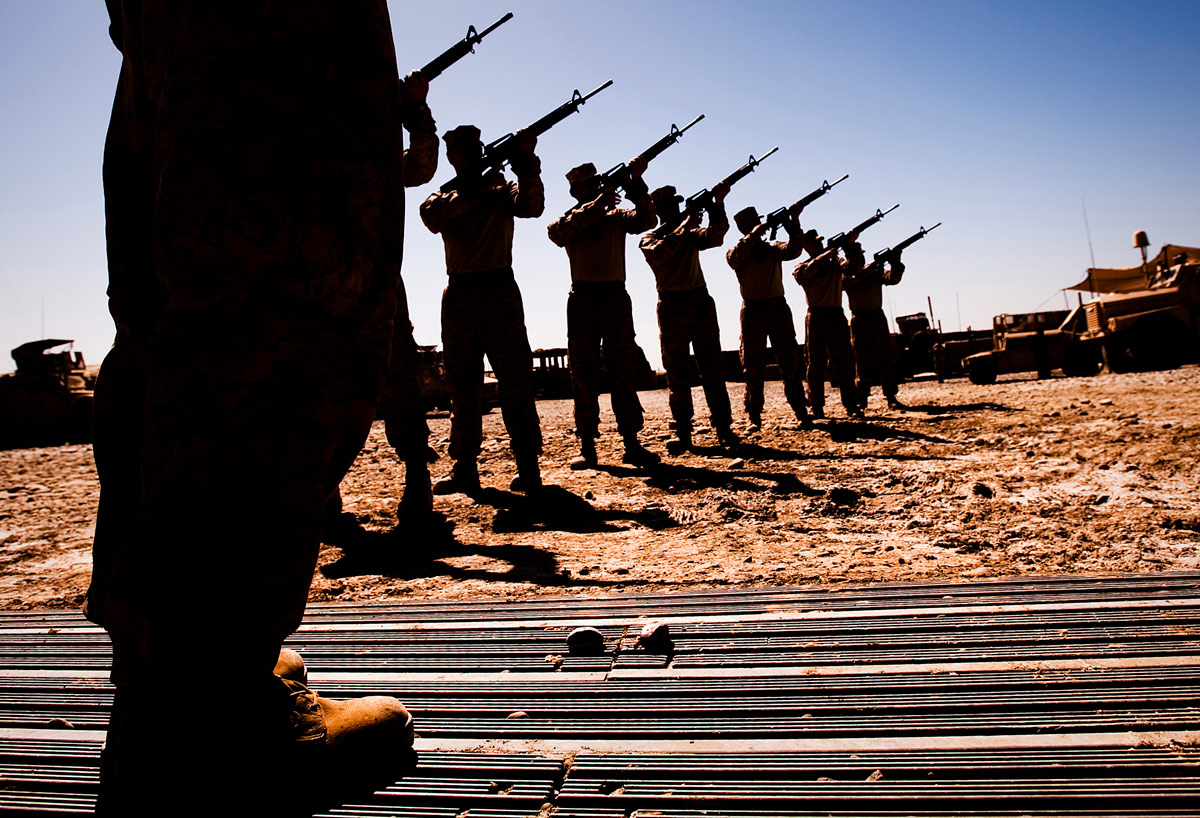
PATROL BASE JAKER, Helmand province, Islamic Republic of Afghanistan — A rifle detail performs a three-volley salute during a memorial service honoring the life of 1st Lt. Scott J. Fleming at Patrol Base Jaker, Afghanistan, Sept. 25, 2010. Fleming died supporting combat operations Sept. 17, 2010. (Official Marine Corps photo by Sgt. Mark Fayloga)
By Robert Crebbs, Command Sergeant Major (Retired)
NCOIC Honor Guard Detail of the Lew Millett MOH Memorial Chapter, 82nd Airborne Division Association and Retired US Army Special Forces Special Operations NCO.
Originally published in the February 2016 Sentinel
Transcript of a speech given by CSM Robert Crebbs at City of Artesia’s Veteran’s Day Program in 2015.
I am a retired Command Sergeant Major, and in my over 39 years in military service, I have been the NCO-In-Charge of numerous Honor Guards, Color Guards, and Memorial Teams. I have long been interested in the use of the term “21 Gun Salute” and how it is often used when referring to the “Three Rifle Volleys” that are traditionally fired at a Memorial Services.
There is a difference.
Most veterans are familiar with the saying “This is my rifle, this is my Gun, this is for shooting and” — well, you may have heard this saying, which was used to teach recruits that Rifles are not considered Guns in military terminology. This also applies to the military term “21 Gun Salute,” which is done with Guns not Rifles. (Guns, in the military, refer to artillery pieces, Cannons and other large, crew-served weapons.) The “21 Gun Salute” is used to honor Countries and their Heads of State. The number of shots fired, 21, one after the other, was set by international agreement and has nothing to do with the fact that adding the numbers in the date 1776, you come up with 21.
The three rifle volleys used in memorial services are done using five to eight riflemen all firing together three times (which is per the Army’s Drill and Ceremonies Manual) and has no relationship to a “21 Gun Salute”. The history of the “Three Volleys” dates back to the Vikings and the Roman Legions, where heroes who fell in battle were honored before burial. Yes, everyone knew the hero was dead, BUT as their body was being honored, their name would be called three times (or in some cases, three stones or pebbles would be thrown at the body). When there was no response, the hero would be officially declared to have passed, and the body would be buried or whatever was accepted for deceased members of his group.
In more recent times, during the US Civil War, after a day of battle, as light faded, a truce would be called to collect the dead and wounded from the field of battle. When one side had collected all their fallen, they would fire three volleys into the air; when the other side had finished, they would also fire three volleys into the air. This signaled the truce was over and hostilities could/would commence.
This is what led to our currently used military memorial service, where three volleys are fired into the air (signaling the fallen have been recovered) and TAPS being played (signaling the end of the day for the fallen).
I hope now you understand there is a difference between a “21 Gun Salute” fired to honor a country or the country’s Head of State and the “Three Rifle Volleys” fired at memorial services to honor our fallen comrades
About the Author:
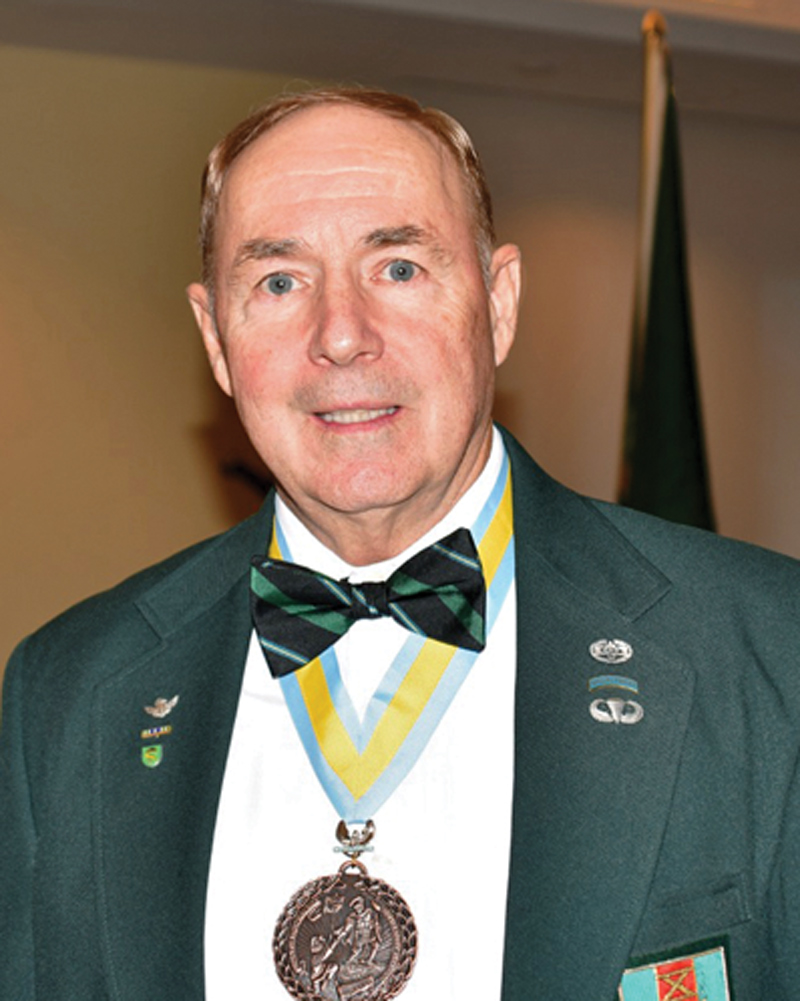
Bob Crebbs, as Secretary for our chapter was responsible for drafting and submitting the paperwork that resulted in our chapter being accepted as officially a part of the Special Forces Association. Following his two years as founding Secretary he has continued to work in the background supporting SFA Chapter 78, is also very active in community veterans events, and strongly supports the California Military efforts. He has also presented the POW MIA service at our Christmas dinners and major events for over 20 years. “A Tip of the Beret” to CSM Bob Crebbs.
Leave A Comment